Aug 28, 2026Residential ESS
Can a 16kWh Home Battery Charge an EV During an Outage?
Before using a 16kWh home battery for EV charging during an outage, check charger demand, inverter output, household reserve and driving needs.
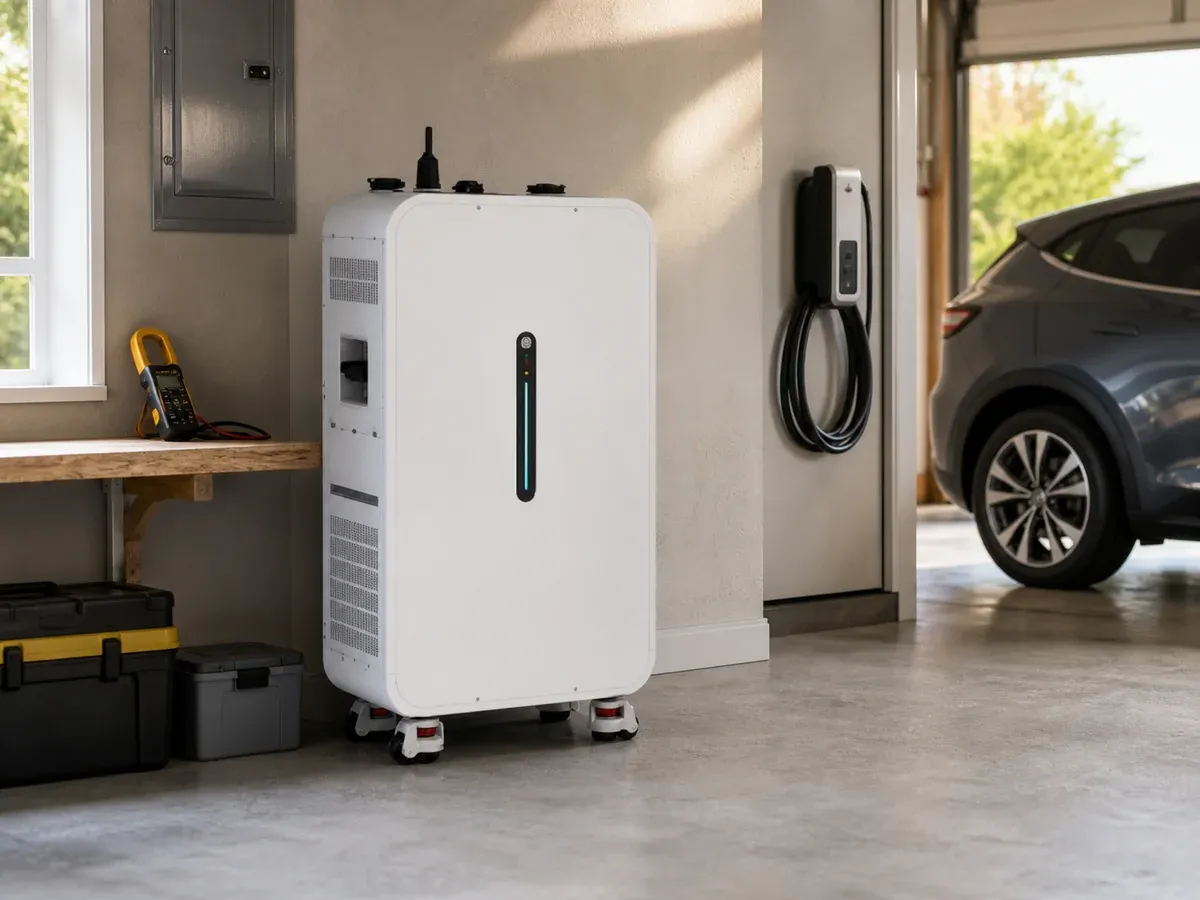
Technically possible is not the same as strategically clever. Charging an electric vehicle from a 16kWh home battery during an outage may be feasible in some configurations, but it can also consume the reserve that was supposed to keep the house comfortable.
The first question is not “Can it charge?”
Ask: how much driving energy is actually needed before grid power or another charging option returns? A short emergency top-up and a full vehicle charge are very different projects.
Four limits decide the answer
EV charger demand: confirm adjustable current, voltage, phase and minimum operating requirements.
Inverter output: the exact system must support the charger and the household loads operating at the same time.
Usable battery energy: reserve settings, conversion losses, temperature and protection limits reduce what reaches the loads.
Household priority: refrigeration, communications, lighting, pumps and cooling may deserve the energy first.
A better outage strategy
Create two operating modes.
Home-reserve mode protects essential circuits and blocks or limits EV charging.
Mobility mode allows a controlled EV top-up after the household reserve has been secured.
The control method depends on the inverter, charger, energy-management system and local electrical design. Do not assume every device will negotiate politely just because both have apps.
Questions for the installer
Can the EV charger current be limited automatically or manually?
What happens if a pump or air conditioner starts while charging?
Is the charger on the backed-up distribution board?
What reserve should remain for the house?
How will the system recover when grid power returns?
Are the charger, inverter and transfer equipment approved for the local installation?
Use an energy budget
Start with confirmed usable energy. Subtract the household reserve and expected overnight loads. The remainder is the maximum planning allowance for the vehicle, before further losses. Compare that with the vehicle’s real energy-per-distance data and the required trip—not a perfect-weather dashboard estimate.
When the idea makes sense
It may suit a villa with measured loads, a compatible controllable charger and a need for limited emergency mobility. It is a poor promise when the buyer expects unlimited whole-home backup and a full EV charge from the same battery.
What to send LinkPower
Provide the EV model, charger data, local voltage and phase, daily distance, minimum emergency range, household essential-load list, desired reserve, installation location and current solar/inverter details.
Review the LinkPower 16kWh villa home battery:
https://www.linkpoweress.com/products/16kwh-premium-energy-storage-for-villas