Aug 26, 2026Residential ESS
4kWh Home Battery vs Generator: The Quiet-Backup Decision
Compare a 4kWh home battery with a small generator by noise, startup loads, refueling, indoor use, maintenance and realistic backup planning.
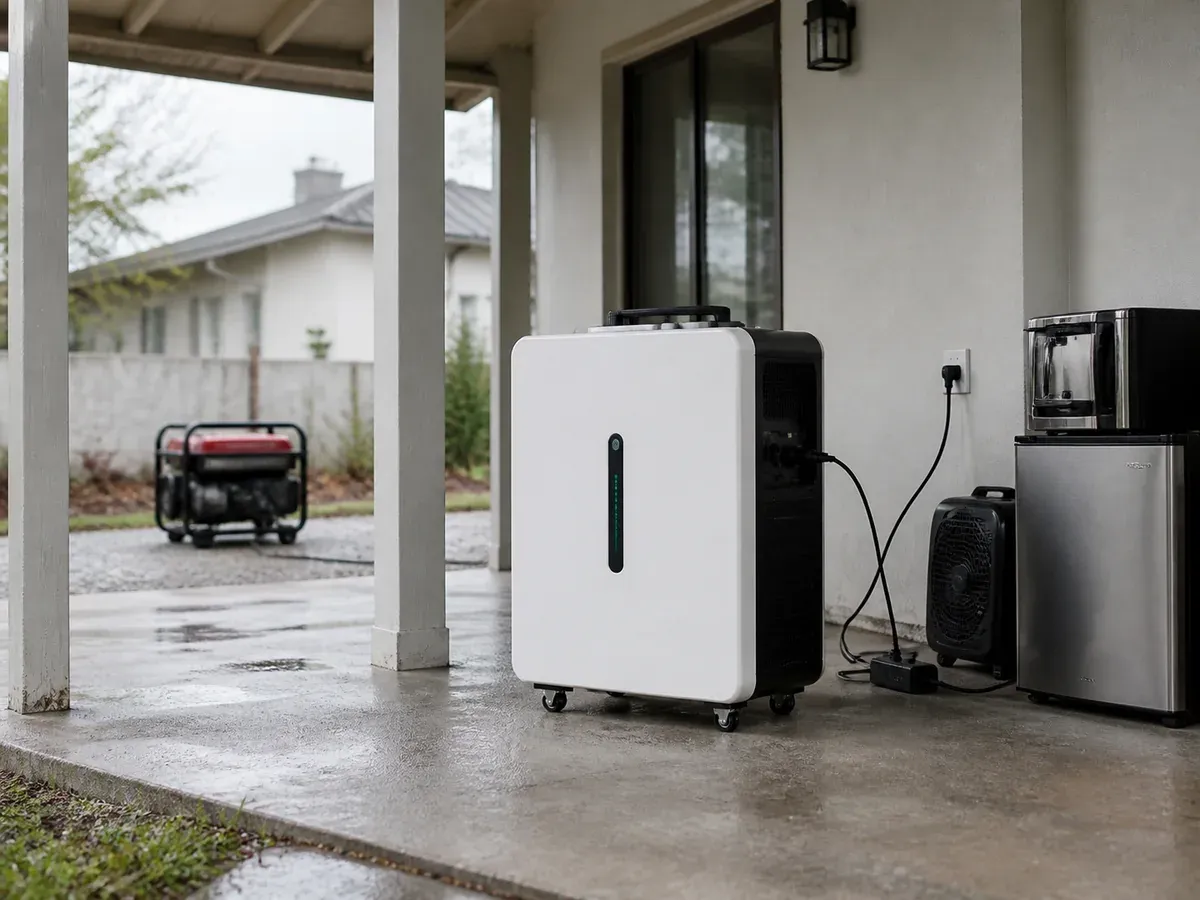
A generator announces itself. A battery usually does not. That difference matters when the outage starts at 2 a.m. and the neighbors have already formed opinions.
Choosing between a 4kWh home battery and a small generator is not a contest with one universal winner. It is a comparison between two operating habits.
Where the battery feels easier
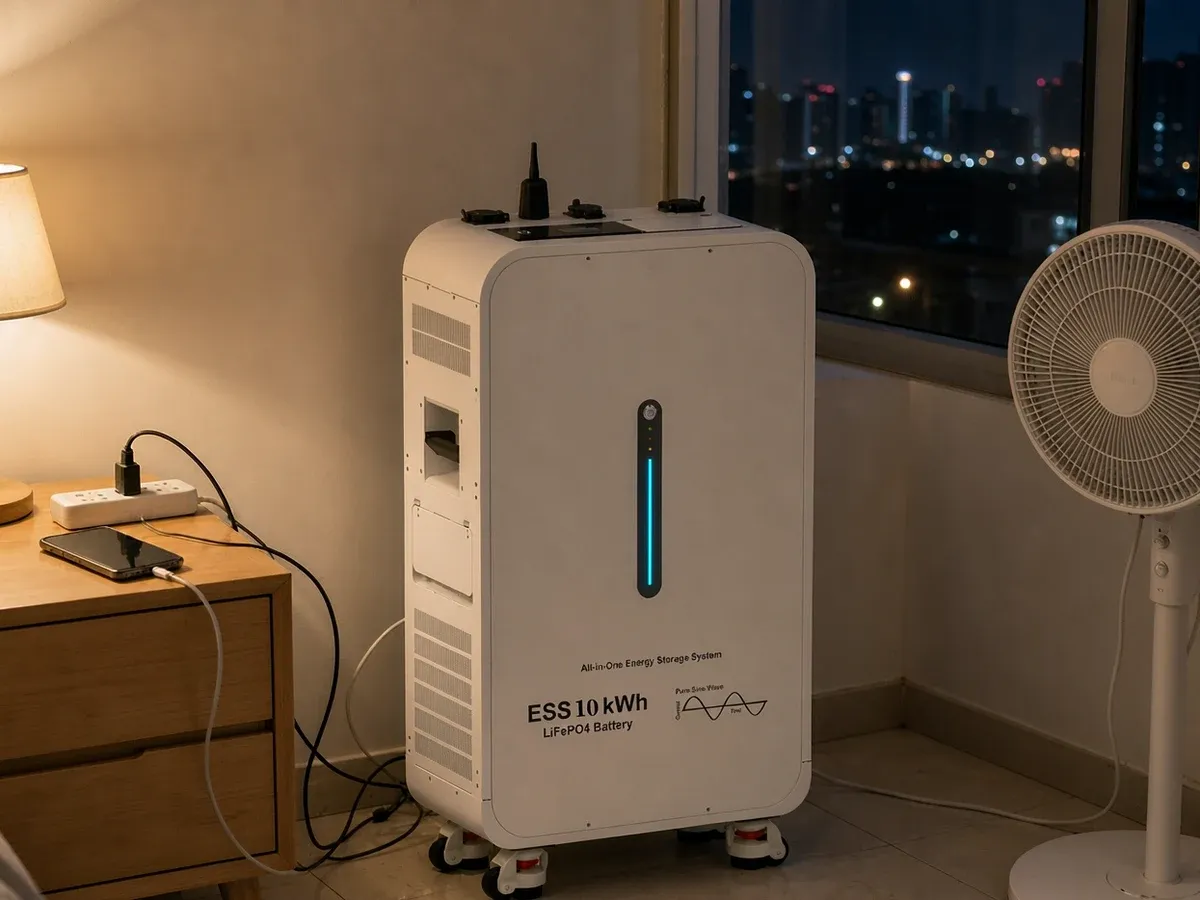
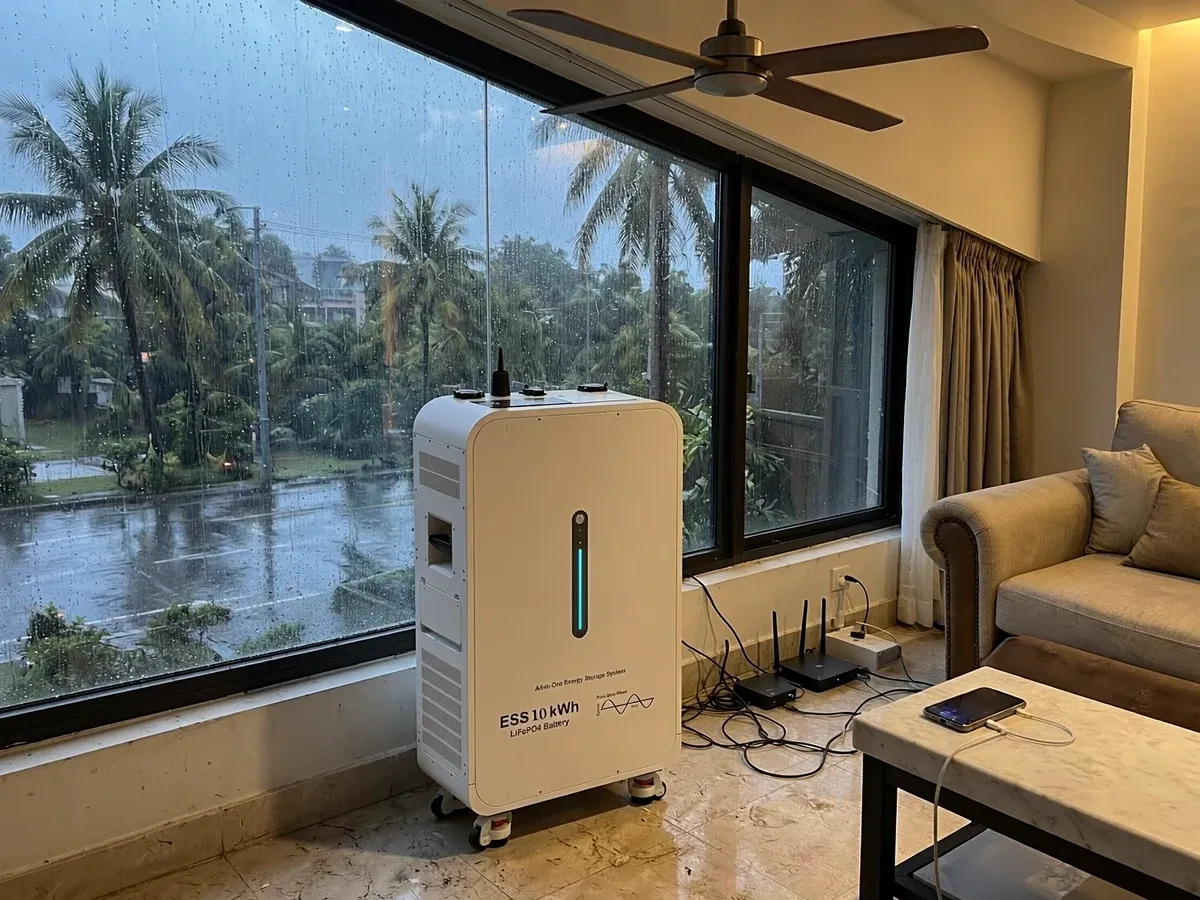
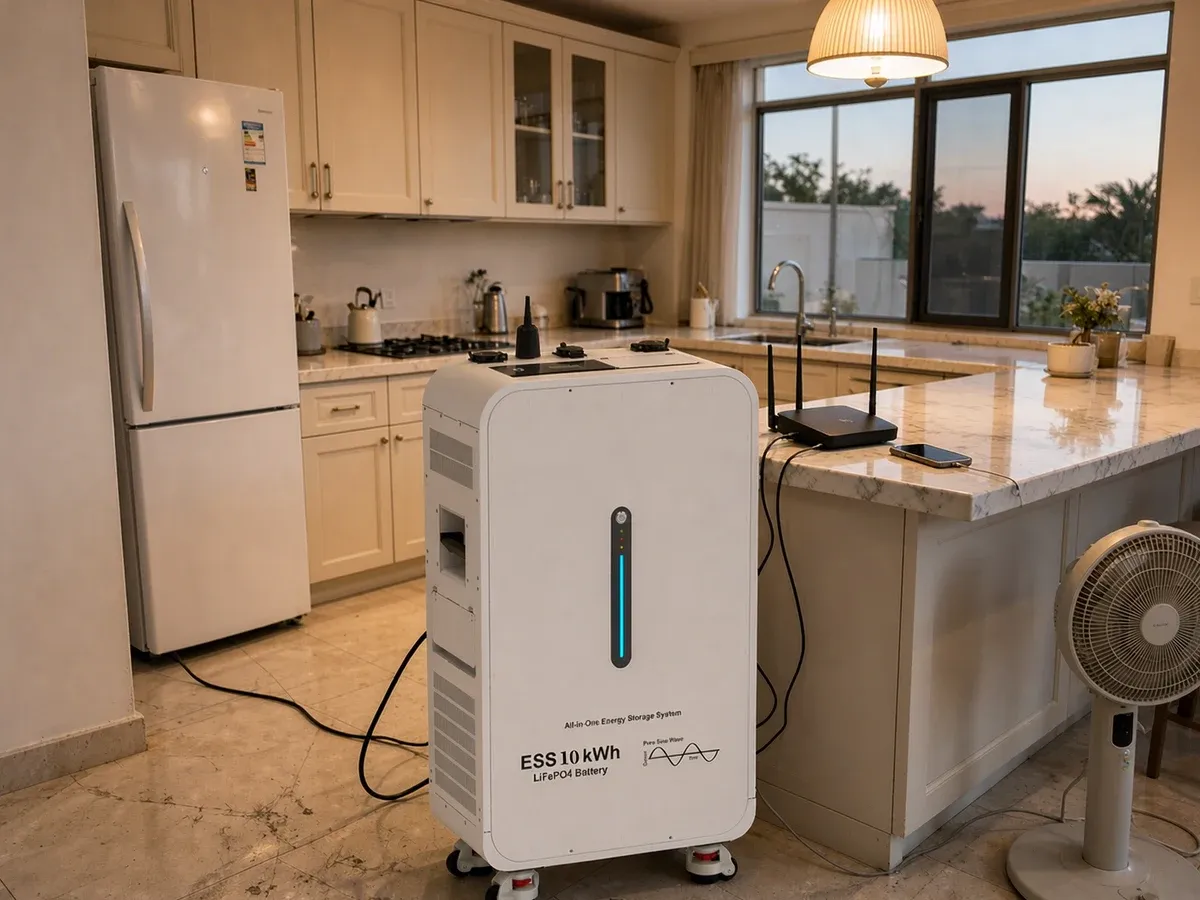
A battery can support selected electrical loads without fuel storage, exhaust or a pull cord. It can be attractive for apartments, villas, mobile work and locations where noise or fumes are unacceptable. It still requires correct ventilation, protected placement and a charging plan.
Where the generator changes the equation
A generator can continue while fuel is available, which may suit long and unpredictable outages. In return, the owner accepts fuel logistics, outdoor-only operation, maintenance, noise and safe transfer arrangements. Never run a combustion generator indoors or in an enclosed area.
Comparison that buyers can actually use
Noise: battery low; generator noticeable.
Energy source: battery must be recharged; generator needs a safe fuel supply.
Indoor operation: follow the battery installation instructions; generator exhaust makes indoor operation unsafe.
Maintenance: battery systems need inspection and correct storage; engines also need fuel and mechanical maintenance.
Heavy startup loads: both systems must be checked against the exact appliance and output data.
The capacity trap
Four kilowatt-hours is an energy figure. It does not tell you how much power can be delivered at one moment. A pump, refrigerator or tool may have a short startup demand that decides whether the system works. Confirm the current inverter ratings for the exact product and measure the loads.
Build a two-column outage list
Column A: must run—router, lights, refrigeration, communications and any verified critical device.
Column B: nice to have—kettle, heater, large tool and everything somebody remembered after the quotation arrived.
Size Column A first. If the plan only works when nobody opens the refrigerator and the router takes a holiday, it is not a plan.
Questions for the supplier
Ask about usable energy, continuous and surge output, charging options, operating temperature, enclosure protection, port types, warranty terms and the latest model documentation. Also provide local voltage, destination market and the intended operating environment.
The short answer
Choose the 4kWh battery when quiet, fuel-free selected-load backup and simple operation are priorities. Consider a generator when very long outages and refueling are central. Some projects use both, but the transfer and charging design must be handled properly.
Review the LinkPower 4kWh all-in-one home battery:
https://www.linkpoweress.com/products/1-4kwh-home-lifepo4-energy-station-ess-4kwh
Send LinkPower your load list for a project-specific discussion:
https://www.linkpoweress.com/contact-us