Aug 24, 2026Residential ESS
5kWh Home Battery Case: A Critical-Load Backup Plan
A practical planning case showing how an installer can build a selected-load backup plan around a 5kWh home battery without guessing runtime or appliance demand.
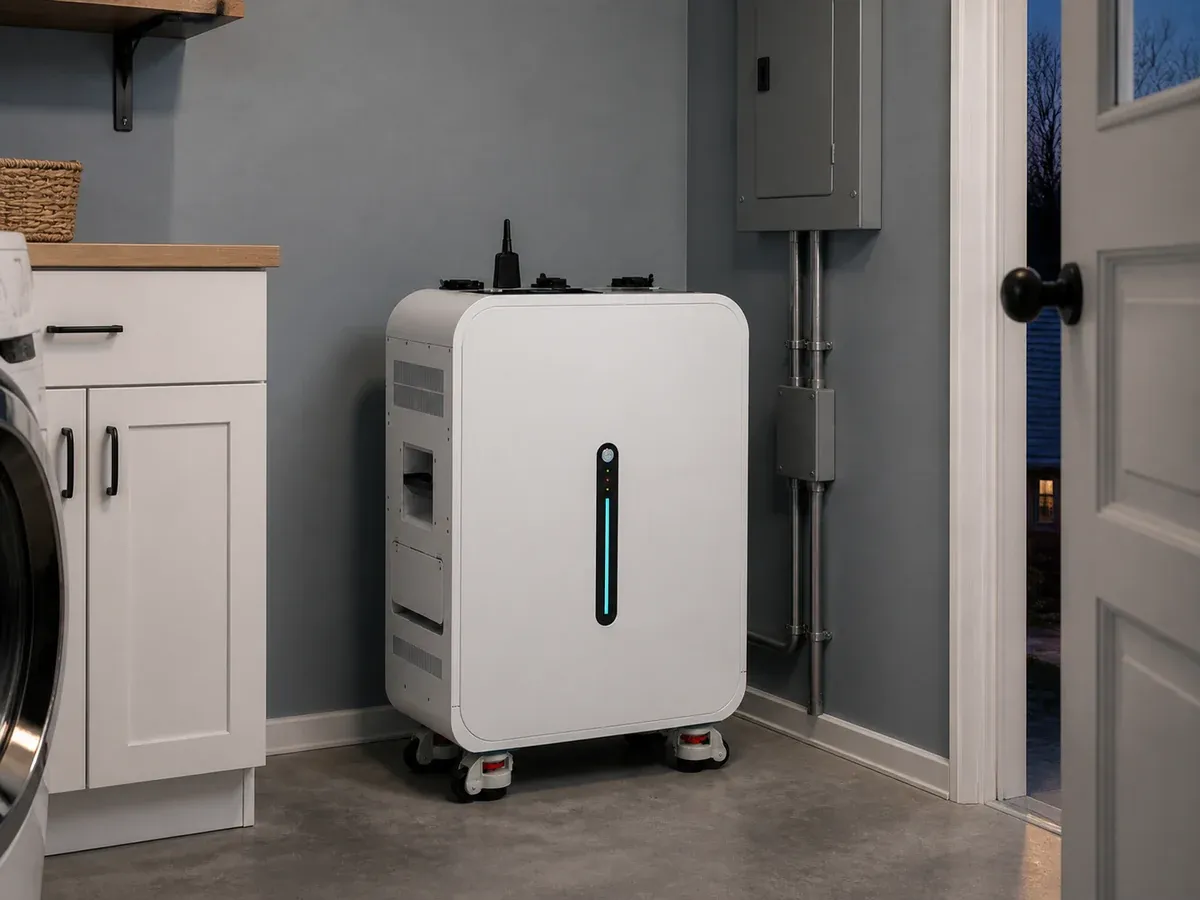
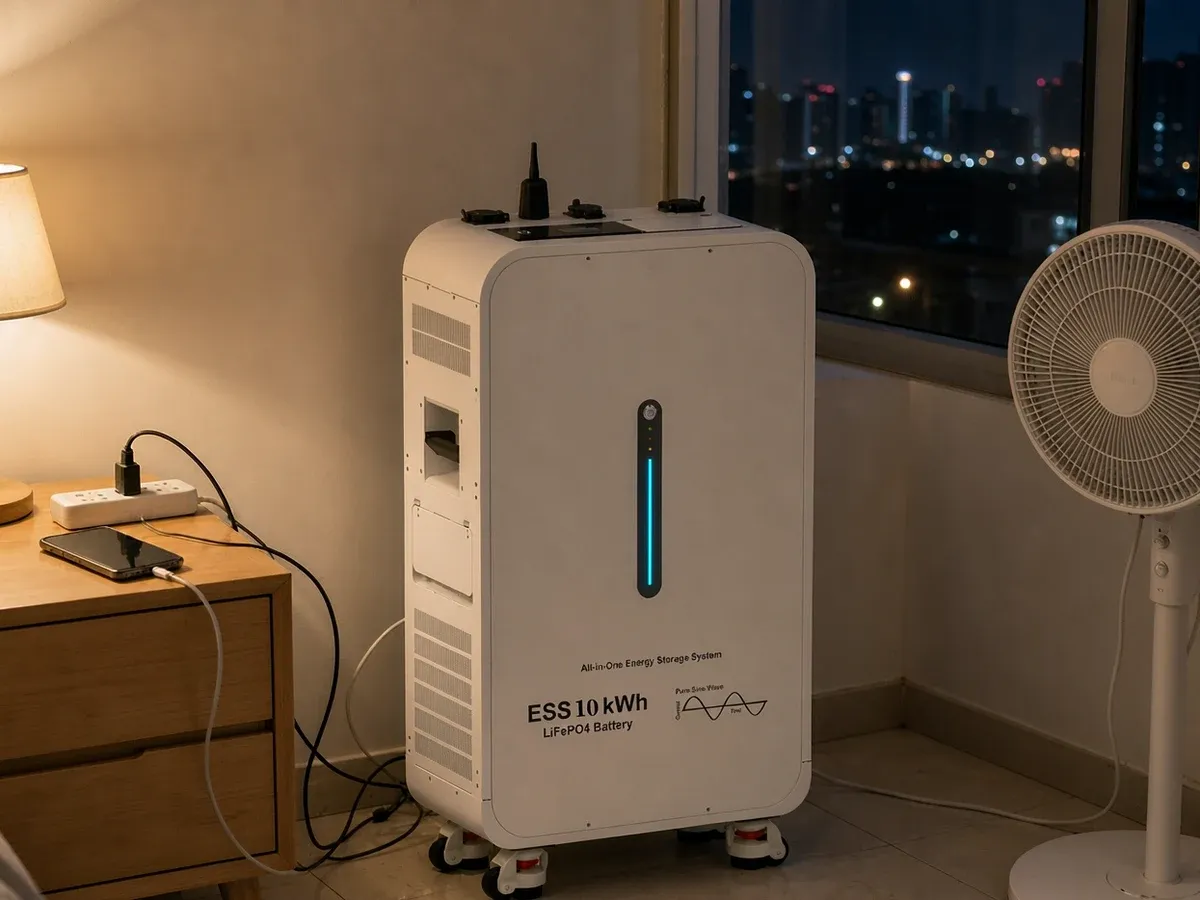
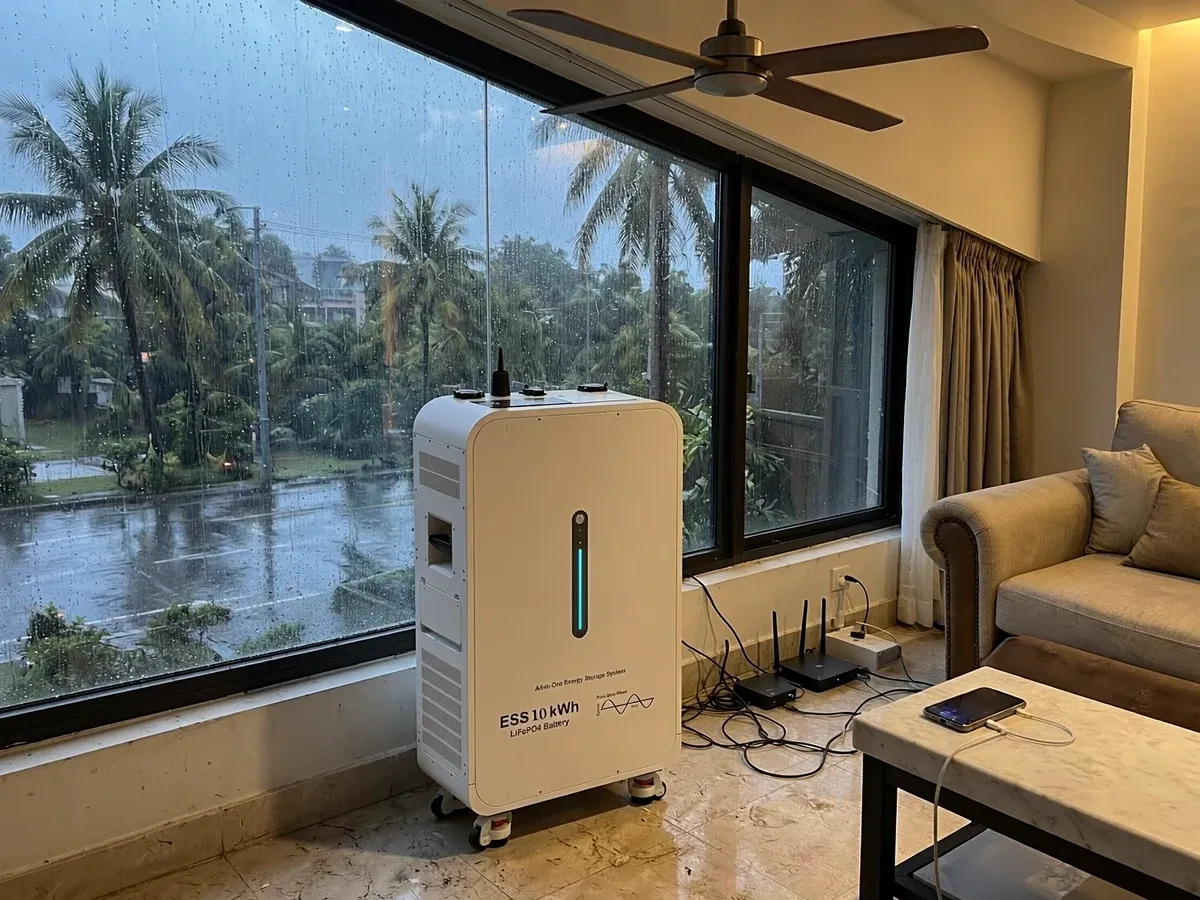
A homeowner asks for “backup during the usual evening outage.” That sounds simple until the installer asks the only question that matters: what must remain on?
This planning case shows how a 5kWh home battery can be evaluated for selected essential loads. It is an illustrative workflow, not a claim about a named customer or a guaranteed runtime. Actual performance depends on the measured loads, startup demand, battery configuration, inverter limits, temperature and installation design.
The case brief
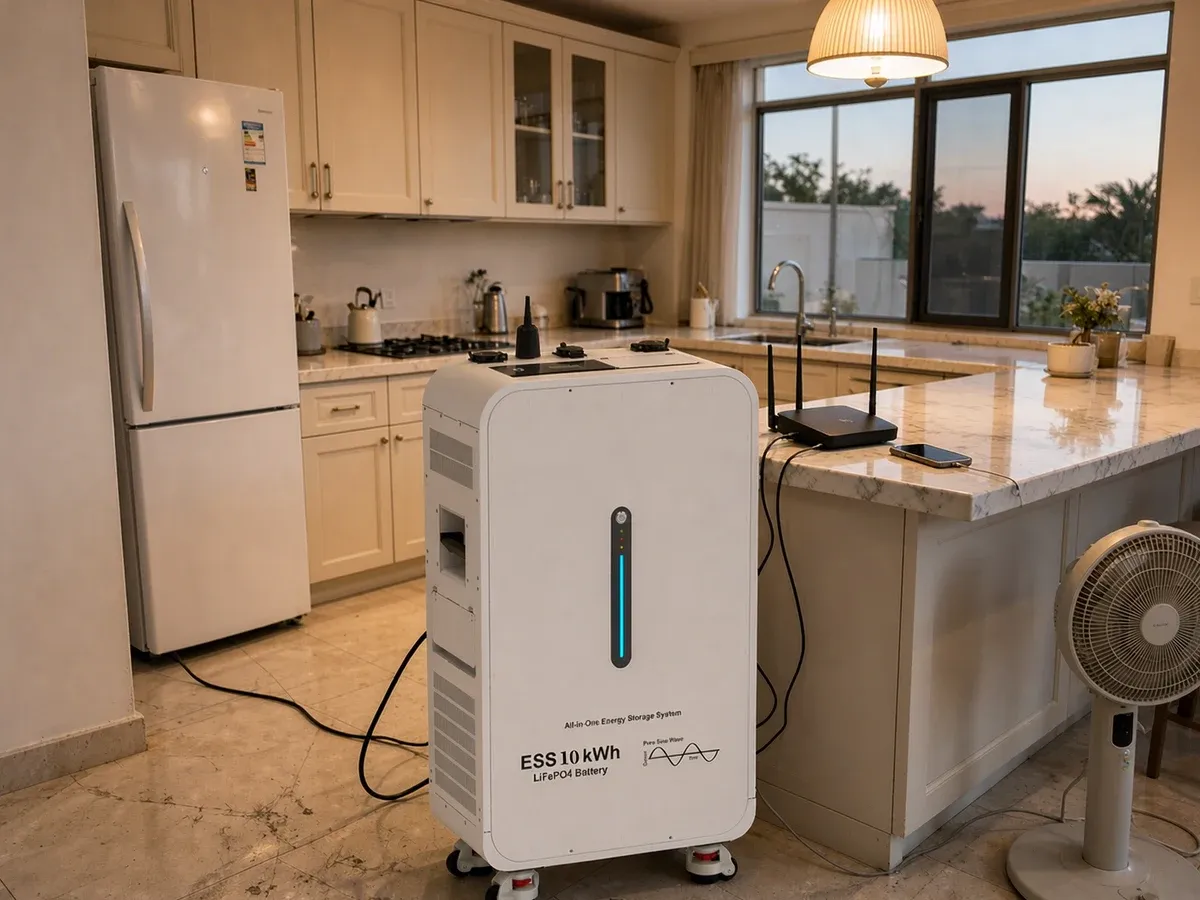
The home has occasional short outages. The owner wants to keep food cold, stay online, charge phones and laptops, and use several lights. Whole-home backup is not required. High-demand appliances can remain off until grid power returns.
The installer’s job is therefore not to make the battery run everything. It is to create a clear critical-load boundary and confirm that every circuit inside that boundary is compatible with the selected system.
Step 1: Separate “essential” from “convenient”
The first conversation produced three groups:
Load group — Planning decision — Why
Refrigerator, internet router, selected lights, laptop and phone charging — Include in the first load list — These match the owner’s stated outage priorities
Water pump, garage door motor or other motor-driven equipment — Verify before including — Startup demand can be much higher than normal running demand
Electric oven, space heater, clothes dryer and EV charger — Keep outside the backup circuit — These can consume the available energy quickly and may exceed the intended selected-load design
This list is not a universal appliance rule. An electrician should check the actual nameplates, measured demand, local wiring and starting current before any final design.
Step 2: Build a load worksheet before discussing runtime
Runtime estimates become unreliable when they start with a generic appliance chart. A better worksheet records:
• the exact device or circuit;
• measured running power;
• startup or surge demand where relevant;
• expected hours of use during an outage;
• whether two high-demand loads may operate at the same time;
• the owner’s “must run” and “nice to have” priorities.
Only after those inputs are checked should the installer compare the plan with a specific battery and inverter configuration. The 5kWh label describes a capacity class; it does not, by itself, answer how long a home will run.
Step 3: Choose the backup boundary
For this case, the practical decision is a selected-load backup panel rather than whole-home backup. The refrigerator, communications equipment and a few lighting circuits stay inside the boundary. High-demand heating and cooking loads stay outside it.
That decision improves three things at once:
- The owner knows exactly what to expect during an outage.
- The installer can test a defined set of circuits at handover.
- The supplier receives a cleaner request and can flag missing information before quotation.
What the installer should verify on site
Before treating a 5kWh system as suitable, check:
• the latest product datasheet and the proposed inverter configuration;
• continuous and startup demand of every protected circuit;
• switchboard condition and available space;
• cable route, earthing and isolation requirements;
• indoor clearance, ventilation and operating-temperature conditions;
• grid, solar and backup operating modes;
• local electrical and fire-safety requirements;
• the owner’s preferred reserve level and outage priorities.
The LinkPower 5.12kWh all-in-one home battery (https://www.linkpoweress.com/products/5kwh-residential-battery-backup-system) is intended for residential storage and selected-load backup planning. The final system must still be matched to the site and confirmed against the current datasheet.
When a 5kWh battery is the wrong starting point
A 5kWh-class system may be too restrictive when the owner expects long overnight autonomy, wants several heating or cooling loads on backup, has a large pump, or refuses to manage loads during an outage. It may also be the wrong choice when local regulations or the existing switchboard make the proposed installation impractical.
In those situations, the correct next step is not to promise more runtime. It is to measure the loads again, clarify the backup boundary and compare a larger configuration or a different system design.
The result of this planning case
The useful outcome is not a dramatic runtime claim. It is a quote-ready brief:
• selected essential circuits are named;
• high-demand appliances are excluded or flagged for verification;
• the backup objective is defined;
• missing site measurements are visible;
• the installer and homeowner share the same expectations.
That is what turns a general request for a “5kWh backup battery” into a design that can be checked, priced and commissioned responsibly.
If you are preparing a residential project, send LinkPower the load worksheet, site photos, grid and solar information, and the required backup circuits through the contact page (https://www.linkpoweress.com/contact-us). We can review the brief and identify which data still needs confirmation before a formal quotation.