Can a C&I Battery Ride Through Short Grid Dips?
A C&I battery may support power-quality objectives only with the right architecture. Collect event, load and transfer data before asking for a grid-dip solution.
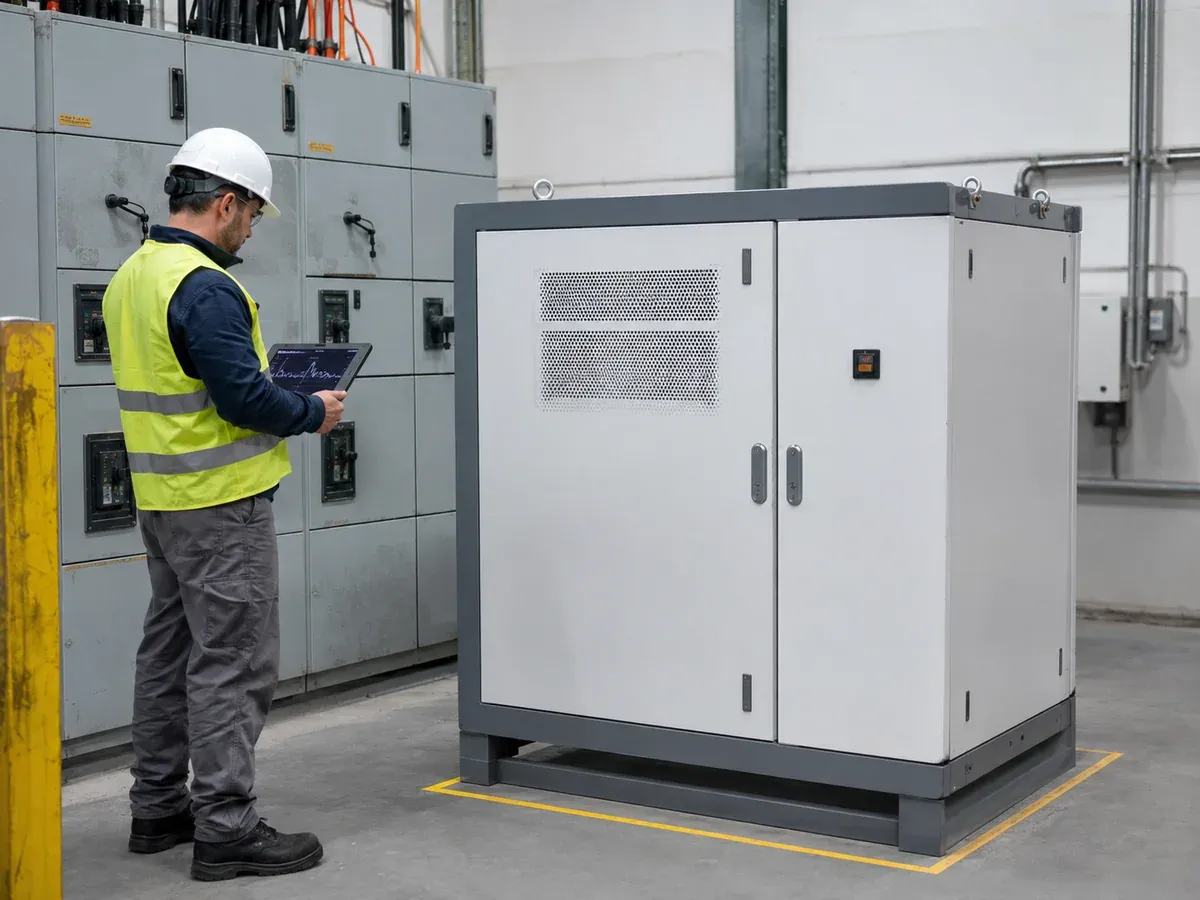
A factory manager says, “The power only disappears for a second.” Production replies, “That second cost us a restart.” Both statements can be true.
Commercial and industrial battery storage may form part of a solution for short grid interruptions or voltage events, but storage capacity alone does not prove ride-through performance. The event, transfer architecture, inverter behavior and protected loads must be defined first.
First identify the event
Was it a complete outage, a voltage sag, a phase-loss event, a frequency excursion or an internal protection trip? How long did it last, how often does it occur and where was it measured?
Ask for records from suitable power-quality monitoring equipment where available. A timestamped waveform is more useful than “the lights blinked around lunch.”
Define the protected process
List the loads that must ride through the event and the consequence if they do not. PLCs, controls, communication equipment, drives, contactors, refrigeration or production lines can have very different sensitivities.
Record continuous demand, startup or inrush behavior, phase, voltage, power factor and required ride-through duration. Identify loads that may be dropped without stopping the critical process.
Architecture decides the result
A battery cabinet is only one part of the system. Transfer equipment, PCS or inverter operating mode, switchgear, controls, protection coordination and connection topology determine how stored energy reaches the load.
Data package before a serious quote
- Grid-event type, duration, frequency and measurement point
- Critical-load list, phase, voltage and operating profile
- Startup, inrush and step-load behavior
- Single-line diagram and switchgear information
- Required outcome and ride-through duration
- Site location, temperature, access and installation constraints
- EPC, installer, commissioning and maintenance responsibilities
Questions that expose a weak proposal
- What event has the proposed architecture been designed to handle?
- What is the expected transfer or response behavior?
- Which loads are excluded?
- How will protection coordination and islanding be addressed?
- What evidence will commissioning collect?
- What happens during repeated events before the battery recovers?
Do not buy a large energy number to solve an undefined one-second problem. Start with event data and the protected process, then select the electrical architecture and storage system together.
Review LinkPower C&I energy storage products, or send the event records, single-line diagram and critical-load list for project review.