Sep 3, 2026Residential ESS
The Load Interview That Prevents Expensive Battery-Sizing Mistakes
Use this practical pre-sales load interview to collect appliances, startup demand, backup priorities, site conditions and buyer expectations before sizing.
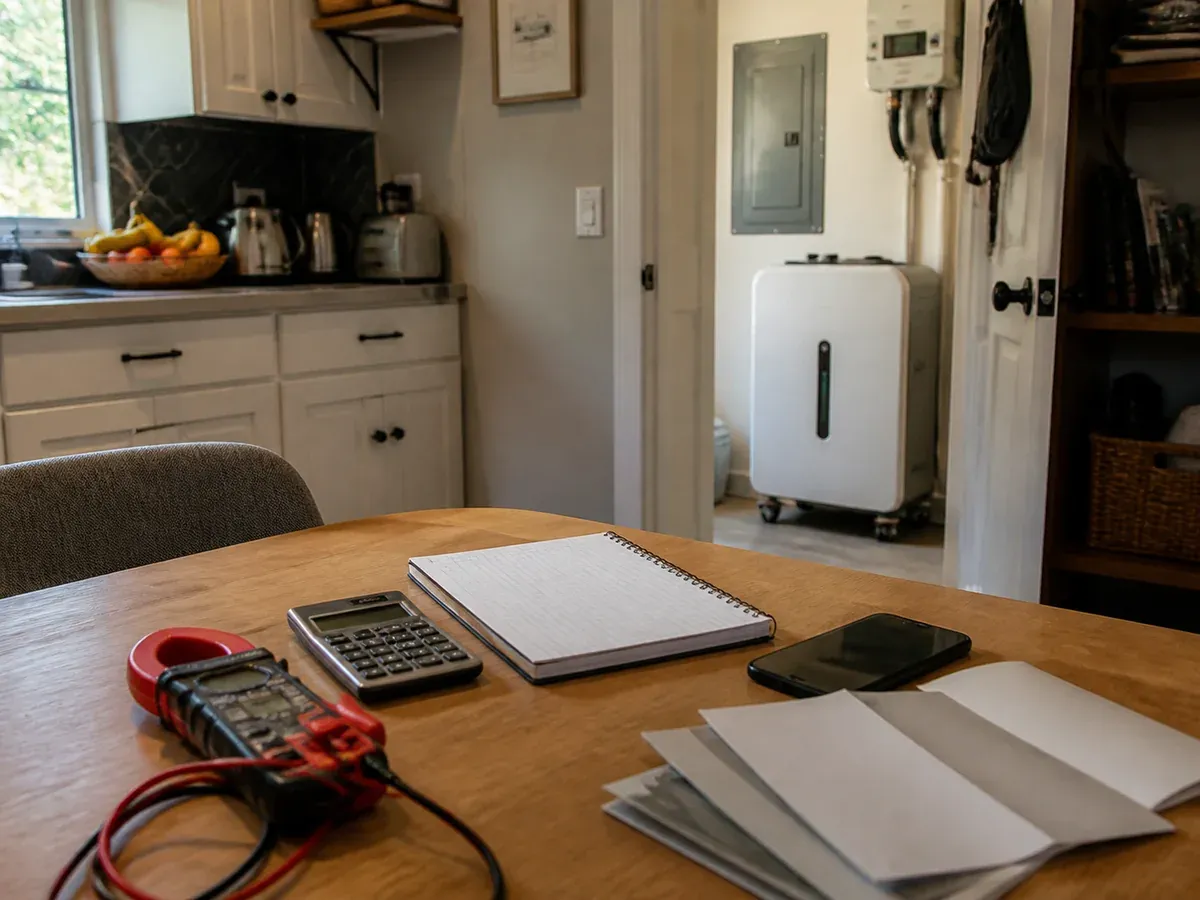
Most poor battery quotations do not begin with bad arithmetic. They begin with a vague sentence: “I want backup for my house.”
A useful load interview turns that sentence into a project. It does not need theatre, a white coat or forty-seven forms. It needs the right questions in the right order.
- What must remain available?
Ask the buyer to separate must-have, comfort and optional loads. Router, refrigeration and essential lighting usually reach the first list. Ovens, heaters and pool pumps often discover they have been promoted without approval.
- What runs at the same time?
Nameplate loads added together can overstate normal demand; ignoring simultaneous operation can understate it. Measure a realistic operating period and record the combinations that matter.
- Which loads have startup demand?
Compressors, pumps, motors and some tools can draw brief peaks. Collect model plates or measured data and compare them with the exact inverter’s continuous and surge ratings.
- How long is the real outage?
Use typical, worst-reasonable and desired backup windows. “All night” needs a start time, an end time and a discussion about what changes after midnight.
- How will the battery recharge?
Document grid availability, solar system details, charging windows and expected operation between repeated outages.
- Where will the system be installed?
Collect photos, access dimensions, ventilation, clearance, temperature, moisture, dust, flood exposure, cable route and local installation restrictions.
- What does the buyer expect to happen automatically?
Ask about transfer time, load priority, remote monitoring, reserve behavior and restart after grid return. Expectations are part of the specification even when they are not in the datasheet.
- What information belongs in the inquiry?
Destination market, voltage and phase, quantity, project schedule, solar and inverter details, required documentation, installer responsibility and after-sales expectations.
The one-page output
The interview should produce a load table, backup priority list, required duration, site notes, known unknowns and next measurements. It should not produce a confident model recommendation while half the boxes are blank.
How this helps distributors
Better inputs create faster, more comparable quotations and fewer mismatched expectations. They also make capacity conversations more honest: 1kWh, 2kWh, 4kWh, 5kWh, 10kWh and 16kWh become options to test, not a ladder the salesperson climbs until the buyer stops asking questions.
Send LinkPower the completed load brief for a project-specific review:
https://www.linkpoweress.com/contact-us