How Much Battery Storage Does a Home Need? A Sizing Guide for Real Houses
A working method for sizing home battery storage: list the loads you refuse to lose, multiply by backup hours, and match the result to 5, 10, 16 or 20 kWh tiers. No marketing math.
How Much Battery Storage Does a Home Need? A Sizing Guide for Real Houses
A working method for sizing home battery storage: list the loads you refuse to lose, multiply by backup hours, and match the result to 5, 10, 16 or 20 kWh tiers. No marketing math.
Short answer: a house that must ride out a full evening with the fridge, lights, fans, and a few hours of air conditioning lands at 10 to 16 kWh. A flat that only needs lights on and food cold gets by on 5. Most sizing confusion comes from skipping the two numbers that actually matter — the watts you refuse to lose, and the hours you need them. Get those down and the capacity picks itself.
Start with the blackout you're planning for
Nobody backs up a whole house. You back up specific circuits, and you get to choose which ones. Write the list before you talk to any supplier: fridge, lighting, router, a couple of fans, maybe the well pump or a split AC. In a two-storey villa outside Manila, that first list usually lands between 400W and 1,200W of simultaneous demand. In a small apartment in Lagos, it can be under 300W. The gap between those two houses is the entire sizing question.
Two numbers decide everything: watts and hours
Take each appliance's running watts and multiply by the hours you want it covered. A 200W fridge over a 12-hour night is 2.4 kWh. Ten 10W LED bulbs for 6 hours is 0.6 kWh. A router, 20W, running around the clock adds 0.5 kWh per day. Add a 50W floor fan through the evening and you're at roughly 4 kWh — a 5kWh unit covers it with headroom. Now put a 1,100W well pump into the same night: it only cycles a few minutes per hour, but it alone can push the total toward 10 kWh. A 4-hour evening with a 1,200W split AC on top brings you to the 14 to 16 kWh zone.
5, 10, 16 or 20 kWh: where the line falls
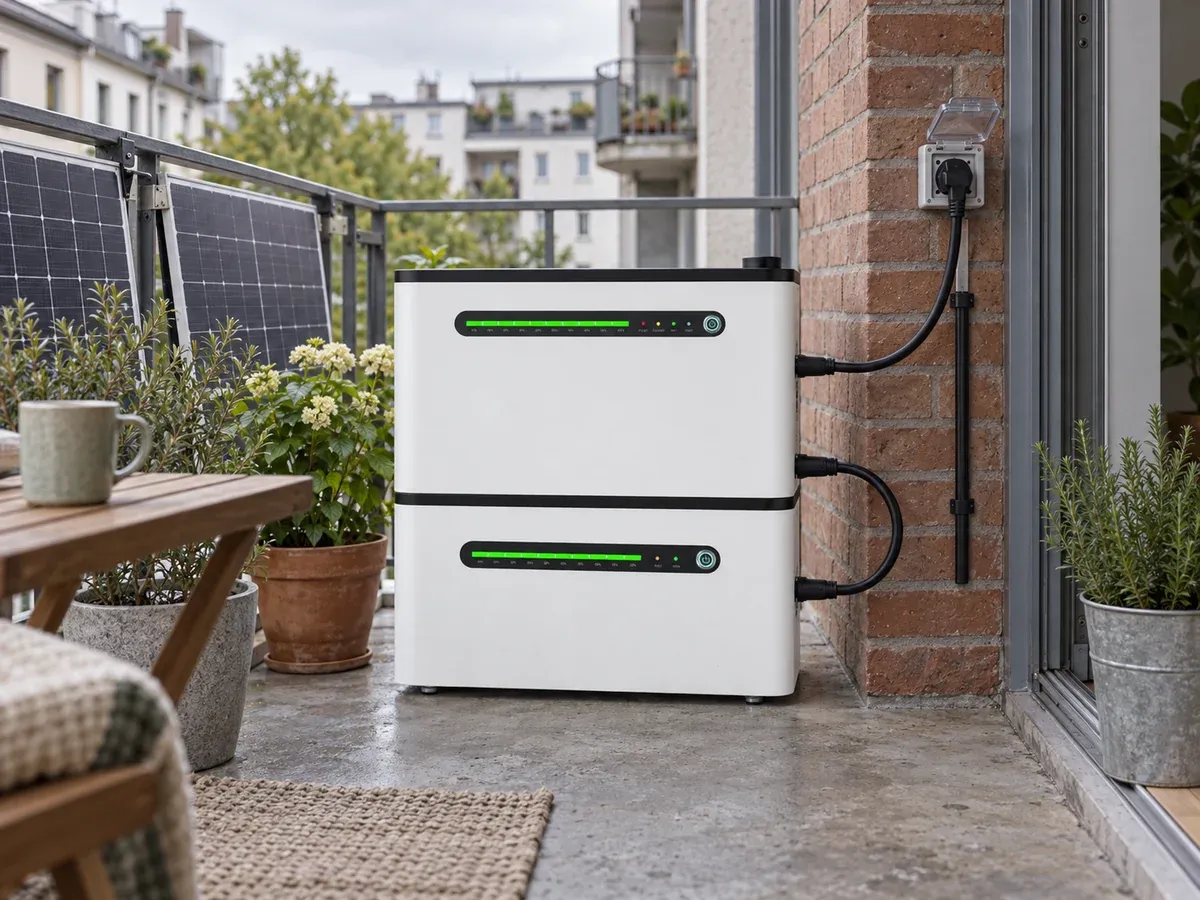
The tiers exist because houses cluster into a few shapes. A 5kWh system fits a small home or shop that backs up essentials only — think 4 to 8 hours of fridge, lights, and communications. A 10kWh system covers the same loads overnight plus a washing machine cycle or an extra fridge, or the essentials for a full 24 hours. For villas, the 16kWh tier has become the workhorse: it carries an evening with AC or a well pump running without draining the cells to their floor. A 16kWh all-in-one villa system is what we quote first for three-bedroom homes with real cooling loads. The 20kWh tier makes sense when outages run past 12 hours or the household plans to add loads later.
The specs that quietly change the math
Nameplate capacity and net capacity are not the same number. A battery rated 16 kWh might deliver 14 to 15 kWh net at the depth of discharge the manufacturer allows — ask which it is, and size from the net figure. Next, check the inverter's continuous output, not just its surge rating: a 5kW inverter handles the fridge, lights, and fans fine, but it will trip if you stack a well pump start on top of an AC compressor. Finally, ask about transfer time. If the battery takes more than about 20 milliseconds to pick up the load, desktop computers and some pumps will reboot at every switchover. Good suppliers publish this number; the rest make you dig.
When a smaller battery is the smarter buy
Oversizing feels safe and usually wastes money. If your outage pattern is two to four evening hours and you don't run heavy loads at night, a 5kWh backup system does the job at a fraction of the cost, and the unused half of a bigger unit does nothing but age. Buy for the loads on your list, keep about 20% headroom, and stop there. Our home energy storage overview breaks the tiers down by house type if you want the short version.
What to send the supplier before asking for a quote
A serious supplier will size from your numbers, not from a brochure. Send four things: your essential-load list in watts, the backup duration you want in hours, your AC voltage and frequency (230V/50Hz across most of Africa, Asia and the Middle East, but confirm), and whether solar will feed the system now or later. Add peak loads — pump starts, compressor starts — because those decide the inverter, and the inverter decides whether the whole thing works.
FAQ
Q: Will a 10kWh battery run my whole house? A: It runs the essential circuits comfortably for a night — fridge, lights, router, fans, maybe a washing machine cycle. It will not carry central air conditioning plus a well pump together. That job starts at 16 kWh.
Q: How long will a 16kWh battery last during an outage? A: With lights, communications, a fridge, and a couple of fans, roughly a full day. Add a 1,200W split AC for evening cooling and expect 4 to 6 hours from it. Your load list, not the battery, sets the clock.
Q: Do I need to decide the capacity alone? A: No — but arrive with numbers. Any supplier who quotes a size without asking for your load list and backup hours is guessing, and you'll pay for the guess.
Send us your kW peak, daily kWh, AC voltage, and the loads you must keep running, and we'll come back with a sized recommendation instead of a generic quote. Start at our contact page — distributors and EPC contractors can request volume pricing through the same form.