5kWh Home Battery Sample Test: A Distributor Checklist
A practical checklist for distributors testing a 5kWh home battery sample before a bulk order—covering loads, charging, setup, documents and support.
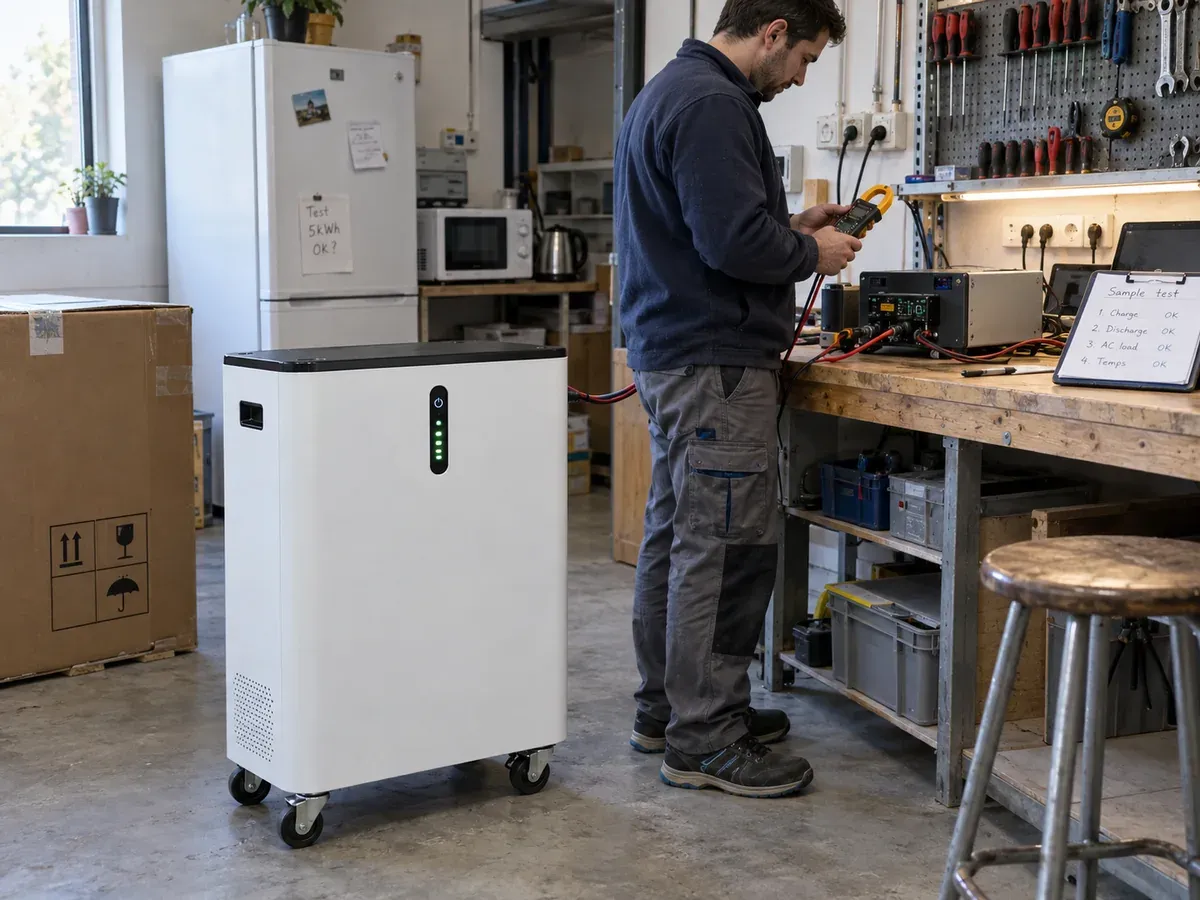
Two 5kWh batteries can look almost identical in a quotation and behave very differently in a distributor’s market. The sample is where the brochure has to meet a refrigerator, a kettle, a router and an installer who has already had a long day.
If you are evaluating a 5kWh home battery sample before a bulk order, the goal is not to make it survive one impressive demo. The goal is to discover what your customers and installers will experience repeatedly: setup, everyday loads, backup behavior, charging, documentation and support.
1. Confirm that the sample matches the market you plan to sell into
Start before the carton is opened. A sample with the wrong socket or voltage standard is not a test unit; it is expensive desk décor.
- Grid standard: confirm the required voltage and frequency for the destination market.
- Connections: check plugs, sockets, cables and any external protection devices included with the sample.
- System configuration: confirm whether the test covers battery-only backup, solar charging, grid charging or the intended combination.
- Labels and manuals: make sure warnings, installation steps and user instructions can be understood by the local installer and buyer.
- Monitoring: if an app or communication interface is part of the proposed configuration, test pairing, reconnection and basic status reporting.
Record the sample model and hardware revision. Otherwise, a successful test can become meaningless if the bulk quotation quietly refers to a different configuration.
2. Test the loads your buyers actually care about
A neat row of test lamps is useful, but it is not a household. Build a short load list from the buyer profile you serve: refrigerator, lighting, router, television, fan, laptop, small kitchen appliance or another genuinely common essential load.
| Test | Why it matters | Evidence to record |
|---|---|---|
| Essential-load run | Shows useful everyday behavior | Load list, starting and ending state of charge, observed runtime |
| Motor or compressor start | Checks how the system handles a brief starting surge | Appliance nameplate and whether the start was successful |
| Simultaneous loads | Reveals what happens when normal habits overlap | Load combination and maximum observed demand |
| Grid interruption | Checks backup behavior under a real changeover | Which loads stayed on and any interruption observed |
| Recharge | Shows turnaround before the next outage | Charging source, start/end state of charge and elapsed time |
Do not turn one runtime result into a universal promise. Actual backup time changes with the connected load, battery settings, operating conditions and the usable energy available in that configuration. A useful report states the test conditions instead of rounding the story upward.
3. Test the installation conversation, not just the hardware
Ask the person who would normally support your dealers or installers to commission the sample using the supplied documents. Watch where the process slows down.
- Was the unpacking and accessory check obvious?
- Were cable routes and connection order clear?
- Could the installer understand local indicators and alarms without guessing?
- Did monitoring reconnect after the network or power was interrupted?
- Was the restart procedure clear after low state of charge or grid return?
Write down every question the installer had to ask. Three repeated questions are not “user error”; they are a manual, training or product-page problem waiting to happen.
4. Check the details that become expensive at bulk-order scale
The battery may work perfectly and still create a bad first shipment. Before discussing a larger order, verify the commercial details tied to the exact configuration:
- Model name, hardware revision and serial-number traceability
- Included cables, connectors and accessories
- Current carton dimensions, gross weight and packing method
- Manual, warranty process and after-sales escalation route
- Documents or test reports required by the destination market
- OEM label, carton and manual requirements, if applicable
- Spare-part and replacement procedure for your sales channel
Do not treat a logo on one PDF as proof that the exact shipped configuration is covered. Ask which model, configuration and destination-market requirement each document addresses.
5. Use a one-page sample acceptance record
A good acceptance sheet is deliberately boring. It prevents the useful details from disappearing into a chat history.
- Sample model and serial number
- Destination country and grid standard
- Test date, room conditions and responsible tester
- Connected loads and observed results
- Charging source and recharge observations
- App, indicators, alarms and restart checks
- Included accessories and document versions
- Open issues, owner and agreed next action
What should you send before requesting a 5kWh sample?
A useful sample discussion starts with context. Send the supplier your destination country, required voltage and frequency, expected quantity range, target sales channel, common household load list, intended solar or inverter setup, required documents and preferred project schedule.
That information helps determine whether the proposed LinkPower 5kWh residential battery configuration is appropriate for the test. It also gives both sides a written baseline for the later quotation.
Frequently asked questions
Can one sample prove the lifetime of a home battery?
No. A sample can reveal setup, compatibility and short-term operating behavior, but it cannot compress years of field use into a few days. Review the applicable technical documentation and test evidence separately.
Should a distributor test only at full load?
No. Full-load checks have a place, but everyday low and mixed loads often reveal the customer experience more clearly. Test the use pattern you expect to sell.
What is the most important result from a sample?
A clear list of what passed, what remains unknown and what must change before the bulk configuration is frozen. “It turned on” is a start, not an acceptance report.
A good sample does more than pass. It tells both sides what the bulk order must contain—and what the sales team must not promise.
Preparing a distributor evaluation? Send LinkPower your market, load list, expected quantity range and required documents for a sample-evaluation discussion and a project-specific quotation.