Energy Storage for Remote Areas Without a Stable Grid: Sizing, Verification, and a Copy-Paste Inquiry Checklist
Homes and small sites beyond a stable grid run on storage as the backbone of supply. This guide shows buyers in Asia, Africa and Central Asia how to size a 10-16 kWh LiFePO4 cabinet to daily kWh and a
Energy Storage for Remote Areas Without a Stable Grid: Sizing, Verification, and a Copy-Paste Inquiry Checklist
Homes and small sites beyond a stable grid run on storage as the backbone of supply. This guide shows buyers in Asia, Africa and Central Asia how to size a 10-16 kWh LiFePO4 cabinet to daily kWh and autonomy days, which documents to verify, and a paste-ready inquiry checklist.
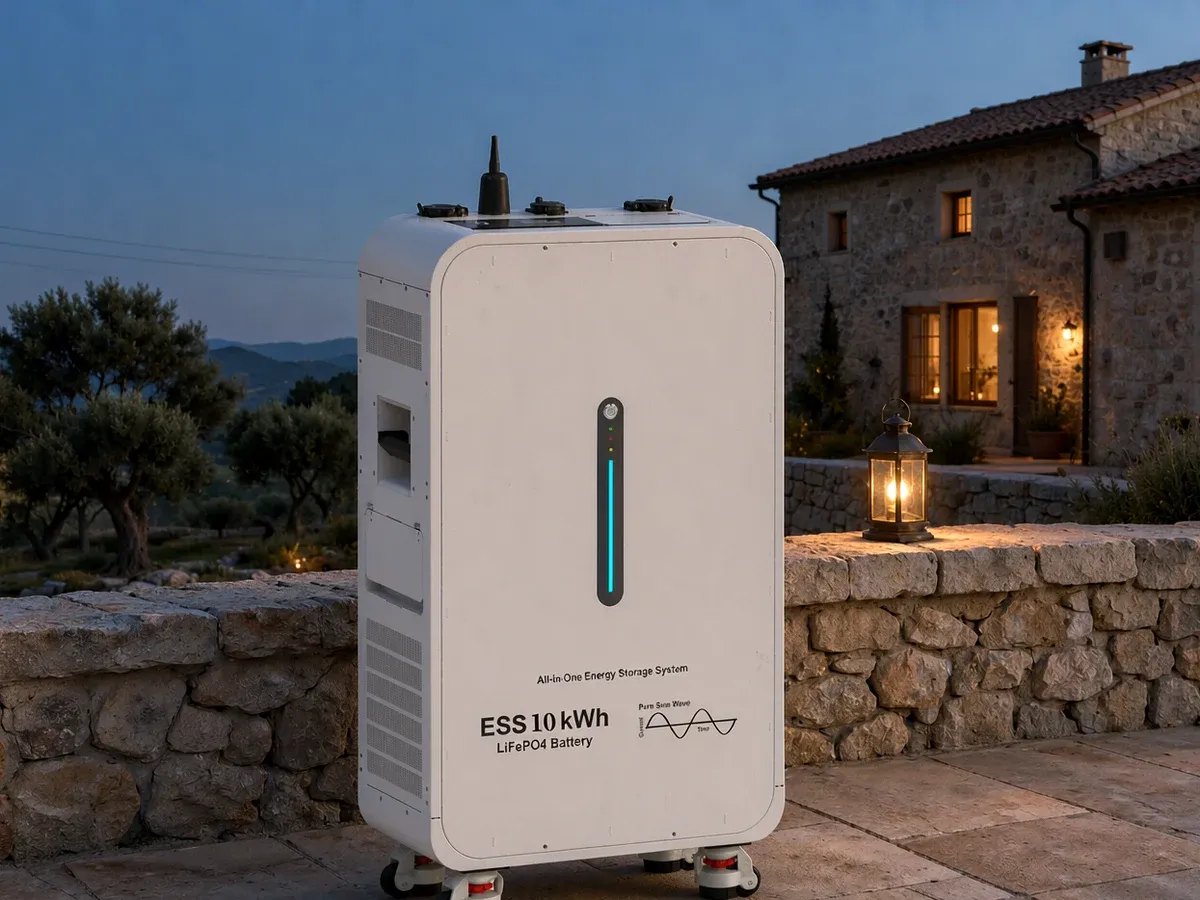
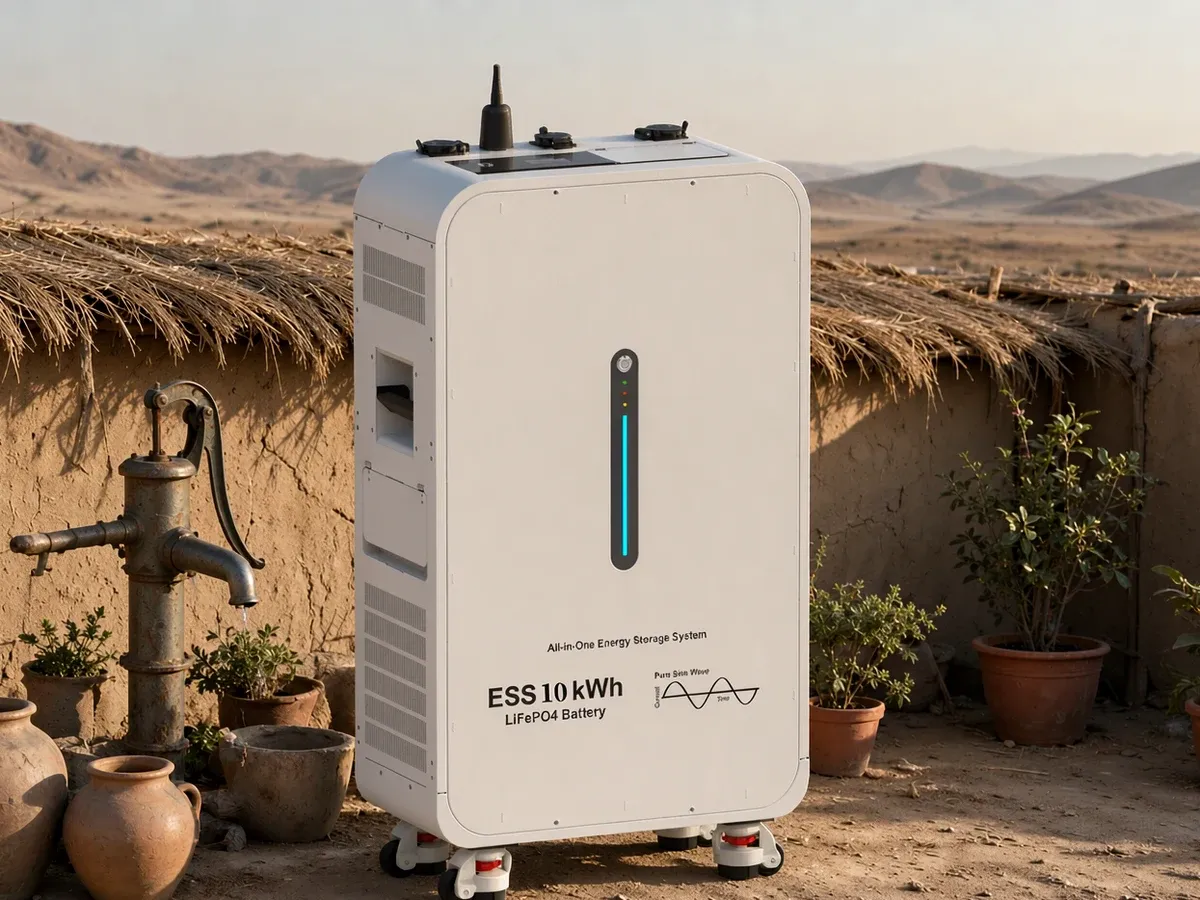
For a home, clinic or small site beyond a stable grid, storage is the backbone of supply, not a backup you hope never trips. Size it to daily kilowatt-hour use plus two to three autonomy days for cloudy or calm weather, then pair it with generation that reaches the site. Across remote communities in Asia, Africa and Central Asia, a practical starting point is one 10-16 kWh LiFePO4 cabinet per household, scaled by load and autonomy days; list what runs and for how long before ordering, since a wrong guess here is costly.
Why Remote Areas Treat Storage as the Primary Supply
On-grid homes treat a battery as insurance; a remote site treats it as the grid. There is no meter to import from and no silent utility to cover a sizing mistake. A remote clinic or farmstead depends on the stored energy between charges. That changes the rules: you size for the worst week, not the average evening, and you make generation (a PV array by day, sometimes a generator or micro-hydro) part of the same plan. Read how energy storage solutions are specified for standalone supply before you budget.
How to Size Storage for a Remote Site
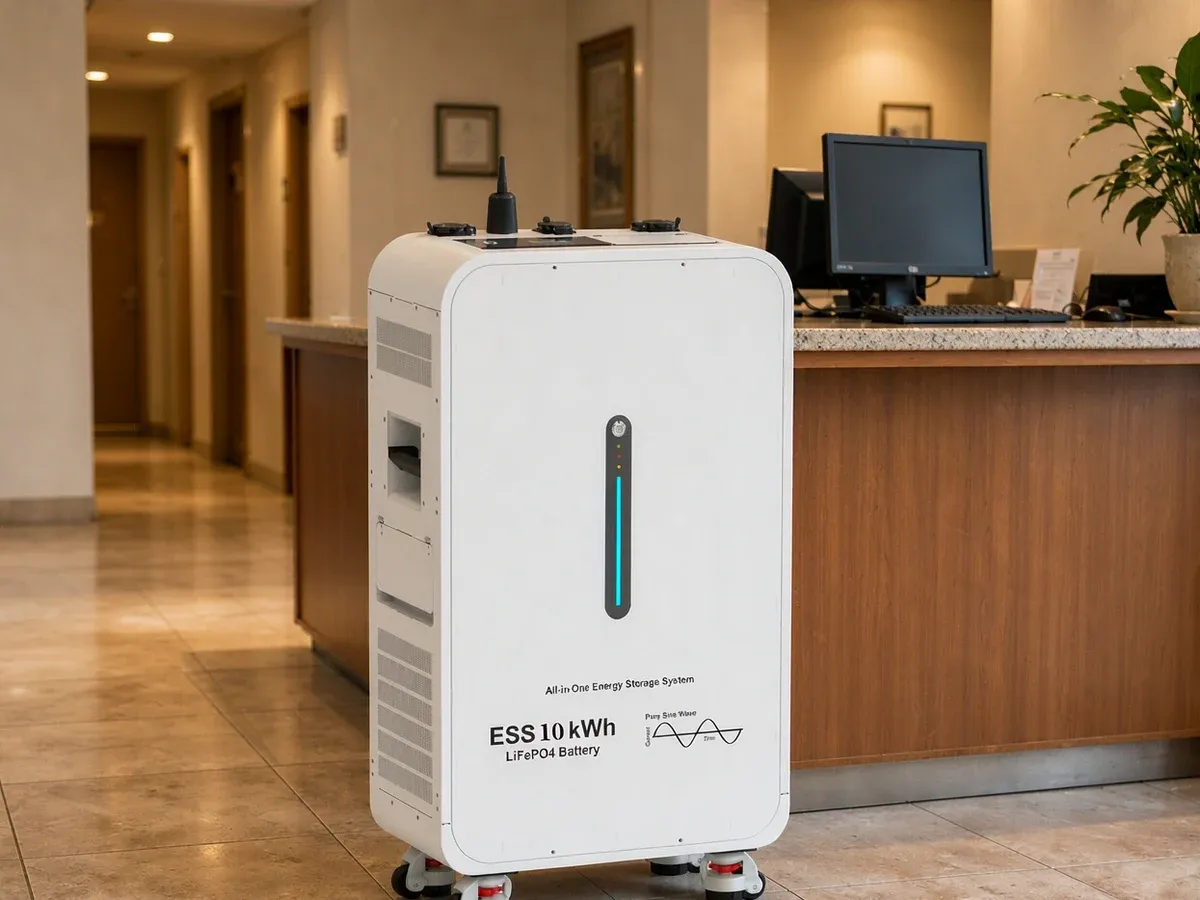
Work backwards from consumption, not a catalog. Two numbers drive everything: daily kWh of essential loads and autonomy days without sun or fuel. A remote home running lights, a fridge, a fan and a few sockets at night might pull 6-12 kWh a day; add a clinic fridge or water pump and it climbs fast. Multiply daily kWh by autonomy days and divide by the usable depth of discharge your supplier states to get the cabinet size. A single 16 kWh villa unit covers a modest off-grid home for one to two days; two or three in parallel serve a site with real refrigeration or pumping.
Use this first-cut reference, then confirm with a written load sheet:
- 6-12 kWh daily, 1-2 autonomy days: one 10 kWh cabinet, essential loads only.
- 12-20 kWh daily, 2 autonomy days: one 16 kWh cabinet or two 10 kWh units.
- 20+ kWh daily, 2-3 autonomy days: two or more 16 kWh cabinets in parallel, planned from day one.
What breaks most remote builds is the motor load. A pump or fridge becomes a problem only when the ambient hits 40C and the motor runs double time; size for the hot season and confirm the inverter handles motor inrush.
Applicable Boundary: When One Cabinet Stops Being Enough
Storage stops being the right answer alone when the site draws at the scale of a small business, resort or village mini-grid: dozens of buildings, commercial refrigeration, irrigation pumps. At that point a residential cabinet is undersized and you should move to commercial and industrial storage sized in hundreds of kilowatt-hours. A second hard boundary: if you need weeks of autonomy with no charging source, no battery bank stores that economically. Know the line before buying, because undersizing a site that needs a small power plant wastes the money twice.
Lead Time, MOQ and Pilot Orders: Confirm Up Front
None of these numbers should be trusted from a brochure. Lead time depends on whether the cabinet is a standard build or configured to your site, plus shipping and import steps, so ask for a written working-day figure and a commissioning plan. MOQ and tiered pricing follow volume; request the written price ladder at 1, 5 and 20 units so you see the real curve instead of a single quote. Equipping several sites? Ask for a single-cabinet pilot first: one unit proves the load profile before you commit the rest. Treat any 'fast and cheap' answer without a document as unconfirmed. Our factory page explains how configurable builds are handled.
Failure Conditions: When to Talk Yourself Out of It
Be honest about where a battery is the wrong first purchase. It fails in three cases: your daily load is so large that the cabinet count becomes a small power plant, where generation-plus-storage is the real project; you have no charging source at all and expect the battery to refill itself, which it cannot; or your autonomy requirement is weeks, not days. A supplier who claims one cabinet ends every outage is selling capacity, not a solution. Match the system to a real charging source and a real number of days, or hold the order.
Testing and Acceptance: How to Know It Really Works
Delivery is not the finish line, especially where service is far away. Request the factory commissioning report and, on site, run a controlled discharge against your actual load for the rated hours; never trust a capacity figure you did not measure at your own temperature. Cells should ship with UN38.3 and MSDS documents, which prove safe transport, not ten-year life. For the system, ask for IEC 62619 and, where required, UL 9540A numbers, then verify them with the issuing body. No certificate proves cycle life; read any cycle claim against its test depth-of-discharge and temperature. Solid after-sales support names who commissions the unit and how remote faults are handled, because a failed cabinet far from a service center is a real cost.
Parameters You Must Hand the Supplier
Before asking for a quote, write down what changes the design: service voltage and phase, because a single-phase home and a three-phase site need different inverters; daily kWh and autonomy days; the ambient temperature range, because a cabinet specced for mild weather derates in a hot dry summer; the charging source (PV size, generator, or micro-hydro); and any space or dust-ingress limit where the cabinet will sit. Hand that sheet over and ask for a system built to it. A supplier who quotes from your load sheet, not a catalog number, is worth a second email.
A Checklist You Can Paste Into Your Inquiry Email
Copy this and send it to any supplier you are comparing:
- Our site uses about __ kWh per day (list the loads: ___).
- We need __ days of autonomy with no sun and no fuel.
- Service is __ V, __ phase, located in __ (country or region).
- Ambient temperature range is __ to __ degrees C.
- Charging source: __ kW of PV / generator __ kW / micro-hydro __ kW / combination.
- Send written lead time, MOQ and the price ladder for 1 / 5 / 20 units.
- Which certificates ship with the cells (UN38.3, MSDS) and the system (ask for IEC 62619 / UL 9540A numbers to verify)?
- What do commissioning and after-sales cover, and from where?
Common Questions From Remote-Site Owners
Can a remote home run fully on storage with no grid at all?
Yes for days, not forever. Storage alone covers your autonomy window quietly and without fuel; beyond that window, with no sun and no generator, it empties and stays empty. Most remote sites pair the battery with a PV array for daily recharge and keep a generator for the rare bad-weather stretch. Plan the battery for the normal case and the generator for the exception.
How many days of autonomy do I need in a remote area?
Two to three days covers the vast majority of sunny remote sites, because a PV array usually recharges within a day. Push to four or five only if your site sees multi-day storms or cannot easily run a generator. More autonomy means more cabinets and more cost, so size to your real weather, not to a round number someone quoted. State the days and let the supplier size to them.
Do I need a PV array for the battery to work?
The battery works without PV; it charges from any source, including a generator, micro-hydro or the grid if one exists. But a remote site with no charging source is just a battery waiting to empty, so you need at least one. A PV array is the quiet, fuel-free choice for daily recharge; a generator or micro-hydro covers the long bad-weather stretch. Say which you have now and which you plan, so the inverter is specified for it from the start rather than retrofitted later.
Which certificates should the supplier provide?
For the cells, expect UN38.3 and MSDS with the shipment, proving safe transport, not ten-year life. For the system, ask for IEC 62619 and, where required, UL 9540A, and request the actual certificate numbers so you can verify them with the issuing body. A certificate that cannot be looked up is decoration. Ask what each covers and what it does not, because buyers lose money trusting a logo that means less than the salesperson implied.
Send Us Your Load Sheet
If your site sits beyond a stable grid, send us your daily kWh, autonomy days, voltage and phase, and charging source. You get a sizing sketch and a document checklist back, not a brochure. Start on our contact page or browse the home energy storage range to see what a configured off-grid cabinet looks like.