Oct 14, 2026Residential ESS
What Should You Send a Home Battery Supplier Before Asking for a Quote?
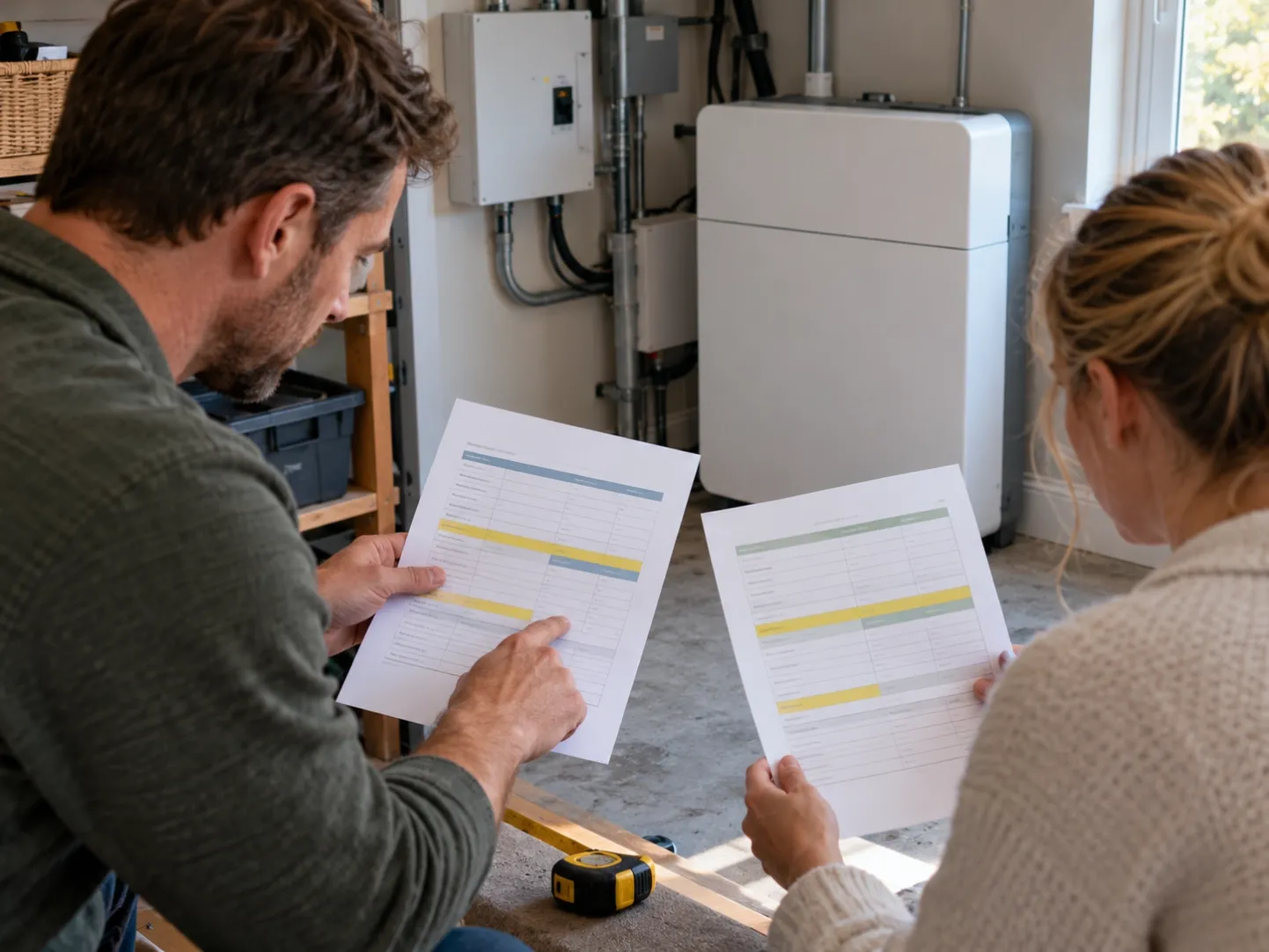
A useful home battery quote starts with load priorities, electrical details and the site—not a guessed capacity. Send this short evidence pack to get a recommendation that can be checked.
The fastest way to make a home-battery quote vague is to begin with one number: “I think I need 10kWh.”
Capacity matters, but it is only one part of the decision. A supplier also needs to understand which circuits must stay on, how much power the home can draw at once, where the battery could go, and what the owner expects during an outage. Send the right evidence first and the conversation becomes much more useful.
THE SHORT ANSWER
Before asking for a home battery quote, send four things: your priority loads, the home’s electrical information, the proposed installation area and your operating goal. Add the latest electricity-bill or usage information if you want a self-consumption or tariff discussion.
THE EVIDENCE PACK THAT SAVES A ROUND OF EMAILS
Essential-load list — Shows what the battery is expected to support. Include the refrigerator, lights, router, pump, heating, cooking loads or other named circuits.
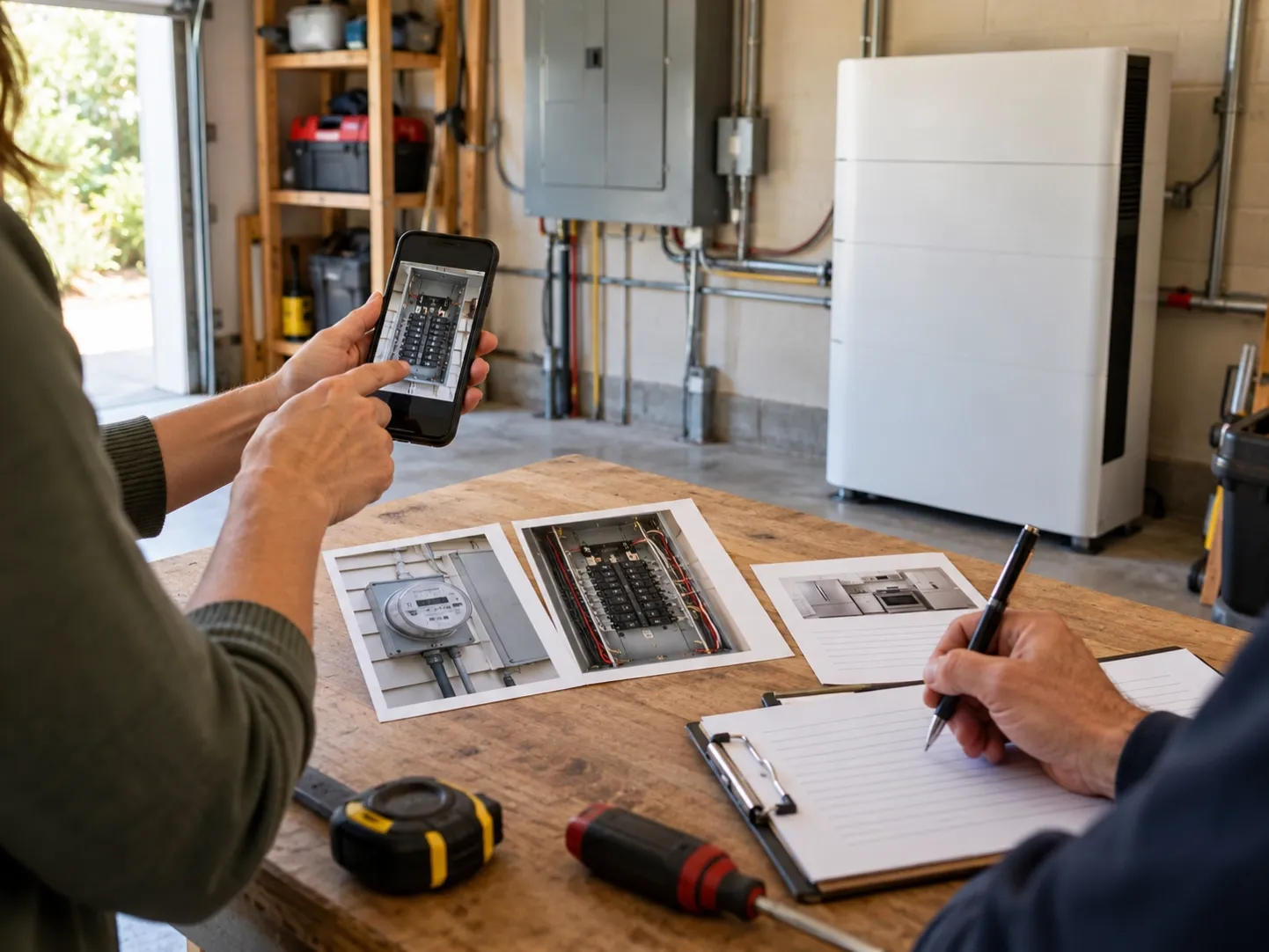
Main-panel photo — Helps identify the supply arrangement and space constraints. Send one clear photo with labels visible, and hide personal details.
Appliance labels — Reveals running or rated demand. Photograph large loads such as HVAC equipment, pumps, cooktops and vehicle chargers.
Installation-area photos — Flags access, clearance, moisture and cable-route issues. A wide shot plus two close-ups from different angles is usually enough for a first review.
Outage objective — Separates “keep essentials alive” from “run the whole house.” Say whether you want overnight backup, short outage cover or support through repeated outages.
Supply and inverter details — Determines compatibility questions early. Note single-phase or three-phase supply, existing inverter, solar and battery information. If you do not know, write “unknown.”
You do not need to turn the first email into a building survey. Clear photos and a plain-language description are more useful than a spreadsheet full of guesses.
START WITH THE LOADS, NOT THE CATALOGUE
Write two lists: MUST STAY ON and NICE TO HAVE. A refrigerator, internet router and a few lights usually belong in the first conversation. Electric cooking, heating, pumps and EV charging need closer attention because their power can change quickly or overlap.
This distinction prevents a common mistake: choosing a capacity that sounds right while forgetting inverter output and backed-up circuit design. A battery can have energy remaining and still be unable to carry a simultaneous peak load.
WHAT A SITE PHOTO CAN REVEAL
A good installation photo helps a supplier ask the right follow-up questions about safe working space and service access; distance to the main panel and inverter; indoor or outdoor exposure, moisture and temperature; cable routes, doors, drains and trip hazards; and whether the intended wall or floor can support the equipment.
These are site-planning questions, not promises about a particular model. Final placement must follow the product documentation and local electrical requirements.
BE CLEAR ABOUT WHAT IS UNKNOWN
If you do not know the home’s peak demand, say so. If the electricity bill is incomplete, say so. If you only have a product photo and not the current datasheet, do not fill the gap with a confident-looking number.
A careful supplier can mark the missing item and tell you how to obtain it. That is better than turning an assumption into a quotation that fails at installation.
A MESSAGE YOU CAN SEND
We are evaluating a home battery for [location]. The loads that must remain during an outage are [list]. The home is [single-phase/three-phase/unknown]. The proposed battery area is shown in the attached photos. We want [backup objective]. Please tell us which additional data you need before recommending a configuration.
That message gives the supplier a decision to make and a clear path to ask for more information. It also creates a useful record for comparing different quotations.
WHAT TO COMPARE AFTER THE FIRST REPLY
- Is the quoted capacity nominal or usable?
- What continuous and peak output is documented for the proposed configuration?
- Which circuits are actually backed up?
- What reserve or shutdown settings affect the available energy?
- What installation, commissioning and after-sales support is included?
The answers should refer to current product documents. If a figure is not documented, label it as a question instead of treating it as a feature.
SEND THE EVIDENCE PACK FOR A PRACTICAL DISCUSSION
Review LinkPower energy-storage solutions at /energy-storage-solutions and the 5kWh home battery at /products/5kwh-residential-battery-backup-system. Then send the load list, panel photo, installation-area photos and backup objective. The more specific the evidence, the less likely the recommendation is to be a catalogue guess.
FINAL CHECK BEFORE YOU PRESS SEND
Remove names, addresses, account numbers and any private information the supplier does not need. Keep the technical details clear. A useful enquiry is not the longest one; it is the one that lets the other side answer the real question.