2kWh vs 4kWh Portable Power Station: Which to Choose?
Picking between a 2kWh and a 4kWh portable power station comes down to the worst day you need to cover. Both run the same devices - phones, lights, a router, a fan, a small fridge - but the 4kWh pack
2kWh vs 4kWh Portable Power Station: Which to Choose?
Picking between a 2kWh and a 4kWh portable power station comes down to the worst day you need to cover. Both run the same devices - phones, lights, a router, a fan, a small fridge - but the 4kWh pack lasts twice as long and absorbs a bigger surge. This guide compares real runtimes, the loads that decide, and where each size pays off for outages, camping and off-grid work in Asia, Africa, the Middle East and Latin America.
Picking between a 2kWh and a 4kWh portable power station comes down to one question: what is the worst day you need to cover? Both run the same devices - phones, lights, a router, a fan, a small fridge - but the 4kWh pack simply lasts twice as long and shrugs off a bigger surge. If your plan is a single evening of lights and charging, the 2kWh unit is lighter to carry and cheaper to ship. If you also run tools, a second fridge, or a weekend of festival power, the 4kWh station is the floor, not the upgrade.
What the Numbers Mean Before You Compare
A 2kWh station stores about 2,000 watt-hours; a 4kWh stores about 4,000. You can actually use roughly 85 to 90 percent of that after the inverter's overhead. The device math is identical for both: take the watts a gadget draws, divide into the stored watt-hours, and you get the run time. A 40W fan runs about 40 hours on 2kWh and about 80 on 4kWh. A 100W LED string runs 17 hours on 2kWh and 34 on 4kWh. The capacity only changes how long, never what.
A Night With 2kWh
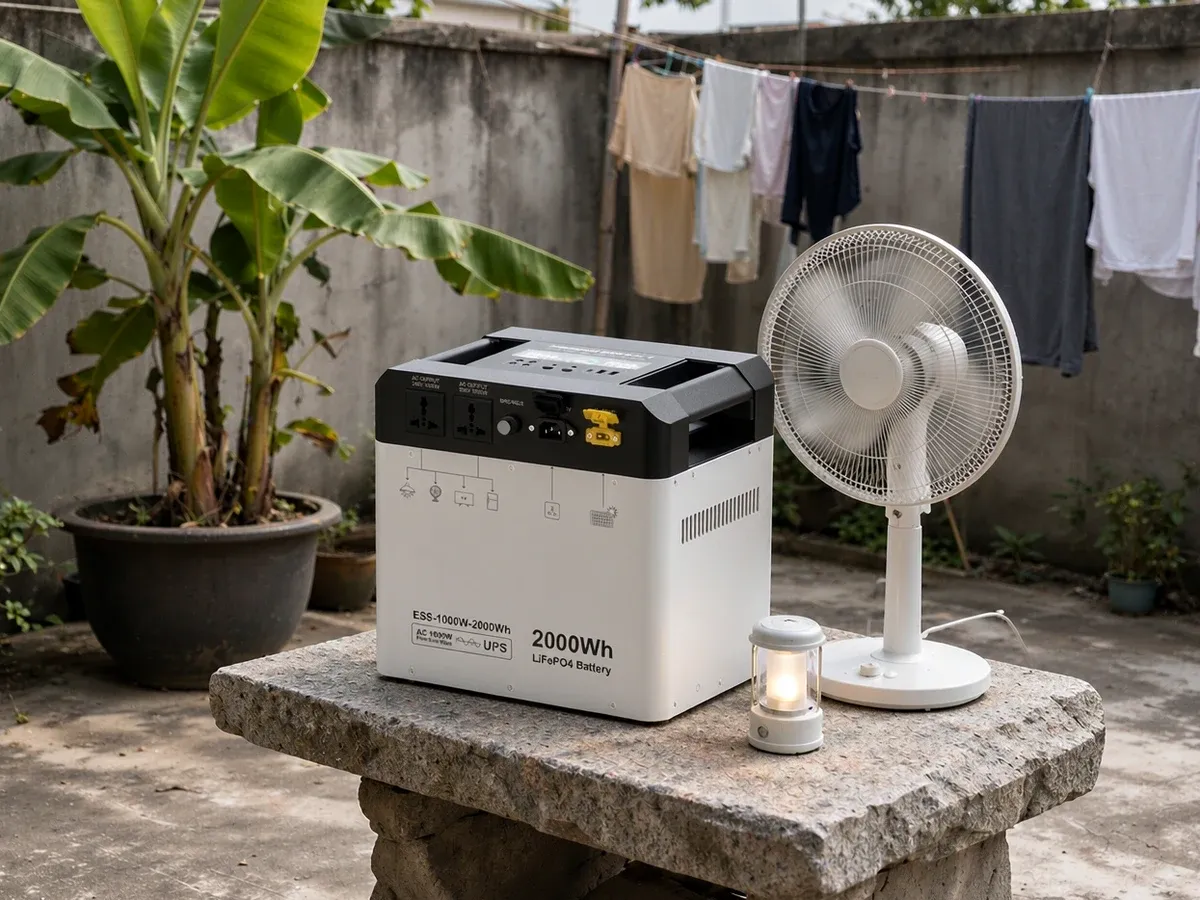
Load a 2kWh pack with the things that actually matter during an outage or a night off-grid: six LED bulbs (60W), a router (10W), a pedestal fan (40W), phones and laptops for the family, and a bar fridge that cycles at 120W. Steady draw sits near 230W. The pack holds roughly 8 to 10 hours before the fridge's compressor and the fan drain it - enough to get a household through the dark hours and keep everyone charged. See the 2kWh compact unit for the exact ports and surge rating.
A Night With 4kWh
Double the capacity and the same load stretches to 18 to 20 hours - you sleep through and still have reserve at noon. Add a chest freezer (150W cycling) or a small worksite with a 600W angle grinder for short bursts, and the 4kWh pack absorbs it while the 2kWh unit would tap out by midnight. With a 4kWh station the difference shows up the moment you stop rationing power and start using it normally.
The Loads That Decide, Side by Side
Lights and phones: either size, days. Router and fan: either size, a full night plus. Bar fridge: 2kWh gives 8 to 10 hours, 4kWh gives 18 to 20. Chest freezer: 2kWh struggles past 6 hours, 4kWh runs past a day. Power tools at 500 to 800W: 2kWh manages short bursts, 4kWh runs them for a morning. The crossover sits around 400 to 500W of steady draw with a fridge-sized cycling load - below that, buy the smaller pack and save the weight; above it, the 4kWh pays for itself.
Match the Worst Day, Not the Average
Buy for the evening everything goes wrong, not the calm Tuesday. A family that only needs lights and phones during a two-hour brownout wastes money on 4kWh. A field team that runs a fridge, a drill and a laptop through a 14-hour power cut needs the 4kWh and probably a second pack. Portable energy storage spans the 1 to 4kWh range for exactly this reason - size to the bad day, then stop.
Technical Notes Most Buyers Skip
LiFePO4 chemistry is why these packs survive daily cycling and enclosed spaces; it holds up far better than older lithium types and stays stable. Check the inverter surge rating before you trust it with a fridge or a power tool - a 2kWh unit often peaks near 2,000W, a 4kWh near 3,000W, and the compressor spike is what trips a weak inverter. Recharge matters too: from a wall socket most refill in 2 to 3 hours, from a 12V car outlet figure 8 to 12 hours, and from a foldable panel plan around a half-day of sun. Cells should be Grade A and traceable - ask the supplier for the cell-grade report. For whole-home thinking beyond the pack, home energy storage covers the fixed installs, and our technology page explains the integrated inverter and BMS we build in.
Where the Choice Pays Off
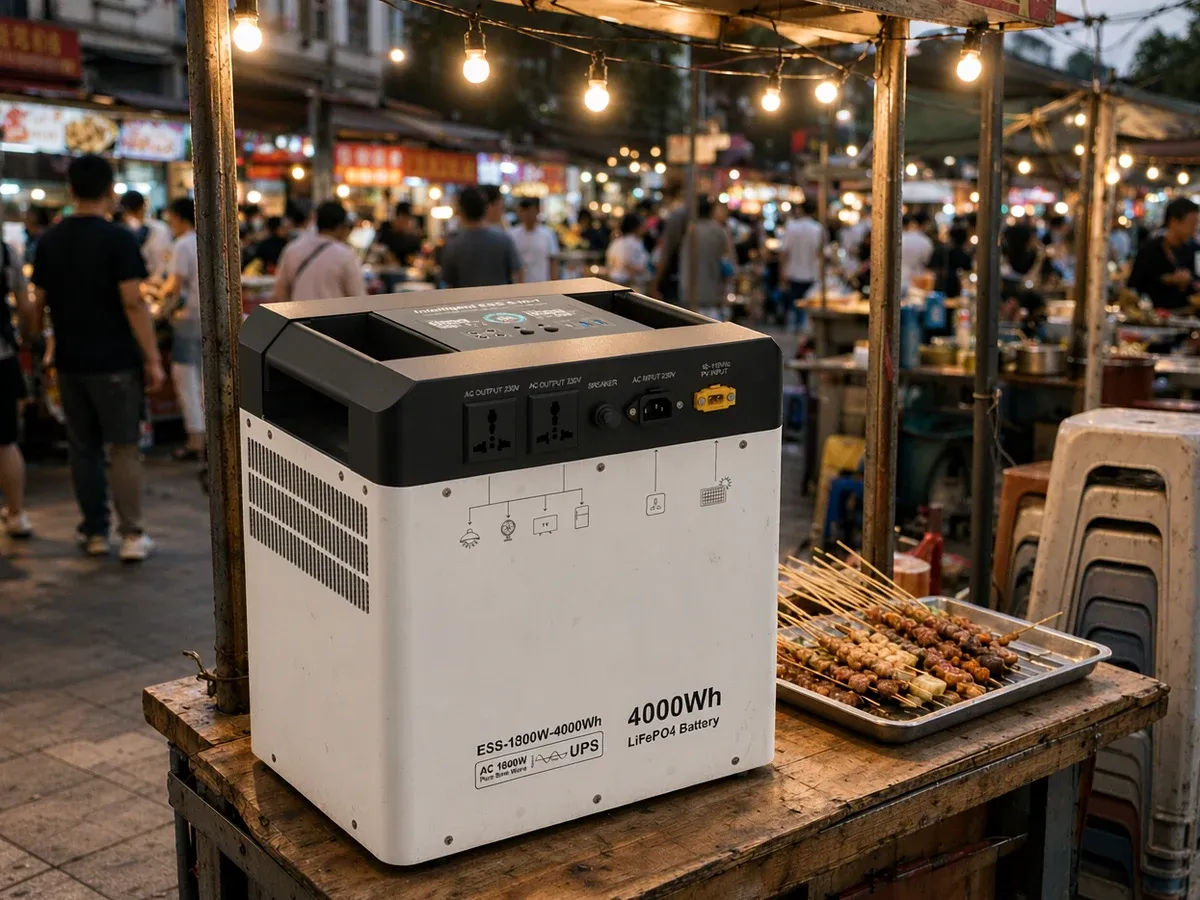
Neither pack is built for a wall of batteries in a suburban garage; both earn their keep where the grid is thin or absent. Market stalls in Lagos and Jakarta run POS terminals and lights past sunset on a single 2kWh unit. A remote clinic in rural Kenya keeps a vaccine cooler and chargers alive on 4kWh through the night. Street vendors across the Middle East and Latin America skip the noisy generator for a quiet evening of charged devices and a fan. Field engineers in Indonesia power test gear without a truckload of lead-acid. The 2kWh wins on weight and shipping cost; the 4kWh wins the moment the job runs past breakfast.
Questions Buyers Ask
Can a 2kWh station run a refrigerator?
Yes, a compact bar fridge for about 8 to 10 hours, and a full-size one for roughly half that. A chest freezer is a stretch on 2kWh but comfortable on 4kWh. Confirm the surge watts first - the compressor spike is the part that trips a small inverter.
Is 4kWh too heavy to move around?
Not for what it does. A 4kWh pack weighs more than a 2kWh and you will feel it, but it still lifts like a large toolbox and rolls on its own wheels. If you carry it by hand every day, the 2kWh is the kinder choice; if it sits in a vehicle or a stall, the 4kWh's weight stops mattering.
How do I know which size my site needs?
Add up the watts of everything you must run at once, then multiply by the hours you need them. A 230W load for 10 hours is 2,300Wh - that points at 4kWh once you leave reserve. Send the list and we will size it, no guessing.
Are these safe to keep in a tent or a bedroom?
LiFePO4 is the stable choice for enclosed use and far less prone to thermal runaway than older cells. Still keep it on a flat surface with airflow, and ask the supplier for UN38.3 and MSDS shipping and safety documents before you import or carry one across borders - those papers are standard for compliant units.
Tell Us Your Loads
Send your device list, the watts of the biggest thing you must run, your AC voltage, and how long you need it, through the contact page. Our engineers will tell you straight whether the 2kWh unit covers your night or the 4kWh station is the honest fit - no upselling, just the watt-hour math.