Portable Energy Storage for Outdoor and Backup Use
A portable energy storage unit earns its keep the moment the wall socket dies or you leave the wall behind. This guide covers outdoor and backup use with concrete runtimes - what it runs, how to size
Portable Energy Storage for Outdoor and Backup Use
A portable energy storage unit earns its keep the moment the wall socket dies or you leave the wall behind. This guide covers outdoor and backup use with concrete runtimes - what it runs, how to size it, and what to check before you buy across Asia, Africa, the Middle East and Latin America.
A portable energy storage unit earns its keep the moment the wall socket stops working - or the moment you leave the wall behind. For most buyers across Asia, Africa, the Middle East and Latin America, the real question is not 'do I need one' but 'how big, and what will it actually run.' This guide covers outdoor and backup use with concrete numbers, not brochure talk.
Where a Portable Unit Actually Pays Off
Three situations show up again and again. Home backup during an outage: a unit on the shelf keeps the lights, the router, a fan and the phones alive for a night or two. Outdoor work and leisure: a food stall, a campsite, a roadside repair, a weekend by the lake. Small-business continuity: a clinic fridge, a barber's clippers, a tailoring machine keep running when the grid drops.
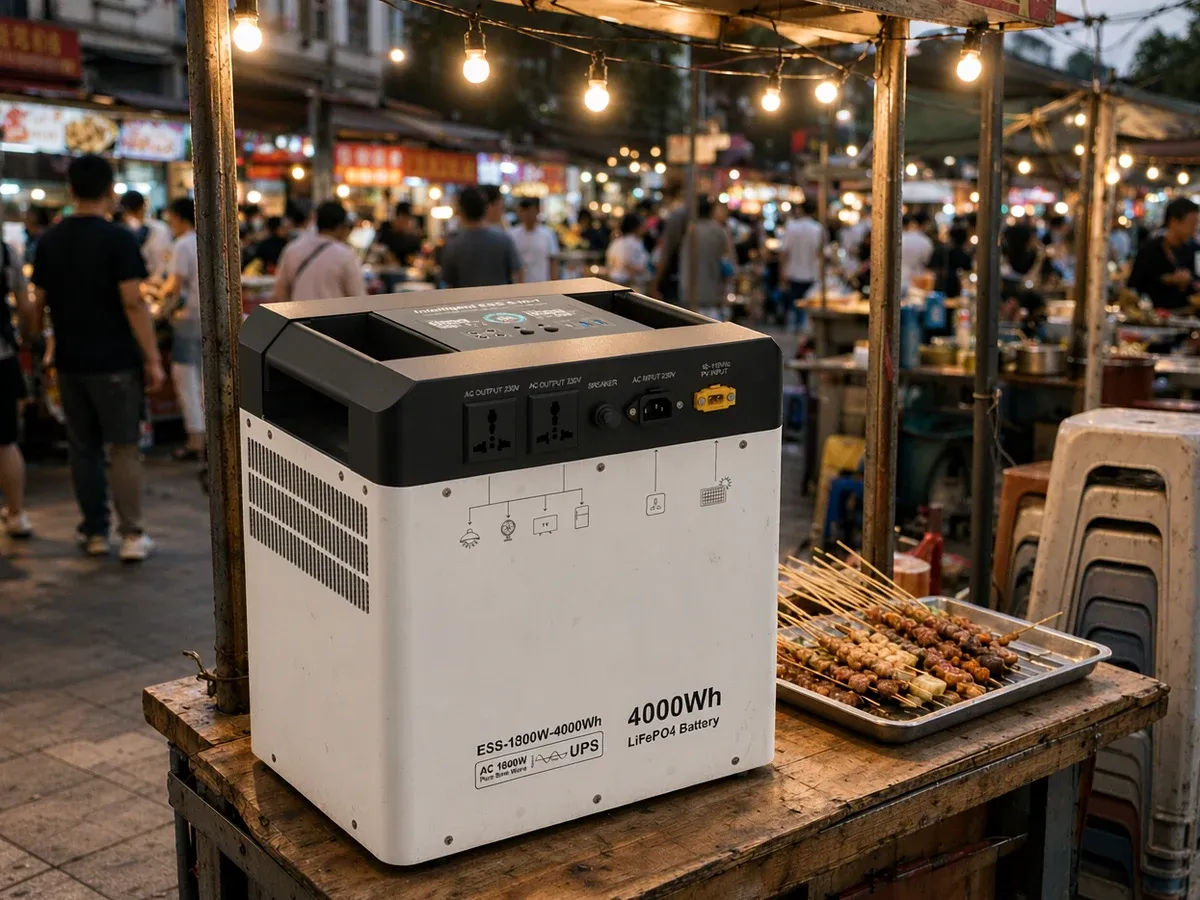
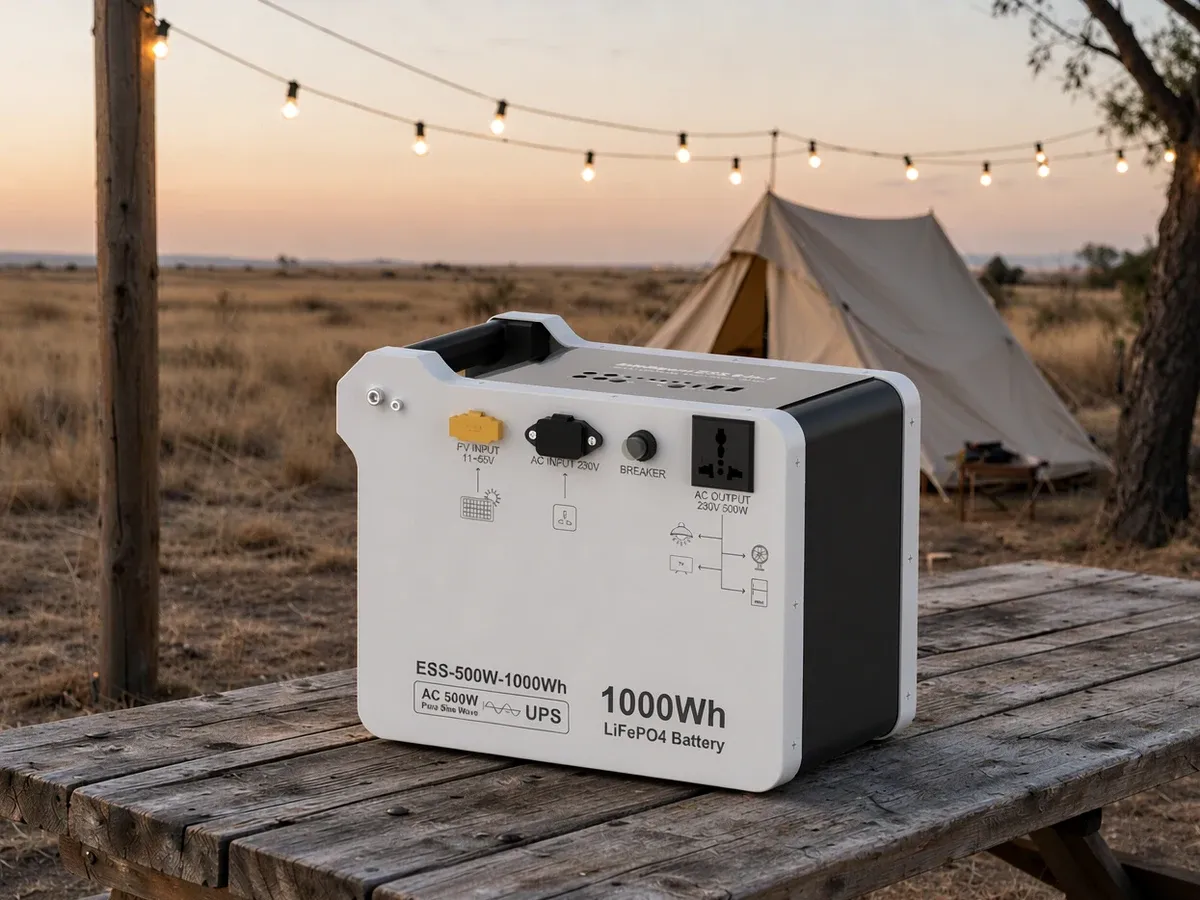
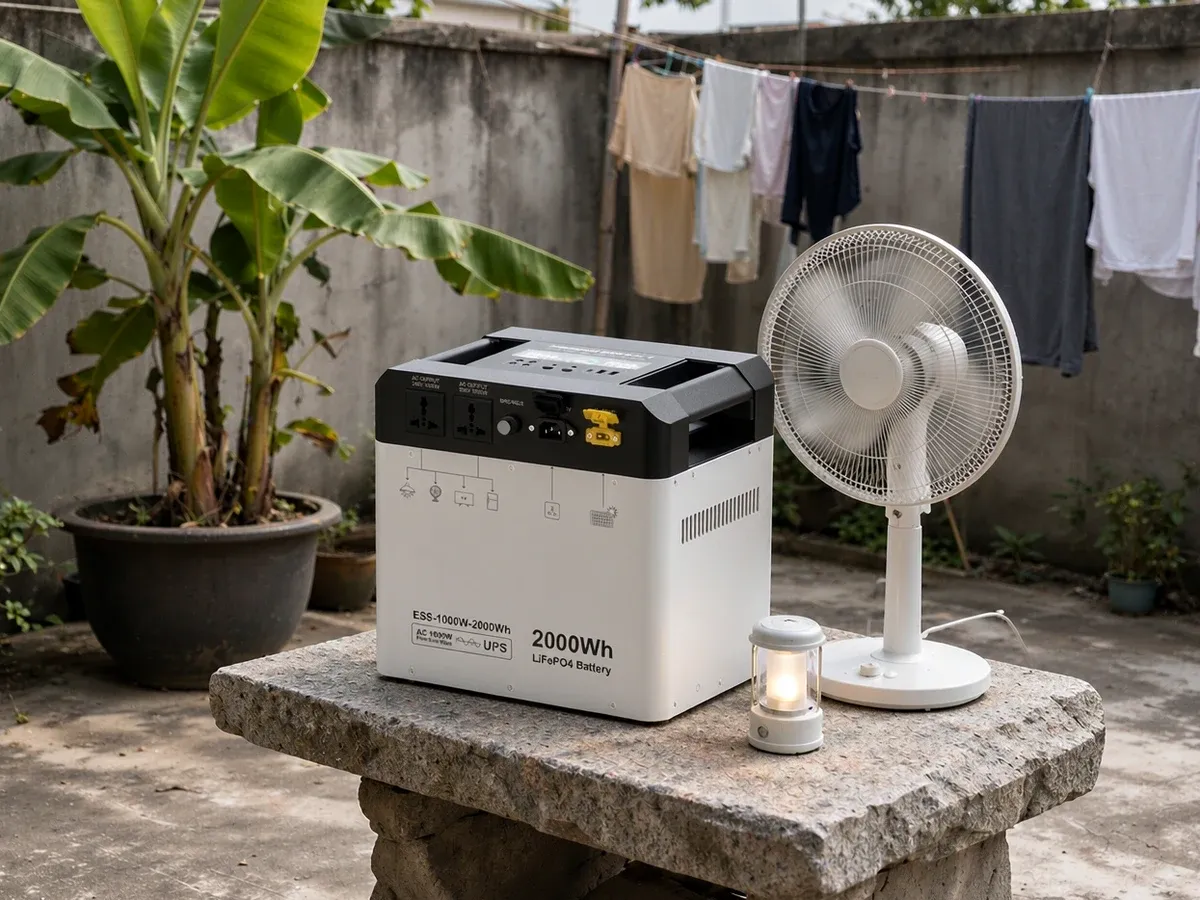
A family outside Manila keeps a 4kWh unit for typhoon season; when the block goes dark they run the living-room fan, two LED tubes and the Wi-Fi for about ten hours. A vendor in Lagos runs a small freezer through evening load-shedding off a 2kWh unit charged during the day. A field engineer in Indonesia powers test gear from the back of a pickup without a truckload of lead-acid. The pattern repeats everywhere: pick the loads, size the battery, stop worrying about the grid for a while. The full portable range runs from 1kWh day-trips up to 4kWh site work.
Sizing It Without Guesswork
Start from watts, not marketing. List each device with its running wattage, add them up, and multiply by the hours you need them. A 50W fan for 8 hours is 400Wh. A 10W router for 10 hours is 100Wh. A 60W fridge that cycles at 40 percent duty for 12 hours is roughly 290Wh. Those three together need about 800Wh, which a 1kWh unit covers with margin; add a laptop and a few phone charges and you are at a 2kWh pack.
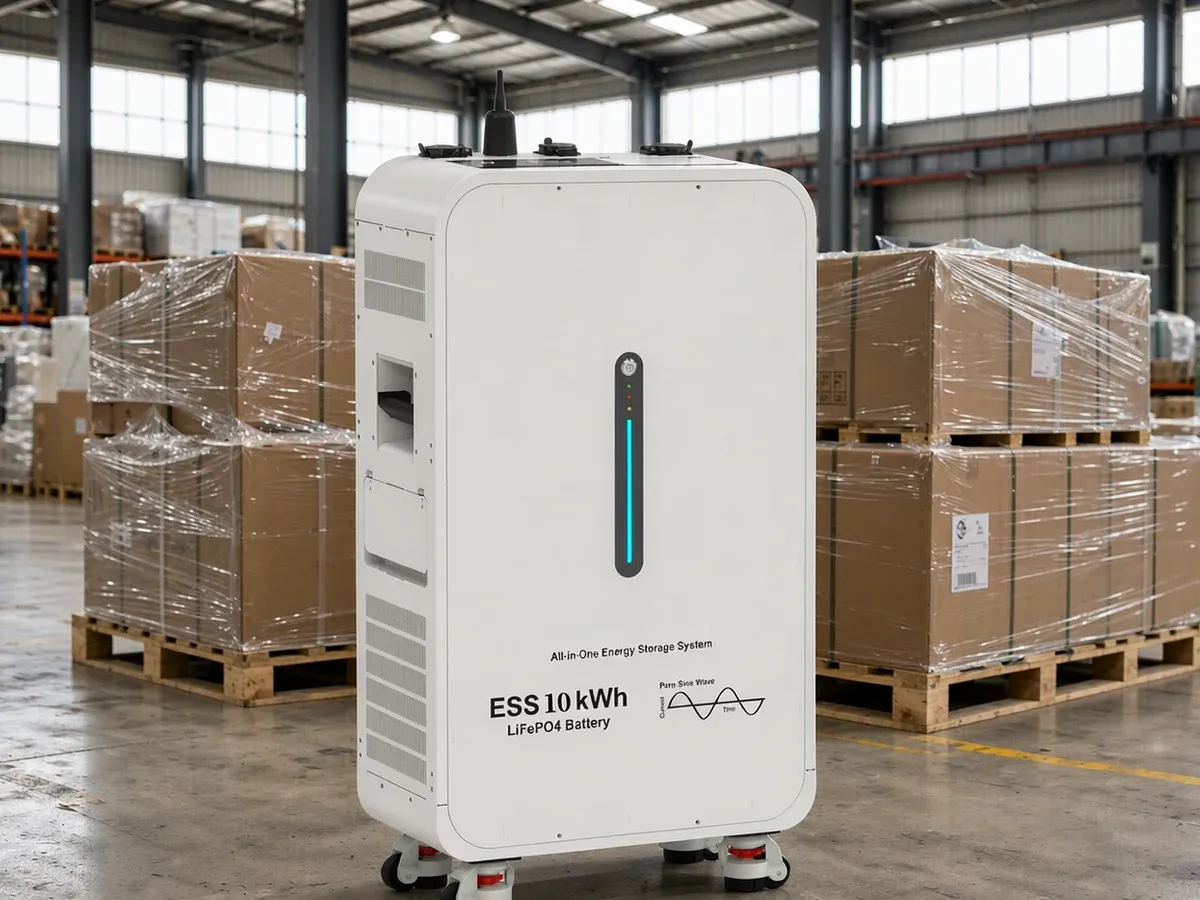
For a longer outage or a small shop, the 1 to 4kWh band is the sweet spot. The 4kWh all-in-one station runs a freezer and lights together, while the 1kWh portable battery suits light backup and day trips. Both use LiFePO4 cells, so daily cycling and enclosed rooms are not a concern. A plain runtime check beats any spec-sheet promise: steady draw near 230W on a 2kWh pack gives you 8 to 10 hours before the fridge and fan drain it, and near double that on 4kWh.
What to Check Before You Pay
Capacity is the headline; the rest decides whether the unit is actually usable. Output voltage comes first - most homes and small businesses across Asia, Africa, the Middle East and Latin America run 220 to 240V, so confirm the AC outlets match your region before you buy, or half your devices will not plug in.
Waveform is the second thing buyers skip. Pure sine wave matters for anything with a motor or a sensitive board - fans, fridges, medical gear, routers. Modified sine wave is cheaper and fine for bare bulbs, little else. Recharge paths matter for where you take it: a wall outlet is fastest, a 12V car socket is slow but useful on the move, and pairing with a foldable solar charger stretches off-grid days, though it will not fully refill a 4kWh unit in one afternoon of sun.
Paperwork closes the sale or kills it at the border. Ask the supplier for the cell grade and a UN38.3 test report, and request the MSDS before you ship. Request the documents, do not assume them - a compliant unit arrives with the papers, a vague one does not.
When a Portable Unit Is the Wrong Tool
Portable is not whole-house. If you want to run an air conditioner, a water pump and the cooktop through a multi-day blackout, you need a fixed residential or C&I system, not a box you can carry. Portable also should not be the only thing between a vaccine fridge and a spoiled batch - for that, size a proper backup install and treat the portable as the top-up.
The honest rule: if you can lift it and carry it, it will run your essentials for a night, not your whole life for a week. A desert camp in the Middle East keeps phones, lights and a small cooler happy on 2kWh; a village clinic that must hold cold chain for two days needs the fixed install. Know which problem you are solving before you spend.
What to Send the Supplier
If you are buying for resale or a site, give the supplier four things so they quote the right unit: the total load in watts, the runtime you need in hours, your local AC voltage, and where you will use it. That turns a vague 'I need a big one' into a unit that fits. Pull the 2kWh compact unit spec sheet and confirm the ports match your devices before you commit - a mismatch here is the difference between a quiet evening and a returned box.
Questions Buyers Ask
Can one portable unit run my whole house during an outage?
No. It runs the essentials - lights, router, fan, phones, a small fridge - not the cooktop, the AC and the water heater. Whole-house coverage needs a fixed system. Treat the portable as the thing that keeps the important corner alive until the grid returns.
How long will a 1kWh unit last on a single charge?
Depends on the load. A 50W fan plus a 10W router runs about 14 hours; add a 60W mini-fridge that cycles and it drops to 6 to 8 hours. List your watts, multiply by your hours, and the answer is just division - no guesswork, no upsell.
Is LiFePO4 safe to keep indoors?
Yes. It is the stable choice for enclosed use and far less prone to thermal issues than older cells. Still keep it dry, on a flat surface with airflow, and away from direct heat - and ask for the UN38.3 and MSDS documents before you import or carry one across a border. Those papers are standard for compliant units.
Can I recharge it with solar?
Yes, with a foldable solar charger, but slowly. A wall outlet is the practical daily refill; a panel is the off-grid extender, not the main plan. Plan around a half-day of sun to add a meaningful chunk to a 4kWh pack, and size the battery for wall charging first.
Tell Us Your Loads
Picking the right capacity gets easy once you know your loads. Send us your watt list, your target runtime and your local voltage, and we will match a unit from the 1 to 4kWh range - or point you to a fixed system if portable will not cover it. Talk to our team.