Aug 20, 2026Residential ESS
Home Battery Storage FAQ: 12 Questions for Solar Distributors and Installers
A practical home battery storage FAQ for solar distributors and installers, covering sizing inputs, safety, installation, supplier checks and quotations.

A home battery storage system should be selected around the household's real loads, the installation environment and the target market—not from capacity alone. This FAQ gives solar distributors and installers a practical framework for qualifying residential energy storage projects, comparing suppliers and preparing a complete quotation request.
1. What is a home battery storage system?
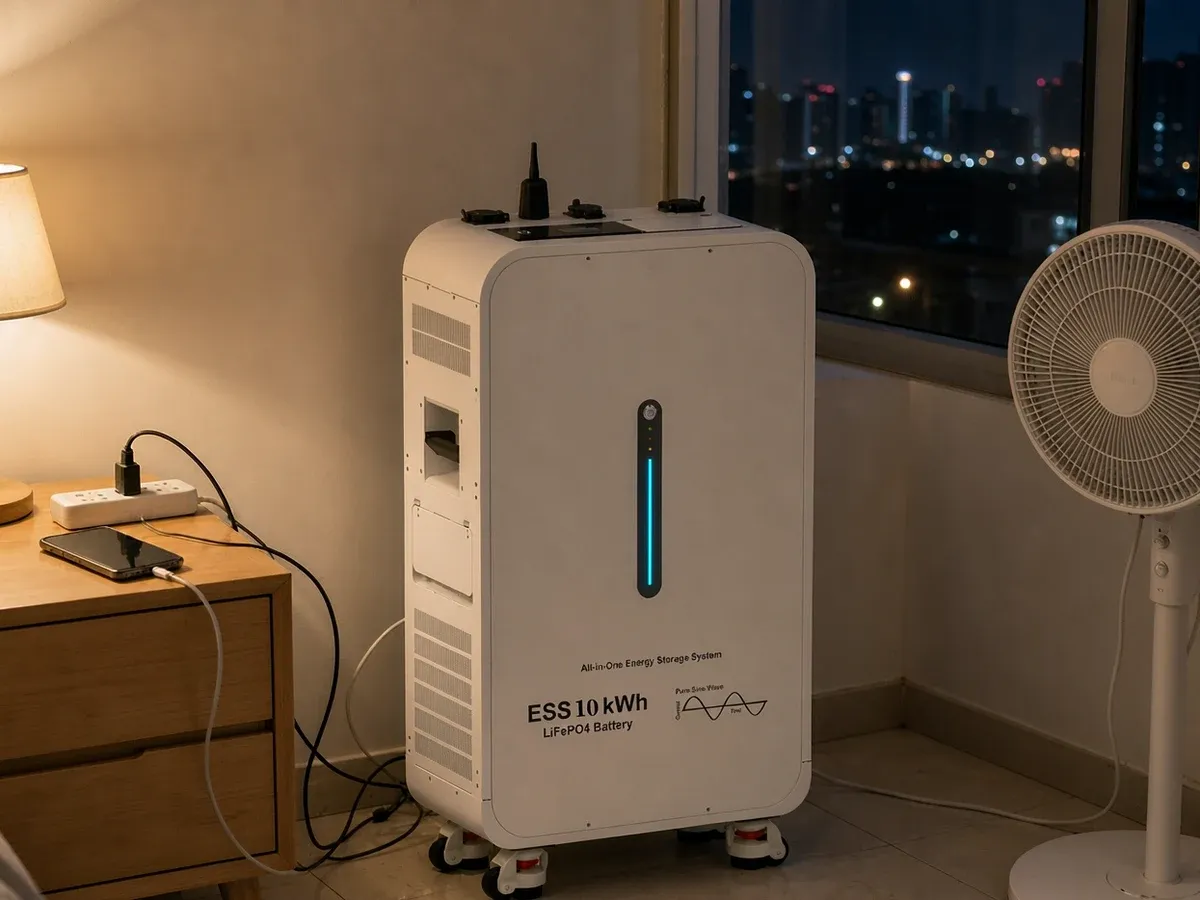
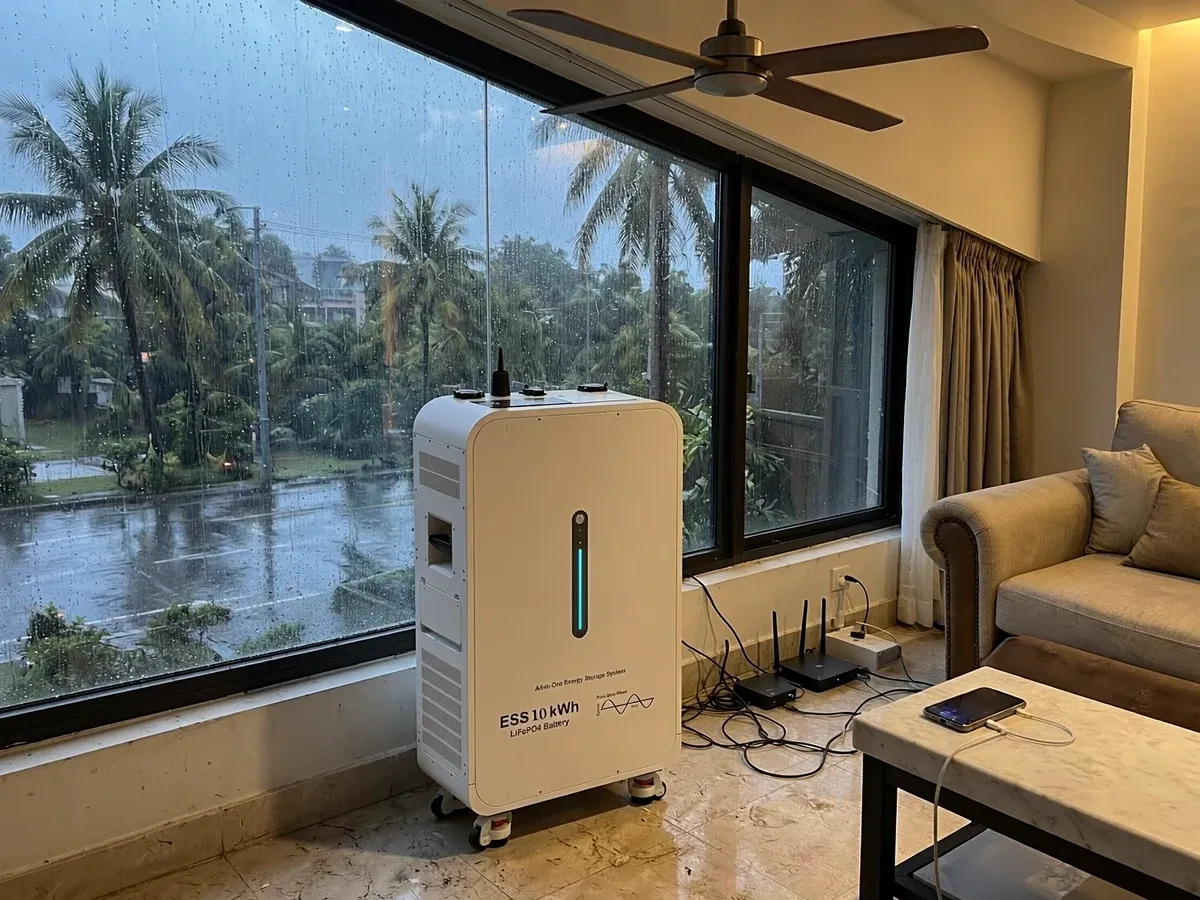
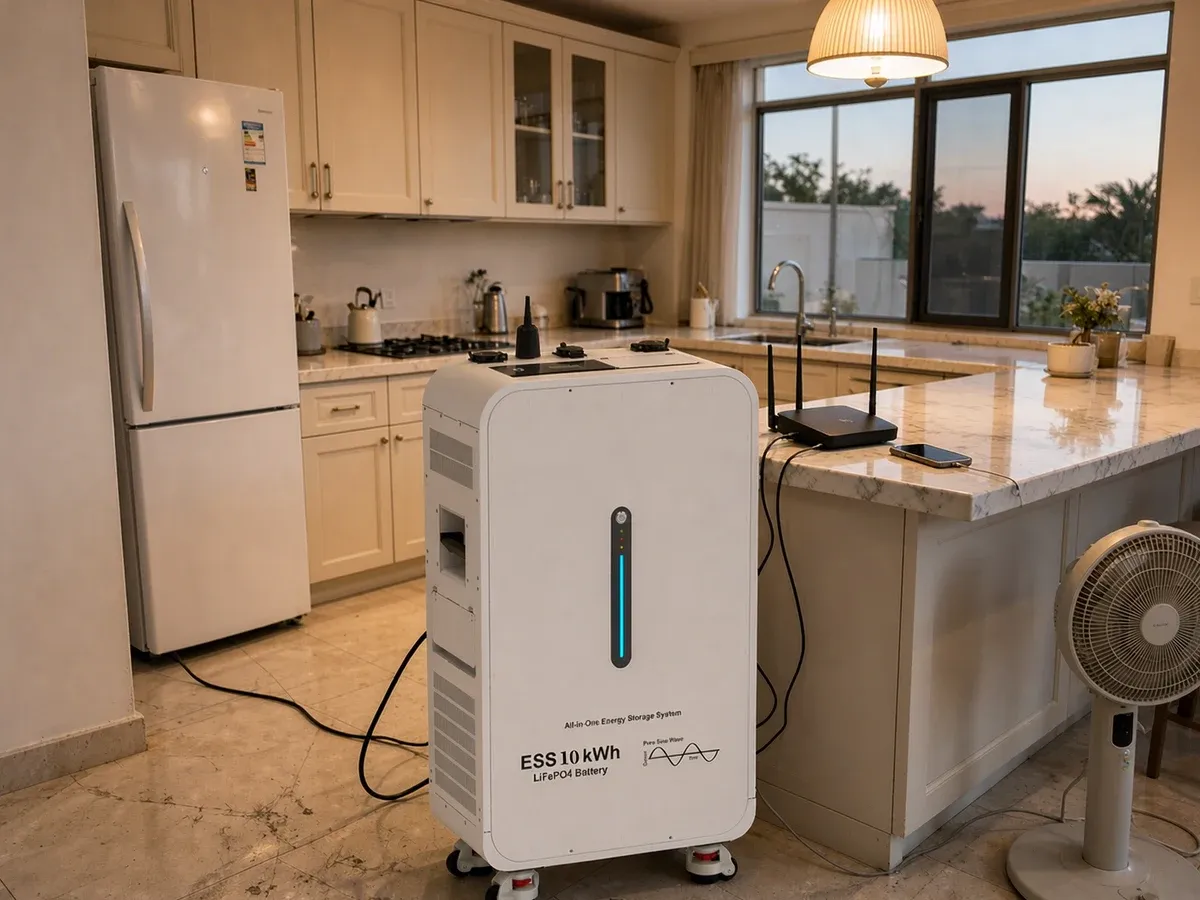
A home battery storage system stores electrical energy for later use in a residence. It can support essential loads during an outage, increase the household's use of solar energy and help manage when energy is imported from or exported to the grid.
A complete solution normally involves more than a battery cabinet. Buyers should confirm how the battery, inverter, battery management system, protection devices, monitoring interface and installation documentation work together.
2. What information is needed before choosing battery capacity?
Start with the home's actual energy profile. Ask the end customer or installer to provide:
- Recent electricity consumption data
- A list of essential and non-essential loads
- The expected backup duration
- The starting and running demand of priority appliances
- Existing or planned solar and inverter information
- Space, temperature and electrical constraints at the installation site
- Possible future loads, such as additional appliances or an EV charger
Without these inputs, a capacity recommendation is only a rough estimate. Our 5kWh, 10kWh and 16kWh home energy storage comparison explains how to structure the first-stage discussion.
3. Does battery capacity equal backup time?
No. Battery capacity is only one input. Actual backup time also depends on usable energy, the connected load, inverter efficiency, operating limits, temperature and the system's control strategy.
A professional proposal should show the assumed loads and operating conditions behind any runtime estimate. Distributors should avoid presenting one fixed backup-time promise without those assumptions.
4. How should buyers compare 5kWh, 10kWh and 16kWh options?
Compare the options by application rather than choosing the largest unit automatically.
5kWh class
This is often considered for focused essential-load backup or households with modest energy needs. Confirm that the selected loads and expected duration fit the project.
10kWh class
This can suit households that want a broader group of priority loads or more flexibility between solar self-consumption and backup use.
16kWh class
This may be considered when the load list, desired resilience or daily energy use is higher. Site space, inverter compatibility and installation planning remain essential.
The right selection must be validated from measured or documented load data. Capacity alone does not confirm output capability, compatibility or runtime.
5. Can a home battery be added to an existing solar system?
Often yes, but compatibility must be checked before an order is placed. The installer should confirm:
- Whether the project uses an AC-coupled or DC-coupled architecture
- The inverter's supported battery voltage and communication protocol
- The existing solar array and grid-connection arrangement
- Metering and energy-management requirements
- Local grid, electrical and installation rules
- Whether any existing warranty may be affected
Never assume two products are compatible simply because their nominal ratings appear similar.
6. Why is LiFePO4 commonly used for residential storage?
LiFePO4 is widely selected for stationary storage because buyers value its cycle-life potential and thermal stability. However, chemistry is only one part of safety.
A residential system should also be evaluated at system level: cell consistency, battery management, electrical protection, enclosure design, thermal management, fault handling, installation quality and user instructions all matter.
7. What safety documents should a distributor request?
Ask the supplier for documentation that is specific to the proposed model and target market. A practical review can include:
- Product datasheet and model identification
- Installation, operation and maintenance manuals
- Battery management and protection descriptions
- Applicable test reports and certificates for the destination market
- Transport documentation where required
- Wiring diagrams, clearances and emergency procedures
- Serial-number or batch traceability
- Warranty terms and claim procedure
Do not rely on a certificate image alone. Confirm that the model name, revision and intended market match the product being purchased.
8. What should an installer inspect at the home?
A site survey should identify conditions that may affect safety, performance and service access. Check:
- Indoor or outdoor location suitability
- Ambient temperature, ventilation and exposure to weather
- Wall or floor support and required clearances
- Cable routes, protective devices, earthing and isolation
- Distance from heat sources, direct sunlight and moisture
- Network or monitoring connectivity
- Access for commissioning, inspection and future maintenance
- Applicable local electrical and fire-safety requirements
The installation manual and local regulations should always guide the final design.
9. How should distributors evaluate a home battery supplier?
Look beyond the sample's appearance. Evaluate whether the supplier can maintain consistent products, documentation and support across repeat orders.
Key checks include model traceability, quality-control records, revision control, production capability, change-notification procedures, warranty handling, spare-parts support and a clear technical escalation route. Use our energy storage manufacturer evaluation checklist before approving a bulk order.
10. Which OEM and private-label details should be agreed?
For distributor projects, define customization before the approval sample is signed off. Items may include:
- Enclosure color and approved branding files
- Rating labels and required languages
- User-interface language and monitoring presentation
- Packaging, carton marks and included accessories
- Manuals and quick-start guides
- Product naming and model-control rules
- Sample approval and production change control
Record every approved item in writing. An unchanged reference sample helps prevent misunderstandings during repeat production.
11. What after-sales information is needed before a bulk order?
A complete after-sales plan should be agreed before shipment, not after the first field issue. Request:
- A fault-code and diagnostic guide
- Technical support contacts and response workflow
- Installer training or commissioning materials
- Spare-parts availability
- Warranty scope and exclusions
- Return, repair and replacement procedures
- Firmware and software version control
- A method for reporting recurring field issues
This information helps distributors estimate service cost and give installers a reliable support path.
12. What should be included in a home battery quotation request?
A useful RFQ gives the supplier enough context to propose and document the correct configuration. Include:
- Destination market and project type
- Expected sample and order quantities
- Required capacity range
- Priority loads and backup objectives
- Existing or planned solar and inverter architecture
- Installation environment and site constraints
- Monitoring, language and OEM requirements
- Required documentation for the target market
- Packaging, delivery and service expectations
- Sample-validation and decision schedule
If some information is still unknown, label it as pending instead of guessing.
Home Battery Storage Buyer Checklist
Before approving a residential energy storage order, confirm that:
- The load profile and backup objective are documented
- Battery and inverter compatibility has been verified
- The installation environment meets the supplier's requirements
- Safety and market documentation matches the exact model
- The approved sample and OEM details are controlled
- Warranty, technical support and spare-parts processes are clear
- Runtime statements use declared assumptions
- Packaging, delivery and commissioning responsibilities are assigned
Final Takeaway
The best home battery storage proposal is not simply the largest battery. It is the system that matches the household's loads, solar architecture, installation conditions and service expectations—with every assumption documented.
Explore LinkPower's residential energy storage products or contact our team with your target market, load profile, project quantity and OEM requirements. We can help you prepare a model-specific comparison and sample-validation plan without inventing missing project data.