Rack vs Wall-Mounted LiFePO4 Battery: How to Choose for an Existing Inverter
Compare rack and wall-mounted LiFePO4 batteries for an existing inverter. Check voltage, capacity, installation, communication and compatibility before quotation.
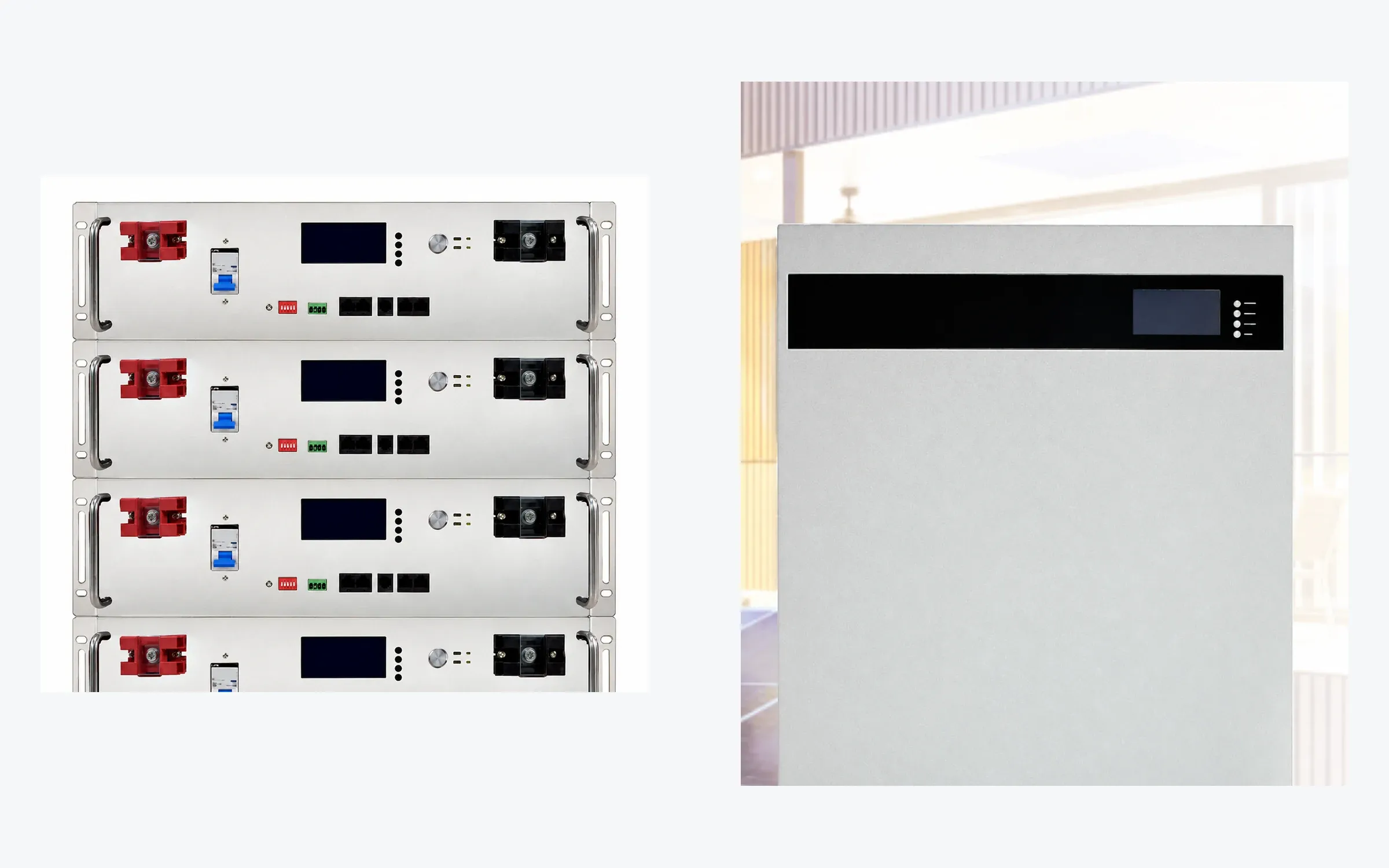
Choose a rack-mounted or wall-mounted LiFePO4 battery by checking the existing inverter first, then the required battery voltage, capacity, communication and installation conditions. Rack batteries suit equipment racks and modular technical-room layouts. Wall batteries can suit sites that prefer wall installation and reduced use of floor space. Neither format is automatically more compatible or more capable electrically.
This guide is for installers, distributors, system integrators and buyers who need battery-only storage. Start with the LinkPower Rack & Wall LiFePO4 battery family. If you need a complete residential battery and inverter system, compare the Home Energy Storage range instead of assuming the two purchasing routes are identical.
Battery-Only Storage and All-in-One Home ESS Are Different Routes
A rack or wall battery stores DC energy for integration with a compatible external inverter. It is relevant when a buyer already has an inverter, or an integrator is designing the battery and inverter arrangement separately. An all-in-one residential system follows a combined battery-and-inverter product route.
Decide which system scope you need before comparing capacity labels. An inquiry for a battery-only platform should identify the inverter and its battery interface. An inquiry for a complete Home ESS should identify the intended loads, target capacity, market and quantity. This distinction helps avoid a quotation that omits equipment the buyer expected to receive.
Start With the Exact Inverter Model
Send the inverter brand and exact model, together with the battery-interface documentation when available. Check the supported battery voltage window, charging parameters, discharge demand and communication protocol. A statement such as “it is a low-voltage inverter” does not establish compatibility with every battery in the same nominal-voltage family.
For a retrofit, describe the existing battery arrangement and the reason for the change. For a new installation, identify whether the inverter has already been purchased or is still being selected. Do not assume that a battery used with another inverter will provide the required integration simply because the equipment has similar power ratings.
Compare the Installation Format
| Format | Selection considerations |
|---|---|
| Rack-mounted | Equipment-rack space, module dimensions, service access, cable routing and the intended integration arrangement. |
| Wall-mounted | Suitable wall structure, mounting arrangement, clearances, access and the available installation environment. |
| Either format | Inverter compatibility, electrical protection, voltage, capacity, discharge requirements and approved expansion scope. |
A rack can provide an organized arrangement in a technical room where equipment is already rack-based. Confirm the selected model's physical dimensions and rack requirements rather than assuming all enclosures share the same fit. Leave the necessary access for installation and maintenance.
A wall installation can be useful when floor space is limited, but the wall and mounting arrangement must be suitable for the selected battery. Confirm the actual dimensions, weight and mounting requirements from the current model documents. Installation decisions belong with the qualified project team, not with a generic comparison of product photographs.
Check the Voltage Platform Before Choosing Capacity
The LinkPower Rack & Wall family includes 25.6V and 51.2V LiFePO4 platforms. A 51.2V rack battery and a 51.2V wall battery may share a nominal voltage while differing in capacity, discharge capability, communication and installation requirements. The format name does not define the complete electrical specification.
Confirm the inverter's operating voltage window and charging requirements. Nominal voltage is a starting point, not an approval for connection. The selected battery protection and the inverter's response to battery status also need to fit the intended system. Universal inverter compatibility is not assumed.
Choose Capacity From the Load and Operating Objective
Describe the application, the loads to be supported and the intended operating duration. State whether the objective is residential backup, solar storage with an existing inverter, small-office storage, telecom backup or another reviewed application. Identify essential loads separately when the battery is not intended to supply the entire site.
The available family spans 50Ah–630Ah, depending on model. This range does not mean every capacity is available in every voltage and installation format. Capacity also does not establish discharge power or backup duration by itself. Confirm the selected model against the inverter and load rather than choosing the largest Ah label that fits the budget or installation space.
Verify Communication Rather Than Counting Connectors
RS485, RS232, CAN, Wi-Fi and Bluetooth are family-level options, depending on model. They should not be presented as a universal feature set for every rack or wall battery. Confirm which interfaces are available on the selected model and which protocol the inverter requires.
A connector name alone is not enough to confirm successful integration. Send the inverter's communication requirements and identify the battery information the system needs to exchange or monitor. If an interface remains unconfirmed, mark it as an open technical item before requesting a final quotation.
Plan Expansion Before the First Order
If future expansion is important, state the intended final system size and installation arrangement at the beginning. Expansion capability is model-specific. The approved connection arrangement, compatible batteries, protection requirements and inverter limits need review before additional units are planned.
Do not assume that any two batteries can be combined because they share the same nominal voltage or chemistry. Record the exact selected configuration and current documents for future procurement. A clear expansion plan is more useful than a general statement that the system should be “modular.”
Prepare a Battery-Only RFQ
| Required information | Buyer checklist |
|---|---|
| Existing inverter | Brand, full model and battery-interface documentation. |
| Electrical platform | Required battery voltage, charging parameters and discharge demand. |
| Storage requirement | Required capacity, intended loads and operating duration. |
| Communication | Required protocol and monitoring or control expectations. |
| Installation | Rack or wall preference, space, environment, access and mounting context. |
| Purchasing scope | Quantity, country, project timeline and any confirmed OEM requirement. |
| Expansion | Initial arrangement and the intended future system scope. |
Request the current model datasheet, installation information and packing details after the relevant configuration has been identified. Documentation and any model-specific options must be confirmed for the selected product. Do not infer a protection rating, cycle-life guarantee, certification or warranty from another product in the family.
Rack and Wall Battery FAQ
Which format is better for a technical room?
A rack-mounted battery can suit an existing equipment-rack layout. Review rack space, dimensions, cable routing and service access. A wall battery may still be appropriate where its mounting requirements and system integration fit the site.
Is a wall battery always better for residential use?
No. The site, inverter and installation conditions decide the appropriate arrangement. Choose the compatible electrical platform first, then review physical space and mounting with the installation team.
Can I replace an existing battery with the same voltage label?
Not automatically. Check the operating voltage window, charging parameters, discharge power, communication and protection requirements against the inverter. Nominal voltage alone does not confirm replacement compatibility.
Can a rack or wall battery also serve a UPS?
Do not treat a generic inverter battery as a confirmed UPS battery. A UPS application needs its own DC bus, charging, discharge, runtime and communication review. Use the dedicated UPS configuration route for that requirement.
Request a Battery Quote for Your Actual Inverter
Send your inverter brand/model, battery voltage, required capacity, communication protocol and quantity. Include the application, rack or wall preference, installation conditions and expansion plans so the review can address both electrical compatibility and the physical arrangement.
Choose Rack / Wall LiFePO4 Battery Systems in the General RFQ. Review the Rack & Wall product page, compare complete Home ESS systems, or return to LinkPower's product routes.