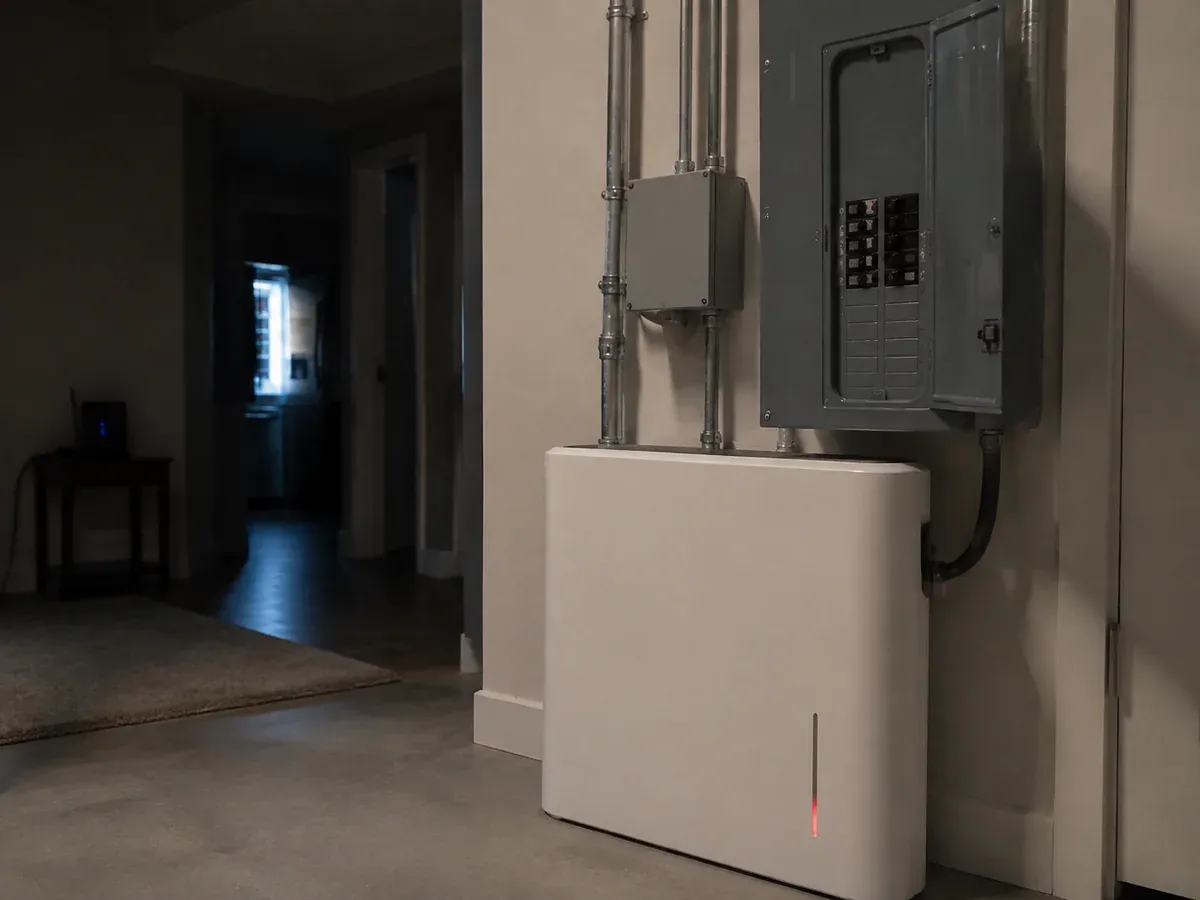
What Should Stay On When a Small Home Battery Takes Over?
Build a realistic essential-load list for a small home battery without letting kettles, heaters and wishful thinking consume the reserve.
During a blackout, every appliance suddenly develops a strong opinion about being essential. The battery cannot chair that meeting. The owner has to.
Start with the loads that protect food, communication, lighting and basic household function. Then check their measured energy use and startup demand.
Use three buckets
| Priority | Examples | Planning note |
|---|---|---|
| Must run | Router, selected lights, refrigeration controls | Measure energy and runtime |
| Useful | Fans, laptop charging, television | Use only if reserve allows |
| Usually exclude | Electric heaters, ovens, kettles | High demand can shorten runtime quickly |
Pumps, compressors and motor loads need extra attention because starting demand may be higher than normal running demand. Battery capacity does not prove inverter suitability.
Decide the rule before the outage
Write down which loads are disconnected first, what reserve is protected overnight and who in the household knows the plan. Test the agreed arrangement during commissioning where the system and local rules allow it.
The best list is short enough to remember. If it needs color coding, a spreadsheet and a family vote at 2 a.m., it is probably too ambitious.
Data for a useful quotation
Provide appliance nameplates, measured daily energy where available, desired backup hours, simultaneous loads and any motors or pumps. State whether solar can recharge the battery during an extended outage.
Explore LinkPower residential energy storage or send your priority-load list for a configuration discussion.