What Size Battery Does a Small Business Need?
A small business usually needs 30kWh to 215kWh of battery, set by two numbers you can read off this week's meter: daily energy use and demand charges. This guide gives the load-based sizing method, th
What Size Battery Does a Small Business Need?
A small business usually needs 30kWh to 215kWh of battery, set by two numbers you can read off this week's meter: daily energy use and demand charges. This guide gives the load-based sizing method, the capacity tiers that fit, and the spec sheet to send any supplier.
A small business usually needs between 30kWh and 215kWh of battery, not the 5kWh or 10kWh units sold for households. Two numbers you can read off this week's meter decide it: how much energy your operation uses on a normal day, and how much your utility bills you for demand spikes. Get those two right and the size stops being a guess and becomes arithmetic.
The mistake most owners make is copying a neighbor's system or trusting a vendor's standard package. A bakery and a cold-storage room pull completely different daily energy, and a shop on time-of-use tariffs needs a battery sized for a different job than one on an unstable grid. This guide gives you the load-based method, shows where demand charges change the math, and ends with the spec sheet you should send any supplier so the quote fits your building.
Start With Your Daily Energy, Not the Brochure
The battery has to cover the energy your business actually consumes during the hours it runs on storage. Pull a month of bills and find the daily kilowatt-hour figure. A small metal workshop in Ho Chi Minh City with CNC machines, lighting and a couple of wall AC units often lands near 70 to 100kWh a day. A butchery in Nairobi running a cold room and display fridges can sit at 120kWh or more. A guesthouse in Dubai with pool pumps and evening lighting can clear 300kWh on a busy night.
Notice the spread. One small business can need three times another's battery. Size to your worst realistic day - equipment running, doors opening, heat at its peak - not the quiet Tuesday average. A bank sized on the average leaves you dark at exactly the moment you needed it.
Demand Charges Are the Second Half of the Answer
In many places across Asia, Africa and the Middle East the per-kWh energy charge is only part of the bill. Utilities also bill a demand charge: a fee based on the highest 15-minute or 30-minute power draw you touched all month. Trim that peak and the battery pays for itself even if the grid never goes down.
Picture a textile shop whose machines spike to 80kW but average 50kW. A battery that delivers 30 to 50kW for an hour or two lops the top off the peak, and the monthly demand saving is what justifies the cabinet. Here the battery is not backup, it is a peak-shaving device - and the right size is driven by your peak kW and how long that peak lasts, not your daily kWh.
A Practical Sizing Path
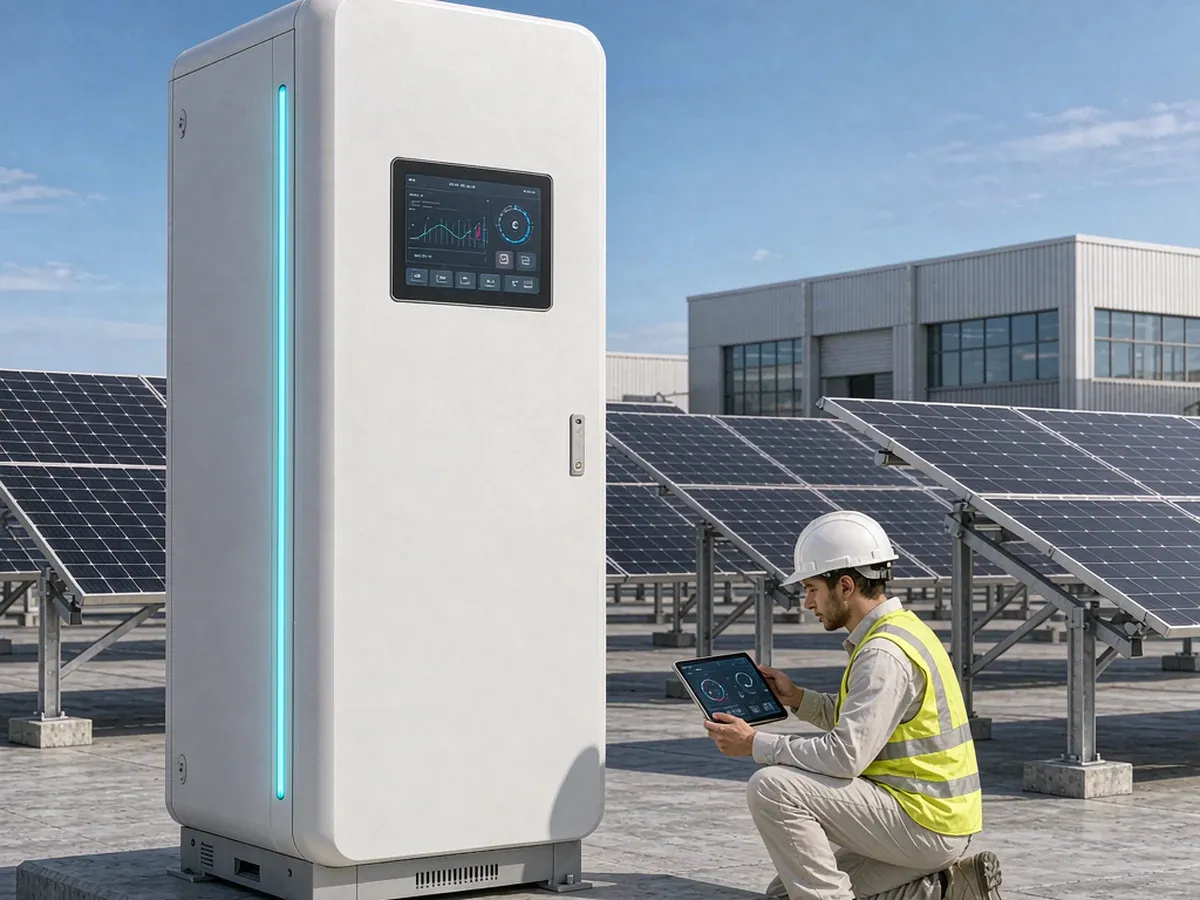
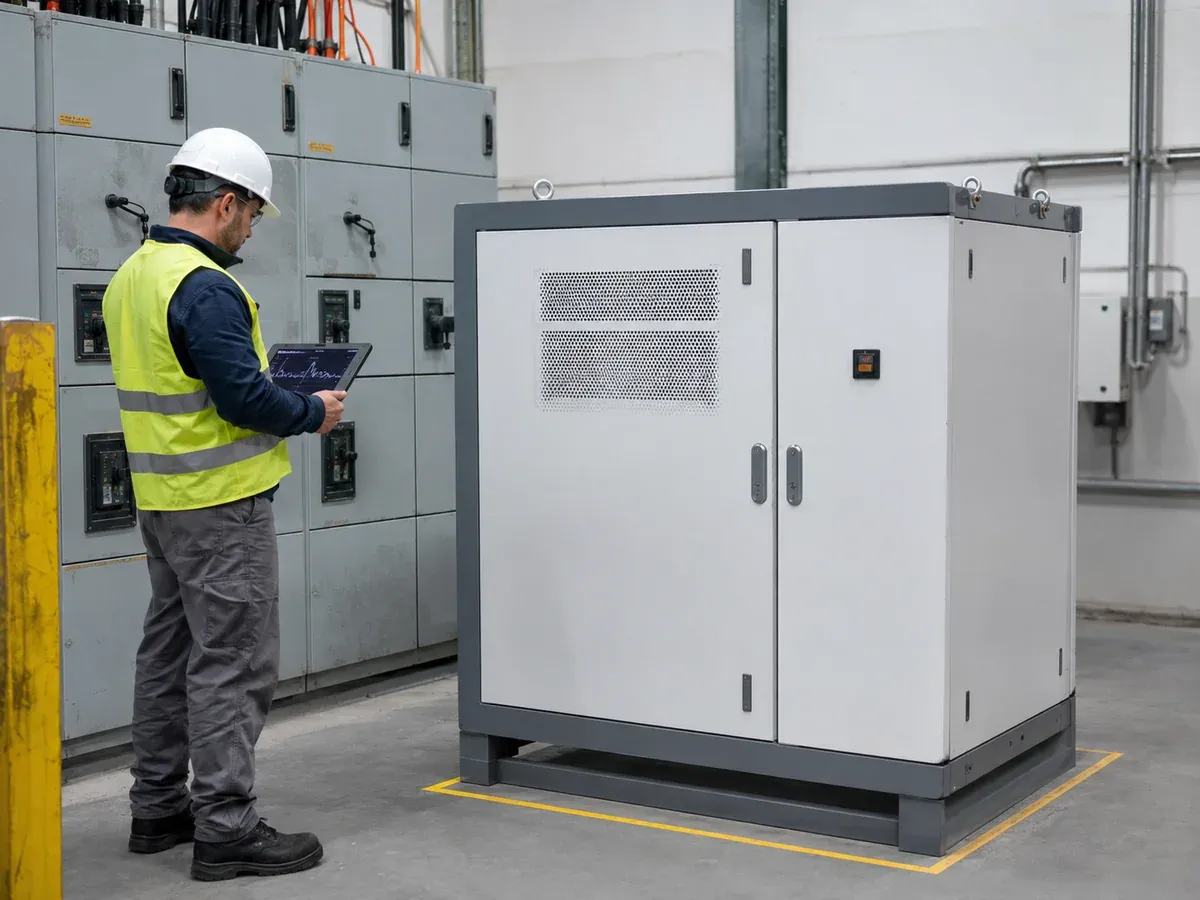
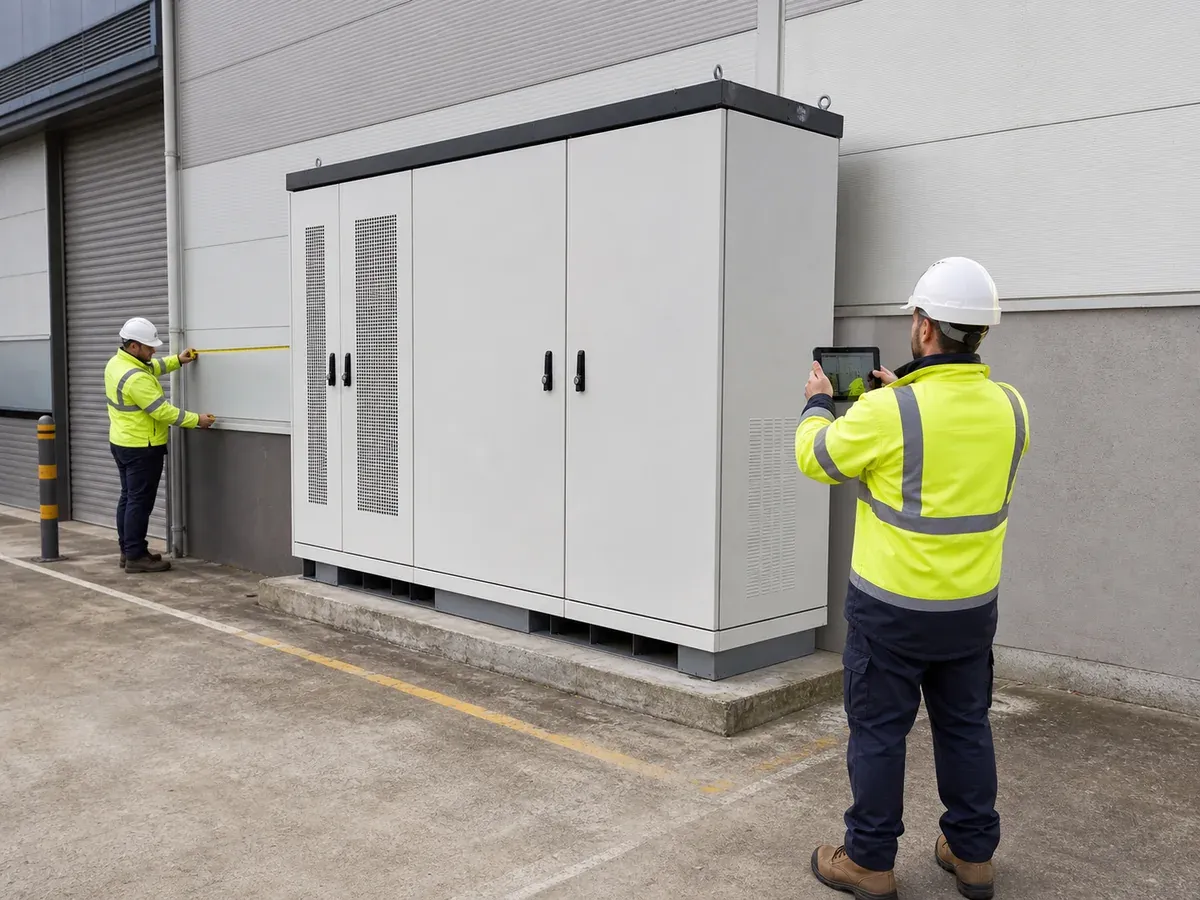
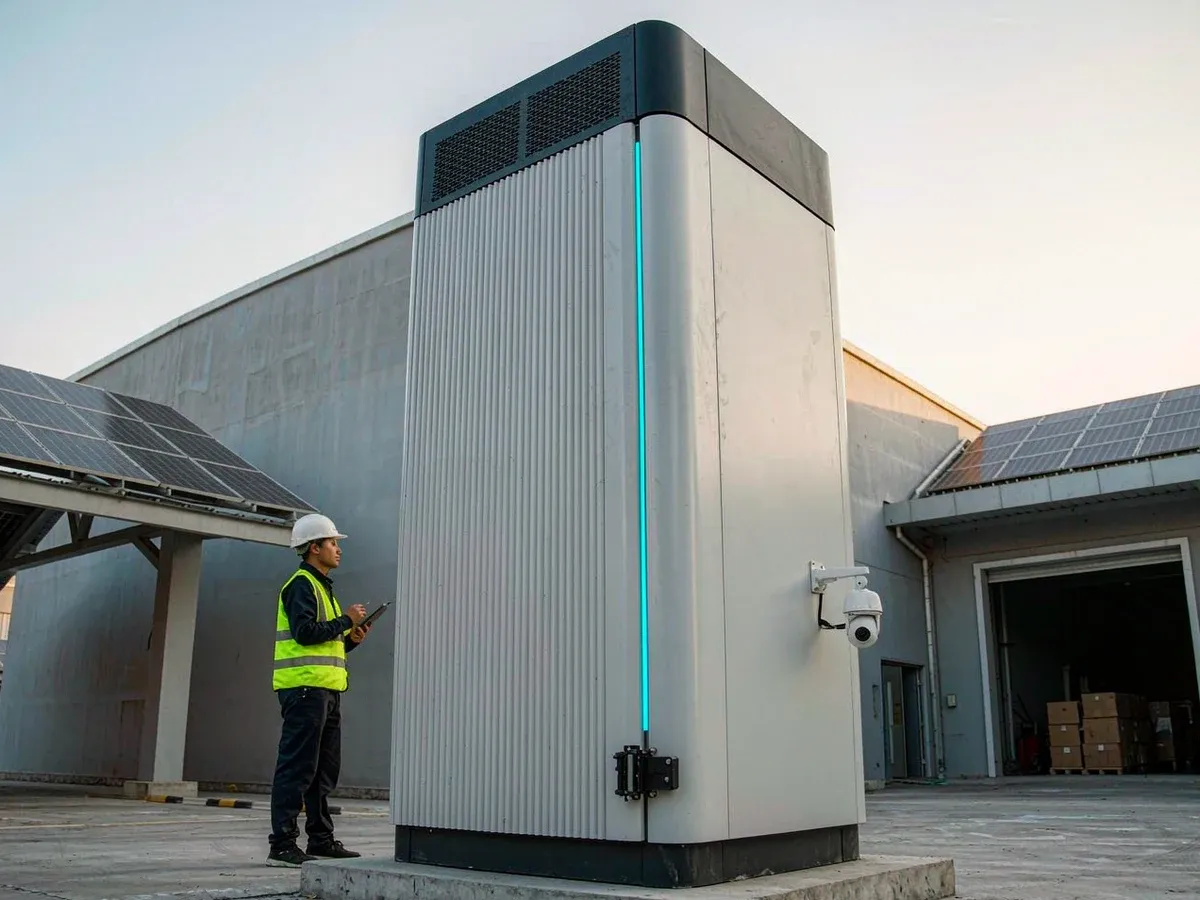
Once you have daily kWh and peak kW, the capacity choice gets simple. Operations under about 100kWh a day with a modest peak fit a single commercial and industrial energy storage cabinet around 144kWh. Mid-size factories and cold rooms in the 100 to 200kWh-a-day band usually land on a 215kWh industrial cabinet that carries the load through an evening outage and still shaves daytime peaks.
Anything with irregular load, multiple buildings, or a planned PV array bigger than the standard cabinet should skip the off-the-shelf unit and go custom. Configurable voltage, capacity and cooling let the design match the site instead of the other way around. The energy storage solutions page lays out how these pieces fit a site from audit to commissioning.
Technical Notes Buyers Skip
Net capacity beats nameplate. A 215kWh cabinet that delivers 195kWh usable is honest; one that quietly reserves 30kWh is not, and you sized on the wrong number. Ask every bidder for usable kWh at the depth of discharge they recommend, and compare on that figure, not the sticker.
Cooling decides lifespan at commercial scale. Larger cabinets in hot climates age fast in a sealed room, so liquid-cooled units hold temperature and cycle life better than fan-cooled ones when ambient runs high. Cells matter too: lithium iron phosphate handles daily deep cycling and heat far better than older lithium chemistries, and you should ask for the cell brand and a grade report. We build with Lishen Grade A cells, traceable to the production batch, and any supplier competing for the order should show equivalent paperwork.
Documentation is the part owners forget. Request UN38.3 test reports and MSDS with the shipment - both are standard shipping and safety documents, not favors - and ask each vendor for cycle count at 80% depth of discharge, 25C, then put it side by side with the price. Anyone who will not write the number down is telling you something.
When This Fits - and When It Does Not
It fits businesses on scheduled load-shedding, shops hit with demand charges, cold rooms, small clinics, telecom sites, and guesthouses where a dark evening shows up in the reviews. Anywhere the grid is unreliable but present most days, a cabinet in the plant room earns its place.
It does not fit a site with no grid at all and round-the-clock heavy load - that is a generator plus an engineer's load study, not a cabinet in the corner. And if your supply is genuinely stable and your tariff has no demand component, you would be buying insurance you may never claim; a smaller unit, or none, is the honest call.
What Your Supplier Needs From You
Five lines get a real design instead of a guess: peak load in kW, daily energy in kWh, AC voltage and phase (220/230V single or 380/400V three), the application - shop, factory, cold room, clinic - and whether rooftop PV exists now or is planned. Add your outage or load-shedding pattern, scheduled or random, hours per day, and you have handed the factory everything that changes the battery.
FAQ
How do I estimate daily kWh without a meter?
Read three months of utility bills and divide the total kilowatt-hours by the number of days. If billing is seasonal, take your worst month, not the average, so the battery covers summer or holiday peaks. A simple plug-in energy monitor on your largest equipment for a week also gives a hard number fast.
Can one battery handle both backup and demand shaving?
Yes, and that dual role is what makes commercial storage pay. The same cabinet rides out an evening outage and trims your daytime peak the rest of the month. Size it for the larger of the two jobs - usually the peak-shaving kW and duration - and backup comes along for free.
Do I need liquid cooling for a small business unit?
Not always. A single 144kWh cabinet in a ventilated, shaded plant room often runs fine on forced-air cooling. Once you go to 215kWh or higher, or site it somewhere ambient stays above 35C for months, liquid cooling protects cycle life and is worth the cost. Ask the supplier for expected degradation at your local temperature before deciding.
How long will a 215kWh cabinet run my shop?
That depends entirely on your load. At a steady 20kW draw it runs roughly nine to ten hours; at 40kW it is about four to five. Run only essential circuits - lighting, fridges, the critical machine - and you extend it; run everything and it drains like any battery. The daily kWh figure from your bills is the number that answers this precisely.
Tell Us Your Loads, Get a Real Configuration
Send your peak load in kW, daily energy in kWh, AC voltage and phase, and your PV situation through the contact page - whether you run one shift or three changes the answer. Our engineers will return a configuration built for your site with the commercial storage details and the UN38.3 and MSDS documents for your market.