What Can a 1kWh Portable Power Station Run? Real Device List and Runtimes
A 1kWh portable power station stores about 1,000 watt-hours. That keeps phones, laptops, lights, a router and a fan alive for a day or two, and runs a bar fridge through most of a night - but it will
What Can a 1kWh Portable Power Station Run? Real Device List and Runtimes
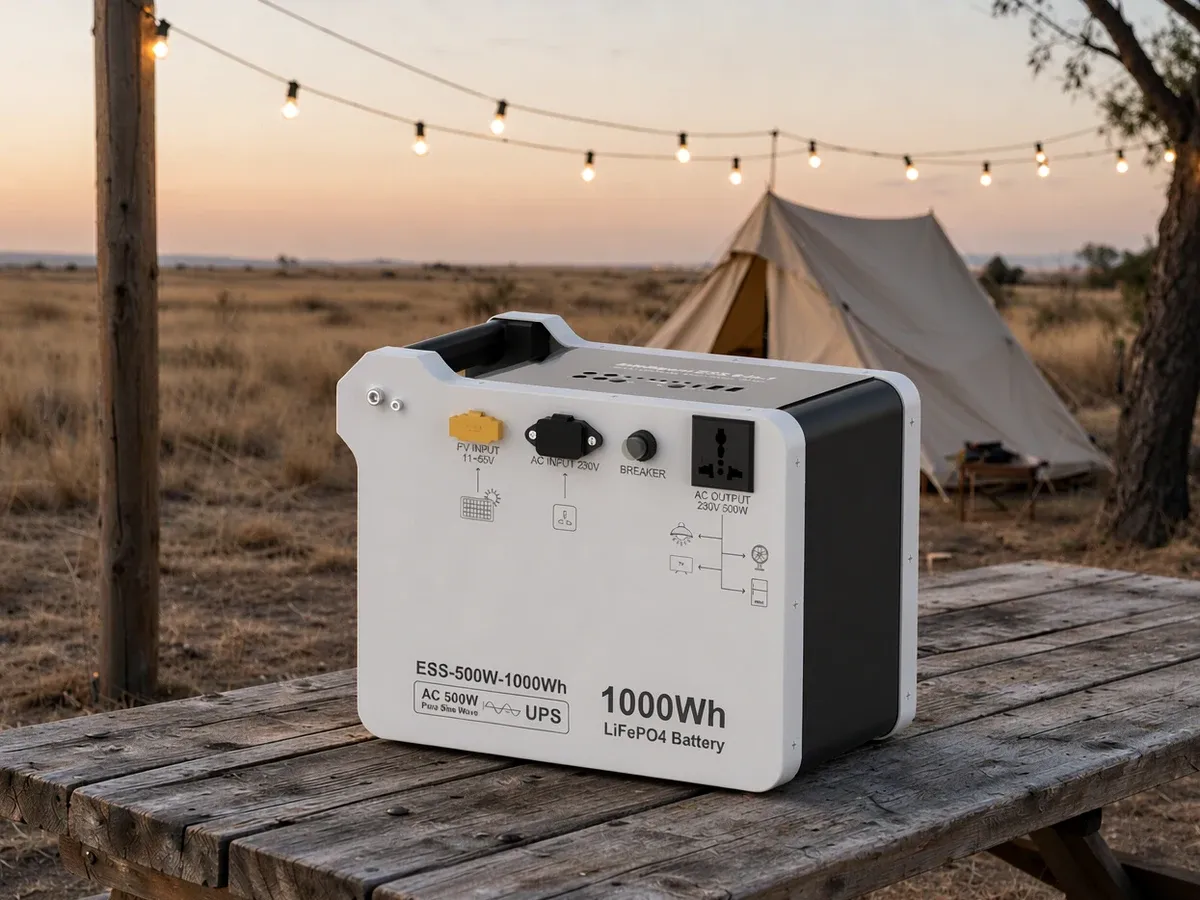
A 1kWh portable power station stores about 1,000 watt-hours. That keeps phones, laptops, lights, a router and a fan alive for a day or two, and runs a bar fridge through most of a night - but it will not run an air conditioner, a kettle or a water pump for long. This guide lists what actually runs, for how long, and how to pick between 1, 2 and 4kWh for outages, camping and off-grid work.
A 1kWh portable power station holds about 1,000 watt-hours of stored energy - call it 850 to 900 watt-hours you can actually use after the inverter takes its cut. That is enough to keep your phone, laptop, lights, router and a small fan alive for a day or two, and to run a bar fridge through most of a night. It will not run an air conditioner, a kettle or a water pump for any useful length of time. If your real question is 'can I keep the important things on when the grid drops or when I am off-grid,' the 1kWh tier answers yes for devices under roughly 100W and no for anything that heats or cools a room.
Start with the number that decides everything: watts drawn versus watt-hours stored. A 1kWh pack delivers 1,000Wh. Divide your device's watts into 1,000 and you get the hours, before losses. A 10W router runs about 85 hours. A 40W fan runs about 20 hours. A 50W television runs about 17 hours. A 100W LED light string runs 8 to 9 hours. The math is that simple, and the rest of this guide just applies it to the devices people actually ask about.
Phones, Laptops, and the Things You Charge
Charging is where a 1kWh station feels endless. A smartphone draws 10 to 18Wh per full charge, so one pack tops up a phone 50 to 80 times. A laptop at 50 to 60Wh per charge gets 15 to 18 fills. Cameras, drones, power banks, earbuds, a handheld GPS - all of it sips. For a family riding out a two-day outage or a crew on a remote site, the comms-and-charging load alone is a strong reason to own one. See the full portable lineup for the 1, 2 and 4kWh options.
Lights, a Router, and a Fan: The Comfort Load
These are the loads that turn a blackout from miserable to manageable. A 10W LED bulb runs for days on a 1kWh pack; string up six and you still get 14 hours. The router keeps the household online, which matters when you are filing claims, pulling weather alerts, or running a small business from home. A 40W pedestal fan runs about 20 hours. Add a 30W CPAP machine without humidifier and you get roughly a night's sleep - about 28 hours - which is why travelers with sleep apnea carry a small station. For whole-home thinking beyond the pack, home energy storage covers the bigger fixed installs.
A Mini Fridge: Yes, With a Catch
A compact fridge averages 40W while running but spikes to 120 to 180W when the compressor kicks in, and it cycles on and off. On a 1kWh pack you get roughly 12 to 18 hours of cold before the pack empties, assuming the door stays shut. A full-size fridge doubles that draw and halves the time. The catch is the inverter's surge rating: it must handle the compressor spike, so confirm the station's surge watts - often 1,500 to 2,000W on a 1kWh unit - before you trust it with a fridge. A 1kWh portable unit handles a bar fridge or a medicine cooler reliably; a chest freezer is a stretch.
What It Cannot Do, and Why That Matters
Anything that makes heat or moves a lot of air eats the pack in minutes. A 1,000W microwave runs about 50 minutes. An induction cooktop at 1,500W lasts about 35 minutes. A 1,500W electric kettle is empty in half an hour. A 1HP air conditioner at 900W drains it in under an hour, and a borehole or pressure pump is worse. The reason is physics, not the brand: 1,000Wh simply cannot supply 1,500W for long. If your plan depends on cooking or cooling through an outage, you need a bigger pack or a fuel generator - no 1kWh unit changes that.
How Long Does the Recharge Take?
Capacity is useless if you cannot refill it. Most 1kWh stations recharge from a wall socket in 1.5 to 2.5 hours on a 500 to 600W charger. From a car's 12V outlet, figure 6 to 10 hours - fine for an overnight drive, not for a midday top-up. Many units also accept input from a foldable panel, which suits camping and remote work but tracks the sun, so plan around a half-day rather than an hour. Ask the supplier for the unit's max charge current before you rely on a short recharge window; a slow charger turns a 1kWh pack into a once-a-day device.
Picking the Right Size: 1, 2, or 4kWh
If your list is phones, lights, a router, a fan and a bar fridge, the 1kWh tier is the sweet spot - light, cheap to ship, and enough for a night or two. Add a laptop-heavy workday, a CPAP or a second fridge and the 2kWh compact unit doubles your window. Run tools, a chest freezer or a weekend of festival power and the 4kWh station is the floor. Buy the size your worst day needs, not your average day - a pack that covers the bad evening is worth more than one that spoils on the good one. The same LiFePO4 chemistry and traceable cells run through the whole range, so cycle life comes down to how you treat the pack, not which capacity you bought.
Where This Actually Pays Off
The 1kWh tier earns its keep in places where the grid is uncertain or the site has no grid at all. Market stalls in Lagos and Jakarta keep POS terminals and lights running past sunset. A remote clinic in rural Kenya runs a vaccine cooler and a phone charger through the night. Campers across the Middle East and Latin America skip the noisy generator for a quiet evening of charged devices and a fan. Field engineers in Indonesia power test gear without a truckload of lead-acid. None of these need a wall of batteries - they need a pack that fits in a backpack and refills by morning.
Questions Buyers Ask
Will a 1kWh station run my air conditioner?
No, not usefully. A 1HP unit alone pulls 900W and a 1.5-ton pulls far more; the pack empties in under an hour and the compressor surge can trip the inverter. For cooling through outages, look at a whole-home fixed system or pair the station with a fuel generator for the AC only.
Can it power a CPAP machine overnight?
Usually yes, if the machine draws 24 to 35W without a heated humidifier. That uses 0.3 to 0.5kWh over eight hours, leaving reserve for a phone and a light. Bring a second pack or a 2kWh unit if you also run a fan.
How many times can it charge a laptop?
Roughly 15 to 18 full charges for a 50 to 60Wh laptop, fewer for a gaming machine. For a work trip that is a week of top-ups from one pack.
Is LiFePO4 safe to keep in a bedroom or a tent?
LiFePO4 is the stable choice for indoor and enclosed use, and the chemistry is far less prone to thermal runaway than older lithium types. Still, keep it on a flat surface with airflow, and ask the supplier for the UN38.3 and MSDS shipping and safety documents before you import or carry one across borders - those papers are standard for compliant units.
Tell Us Your Loads
Send your device list, the watts of the biggest thing you must run, and your AC voltage through the contact page, and our engineers will tell you straight whether a 1kWh unit covers your night or whether a 2kWh or 4kWh pack is the honest fit - no upselling, just the watt-hour math.