How to Choose a Home Energy Storage Supplier (Wholesale/Distributor)
Choosing a home energy storage supplier for resale is a documents-and-behavior test, not a price comparison. This guide gives distributors and wholesale buyers the exact checklist: which documents to
How to Choose a Home Energy Storage Supplier (Wholesale/Distributor)
Choosing a home energy storage supplier for resale is a documents-and-behavior test, not a price comparison. This guide gives distributors and wholesale buyers the exact checklist: which documents to demand, how MOQ ladders actually work, what a sample really tells you, and four answers that should end the conversation.
Choosing a home energy storage supplier for resale comes down to documents and behavior, not the price list. A factory that names its cell grade in writing, walks you through its production line on video and attaches the UN38.3 test summary and MSDS with the first quote is a very different risk from one that sends a catalog and the word 'yes'. This guide is the checklist we would use on the other side of the table - what to verify, what to ask, and when to walk away.
Start With the Factory, Not the Brochure
The first question is not 'how much' but 'who built this'. A trading company and a factory answer it differently. Ask which parts of the unit are made in-house. Cells are almost never produced by the assembler, but the BMS, the enclosure and the final pack assembly should each have a clear answer. Then ask for a live video walk of the production line, scheduled the same day, camera handheld, not an edited clip. A real line has trolleys, semi-finished racks and the exact model you are quoting sitting on a bench. That is how we run visits for wholesale buyers - one call, factory floor live, no rehearsal. If a supplier needs two weeks to arrange a video call, you have already learned something.
The Documents That Decide the Deal
Paperwork separates a shipment from a problem at the port. Three documents are non-negotiable. The UN38.3 test summary proves the pack passed the transport-safety tests that airlines and sea carriers require - it says nothing about cycle life, so do not let anyone present it as a quality certificate. The MSDS tells your forwarder and customs broker what is inside and how to handle an incident. The warranty terms tell you who answers the phone in year three.
Beyond those three, ask for the cycle test report and read the conditions, not the headline number: a cycle count means little until you see the depth of discharge, the temperature and the charge rate it was measured at. Then ask which certificates apply to your destination market and verify each certificate number with the issuing body. Send these requests to the supplier's support desk and watch the response time - a factory that produces documents within a day is showing you exactly how it will behave when you file a claim.
MOQ and the Ladder Behind It
Every factory sets a minimum order quantity, and the number matters less than the logic behind it. MOQ exists for boring reasons: cartons pack pallets in fixed layers, production batches are scheduled around changeover time, certification covers a defined hardware revision, and the after-sales parts pool has to come from the same build. Ask the supplier to explain their ladder - the per-unit price for a pilot batch, for a pallet, for a mixed container - and why each step sits where it sits. A factory that can explain the ladder can flex it for a serious buyer. A factory that only repeats the number cannot.
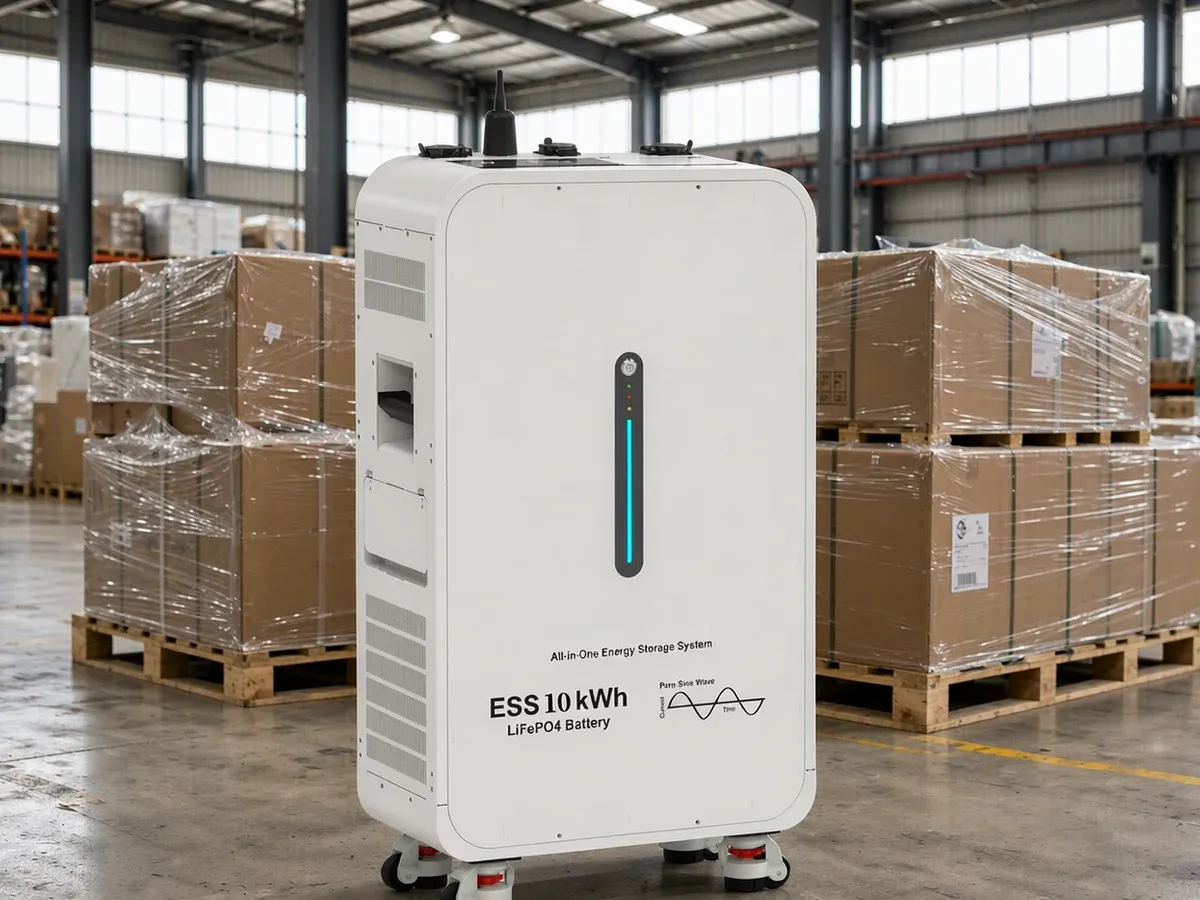
If you are starting in one city with two models, say so early. Most distributors anchor on one mid-size unit and one compact unit - something like the 10kWh all-in-one system for villas plus a smaller wall unit for apartments - then widen the range once the first container has sold through. A supplier who pushes you toward six SKUs on day one is planning their warehouse, not yours.
The Sample Tests the Supplier, Not Just the Battery
A sample is cheap; treating it wrong is expensive. Before it ships, ask three things. Does the sample come off the production line or off an engineer's bench? Bench samples are assembled carefully by hand - production units are built by Tuesday's shift, and Tuesday's shift is what your customers will receive. What does the sample cost, and does the fee come back as credit on the first order? And what is the lead time in working days, not weeks?
When it lands, test what your customers will actually feel. Full charge, then discharge into a real load. Output waveform checked with a meter. How warm the enclosure runs after two hours. Whether labels, manual and packaging match what your market expects. A supplier confident in its line ships the production sample without being asked twice.
Four Answers That Should End the Conversation
Some replies should close the file, politely and immediately. First, nobody will put the cell brand and grade in writing - 'A-grade' is not a grade. Second, the factory tour keeps being postponed and only ever exists as a polished video. Third, certificates are 'in progress' month after month while the quote already claims them. Fourth, there is no answer at all on spare parts, firmware updates or the warranty claim process - which tells you their plan for year two is that you will have none. A supplier who fails one of these may still be honest. One who fails all four has priced your risk into their margin.
Support After the Container Lands
The relationship starts when the goods arrive, not when the deposit clears. Before you commit, ask how a warranty claim actually runs: who diagnoses the fault, which parts ship, on whose freight account, and how long the replacement path takes in your region. Ask whether firmware updates for the BMS and the monitoring app are included for the life of the model, because a shelf of abandoned units at an end customer's house is your reputation, not the factory's.
If you want your own brand on the front panel, raise it before the pilot order, not after - OEM and ODM programs require decisions on labels, manuals, packaging and certificate holders well before production. Changing the brand on a box is easy; changing the certificate holder after the goods ship is neither cheap nor quick.
A Checklist You Can Send This Week
Copy this into your next supplier email and see who survives it. Quote stage: cell brand and grade in writing; UN38.3 and MSDS attached; cycle test conditions stated; destination-market certificates listed with verifiable numbers. Sample stage: production-line sample confirmed; sample fee and credit policy stated; lead time in working days. Order stage: MOQ ladder explained; mixed-container option; spare-parts plan; firmware policy; warranty claim flow with response times. Suppliers who clear all three stages in one or two emails are rare - and once you find one, the price gap stops being the interesting part of the conversation.
Questions Buyers Ask
What is a realistic MOQ for a first order?
There is no industry-wide number; each factory sets one from its pallet configuration and batch scheduling. What you should expect is a clear explanation of the ladder and a genuine pilot option, even at a higher per-unit price. If a supplier refuses any pilot below a full container, keep looking - someone else wants to grow with a new market instead of just filling one.
Can I sell under my own brand?
Most established factories offer OEM or ODM - your logo, your colors, your manuals. The three questions that matter: the minimum volume per SKU for custom branding, who pays for new packaging tooling, and whether the certificates stay valid when the label changes. Get those answers before you fall in love with a mockup.
Which documents do I need for import?
At minimum: commercial invoice, packing list, bill of lading, the UN38.3 test summary and the MSDS for the batteries. Your destination market adds another layer on top - ask your customs broker what your port requires, then ask the supplier whether they can provide it. A factory that ships worldwide every week already has the file ready; one that has never exported to your region will learn alongside you, and that is a risk you should price in.
How do I verify the factory is real?
Three checks cost nothing: a same-day live video walk of the line, a business licence and export record you can look up yourself, and a reference call with one existing distributor in a market that does not compete with yours. Edited footage and stock photos prove nothing. How a supplier behaves on a five-minute unscripted call predicts the next five years better than any brochure.
Tell Us Your Market
If you are building a distribution business and want a supplier that clears the checklist above, send us your market, your target customer and the capacity band you want to start with. You will get documents back, not adjectives - and if a different capacity or a fixed system fits your customers better than what you asked for, we will say that too. Start the conversation.