Sep 1, 2026Solar Modules
720W Solar Modules: When Bigger Panels Save Work—and When They Don't
A practical EPC guide to 720W solar modules covering module count, handling, racking, electrical design, transport and site-specific tradeoffs.
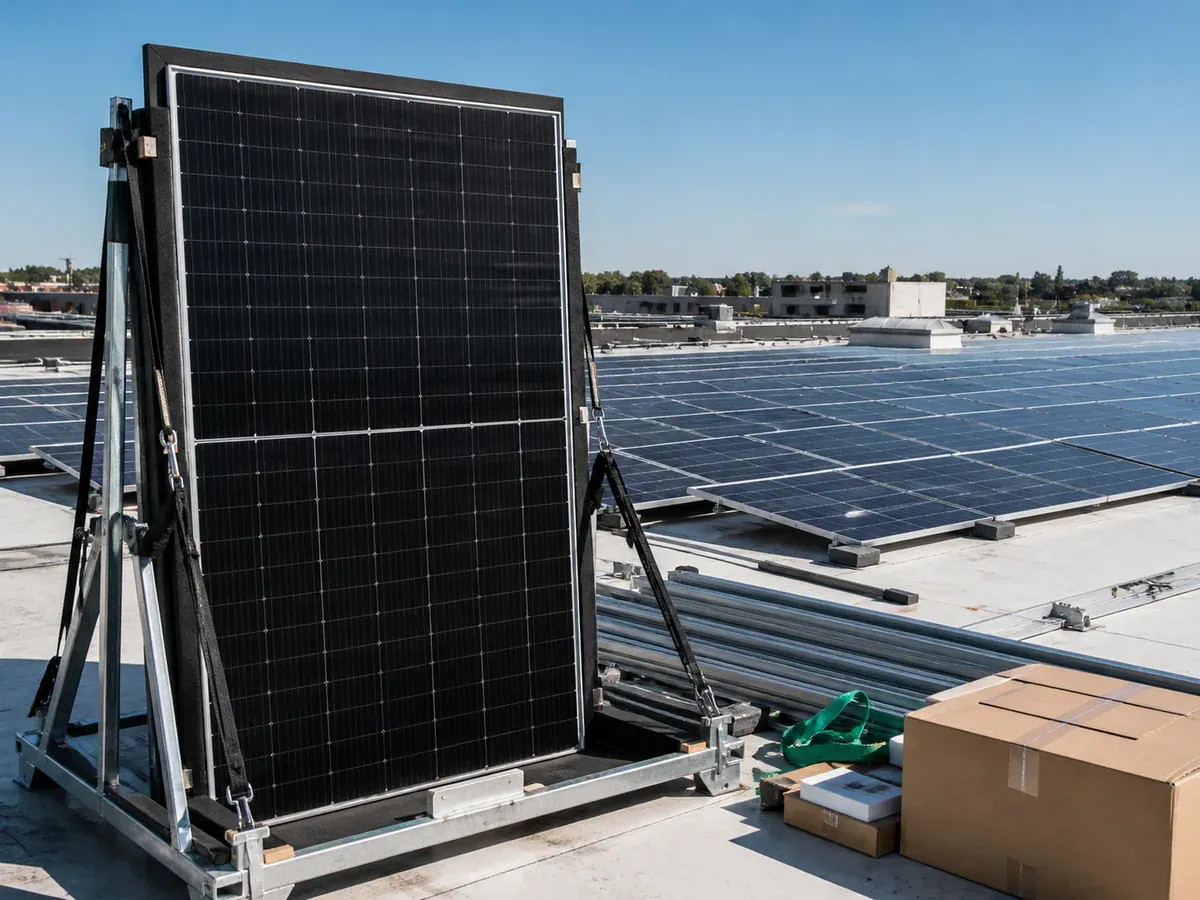
A 720W module can reduce module count for a target DC capacity. It cannot reduce every line in the project plan. Fewer modules may mean fewer clamps and connections; larger modules may also demand more careful handling, lifting and layout work.
Where higher wattage can help
For a fixed array capacity, higher-wattage modules may reduce the number of modules, mounting points, connectors and repetitive installation steps. This can simplify some utility-scale and large commercial layouts.
Where “fewer” becomes “heavier”
Large-format modules affect pallet handling, rooftop access, wind management during installation, crew size, lifting equipment and breakage risk. Confirm the current dimensions, weight and packaging data before calculating labor.
The BOS checklist
Racking: verify clamp zones, rail span, mechanical loads and approved mounting methods.
Electrical design: confirm voltage, current, string length, connector compatibility and inverter input limits using the latest datasheet.
Layout: account for roof obstacles, row spacing, access paths, module orientation and maintenance clearance.
Logistics: check pallet dimensions, unloading equipment, warehouse doors, site roads and rooftop lifting plans.
Handling: define crew method, wind limits, edge protection and glass-safe storage.
One calculation that deserves respect
Module count is approximately target DC capacity divided by module power, rounded according to string and layout requirements. That quick calculation is only the beginning. Electrical limits, usable roof geometry and local design rules decide the final array.
When a 720W module fits well
It is worth evaluating for large open layouts where module count, repetitive installation work and high power density matter. It may be less convenient on small irregular roofs, difficult-access sites or projects whose racking and inverters are already fixed around another format.
Questions for the supplier
Request the current electrical and mechanical datasheet, dimensions, weight, packaging details, connector information, loading limits and applicable quality documents. Ask how samples and pallets are protected during long-distance transport.
The honest tradeoff
Bigger modules are not automatically better; they are better when the site, labor plan, racking, inverter and logistics agree. The panel does not care about your spreadsheet, but the crane operator definitely does.
Review the LinkPower 720W N-Type TOPCon dual-glass module:
https://www.linkpoweress.com/products/720w-n-type-topcon
Send LinkPower your project capacity, layout, inverter and destination details:
https://www.linkpoweress.com/contact-us