C&I Energy Storage for Backup Power: Keeping Factories and Shops Running Through Outages
A C&I battery backup keeps factories, workshops and shops running through grid outages with no fuel and no startup delay. This guide shows facility managers how to size backup storage, which supplier
C&I Energy Storage for Backup Power: Keeping Factories and Shops Running Through Outages
A C&I battery backup keeps factories, workshops and shops running through grid outages with no fuel and no startup delay. This guide shows facility managers how to size backup storage, which supplier documents to verify, and what to ask before ordering, with a copy-paste inquiry checklist for sites across Asia, Africa and the Middle East.
A C&I battery backup keeps a factory, workshop or shop running through a grid outage by discharging stored energy the instant the utility drops, no fuel and no technician on call. For most small industrial and commercial sites in Asia, Africa and the Middle East, start with a liquid-cooled cabinet in the 100-215 kWh range and a fast inverter, sized to the loads you cannot afford to lose rather than the whole building.
Why Battery Backup Beats a Generator for Business
Diesel generators still earn their place for multi-day outages. For the common case, outages of minutes to a few hours hitting several times a month, a battery wins on three fronts. It starts in milliseconds, so controls and cold rooms never blink. It needs no fuel delivery, which matters where logistics are unreliable. And it sits quietly with almost no upkeep, unlike an engine needing oil, filters and weekly runs. A commercial and industrial storage setup also doubles as peak-shaving capacity on normal days, something a generator cannot do.
How a C&I Backup System Actually Works
The hardware is simple: a battery cabinet and an inverter sit between your service entrance and your loads. While the grid is up, the inverter charges the battery from the grid or on-site generation. The moment voltage collapses, it transfers your critical loads to battery, and the transfer time, not the battery size, protects computers and motor drives from resetting. Once the grid returns, it recharges. Ask the supplier for the transfer time in milliseconds and confirm it against the equipment you cannot tolerate rebooting, because a brochure number and a commissioned number are not the same thing.
Sizing: Which Loads You Must Cover
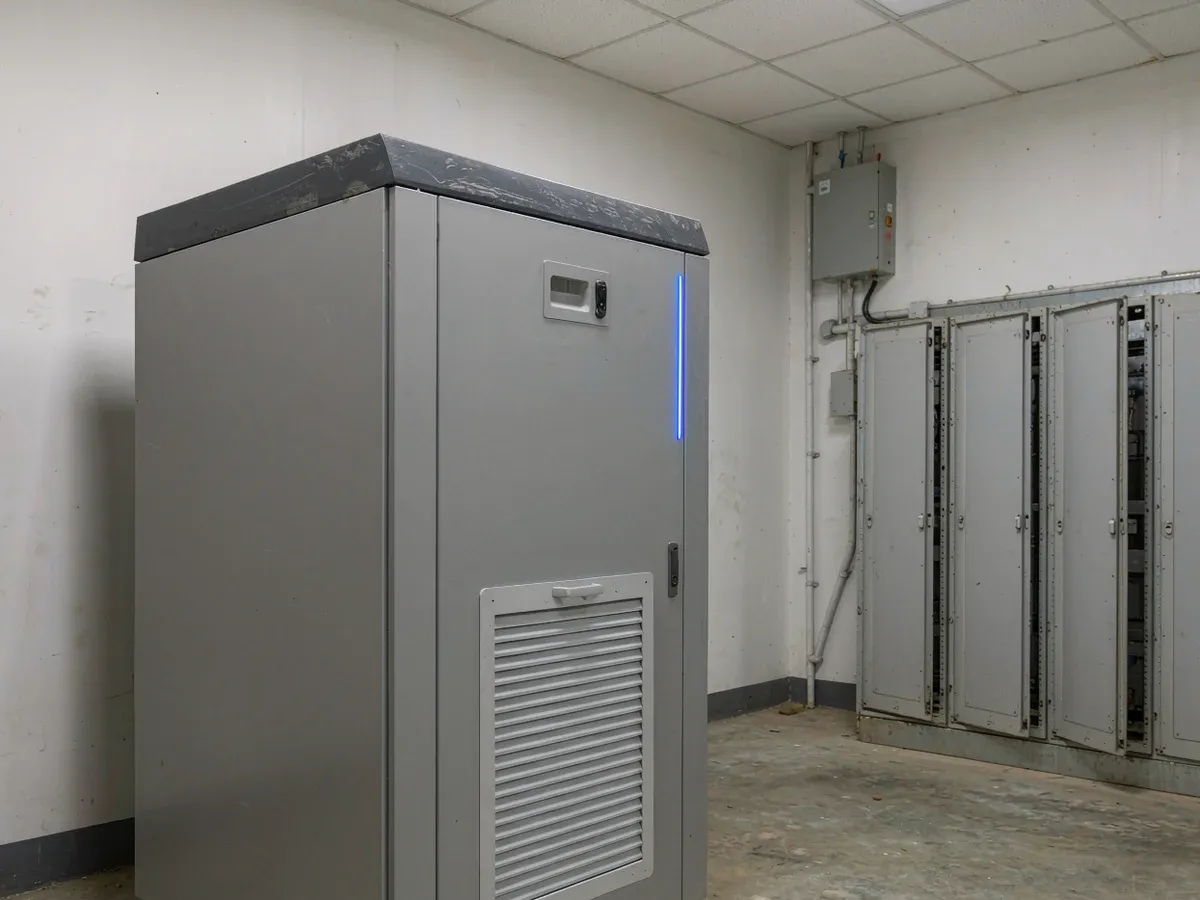
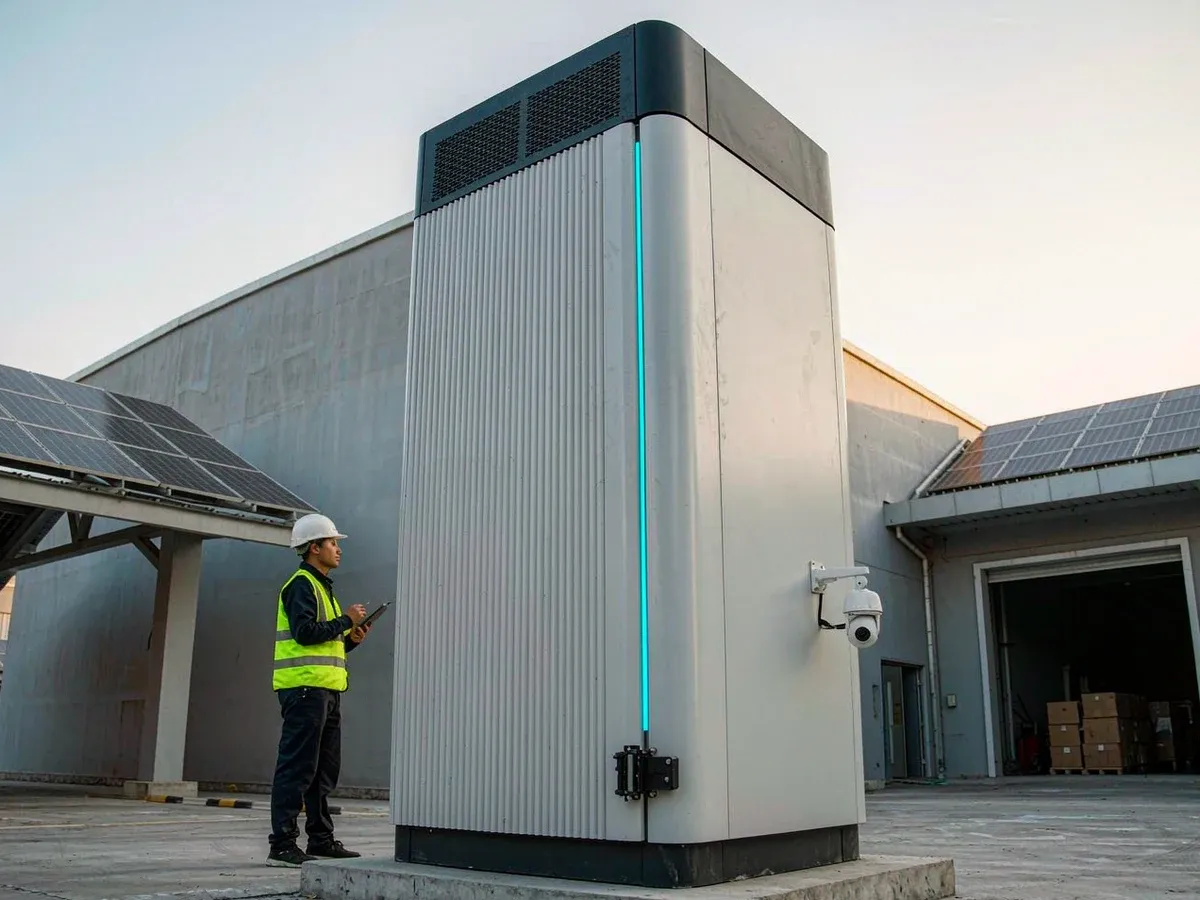
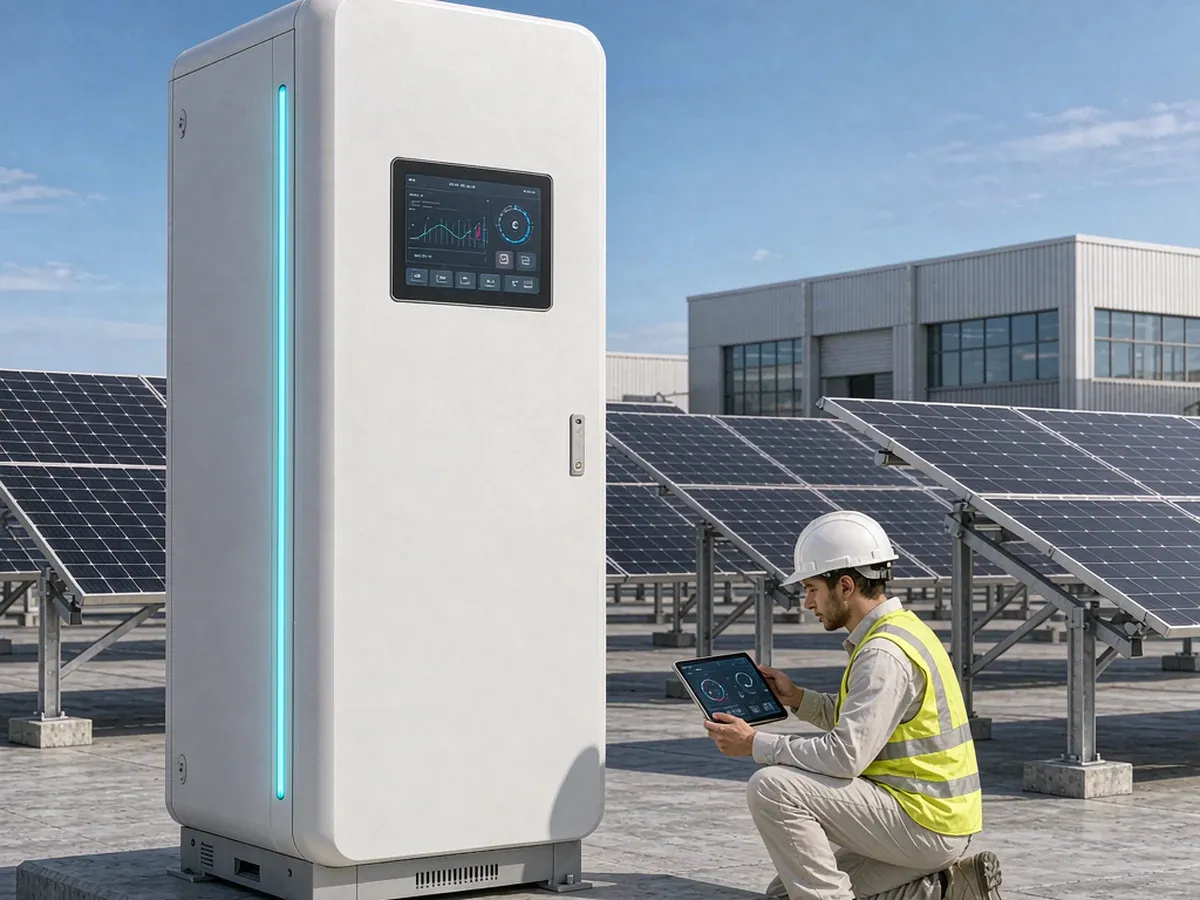
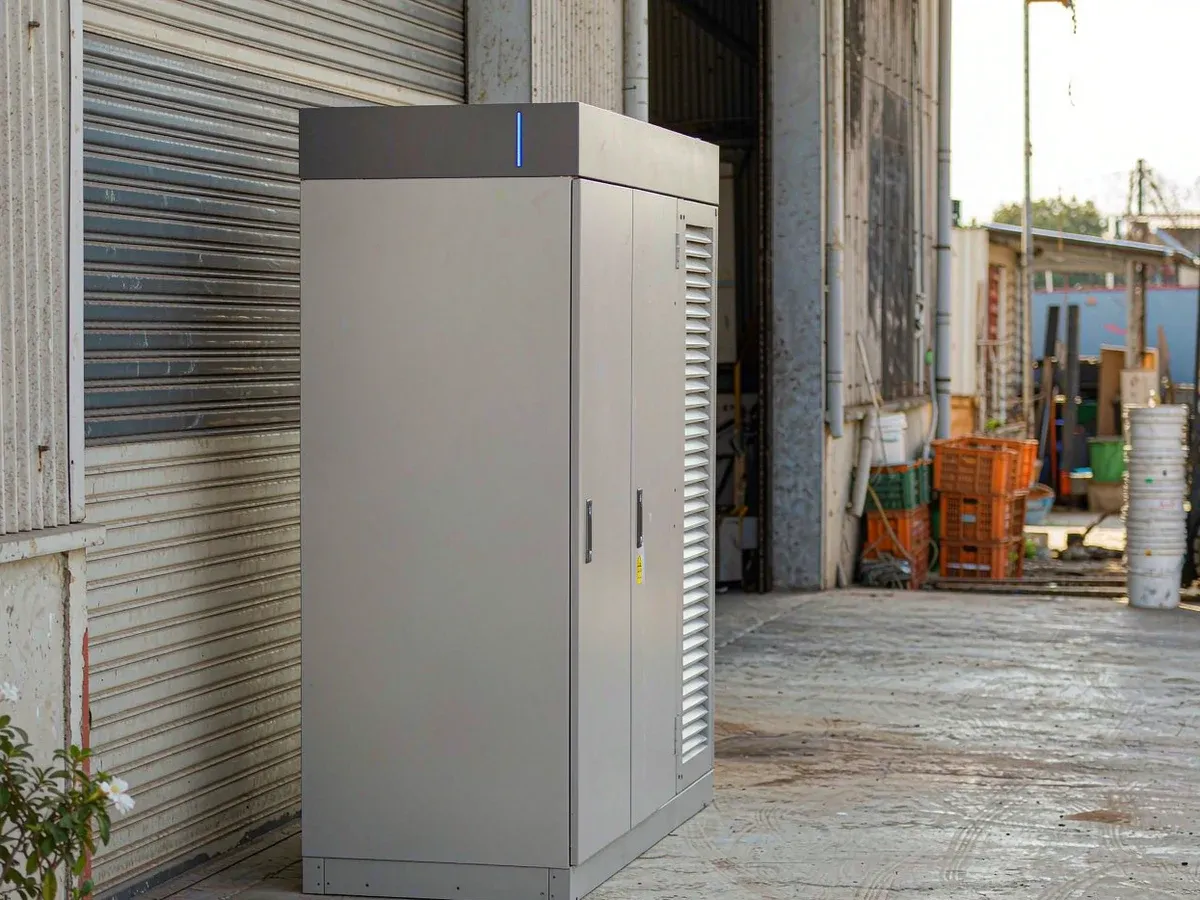
Start from the loads you cannot shut down: production controls, a cold-storage compressor, POS terminals, security, emergency lighting. Their running power in kilowatts sets the inverter size; the hours you need them alive sets the battery capacity. A small shop might need 20-50 kWh; a workshop or clinic typically lands in the 100-215 kWh range, which is why a liquid-cooled 144 kWh cabinet or a 215 kWh industrial cabinet fits most mid-size sites. Smaller operations can start with a 32 kWh light-commercial unit and add cabinets later. Size to essential loads, not the whole building.
When Battery Backup Pays, and When a Generator Still Wins
Be honest about the boundary. Battery backup pays when outages are frequent, loads critical, and fuel logistics a headache, the norm in many growing industrial belts. It does not pay, or a generator wins, in three cases: outages arrive once or twice a year and stay brief; the loads to cover are tiny; or you need two or more days of runtime with no way to recharge, since a battery alone cannot store that much economically. If your site faces long blackouts with no solar and no fuel, pair the battery with a generator rather than oversizing it. A supplier who claims a battery solves a three-day outage alone is selling capacity, not a solution.
Parameters You Must Hand the Supplier
Before asking for a quote, write down the numbers that change the design. Your service capacity and AC voltage and phase, because single-phase shops and three-phase factories need different inverters. The essential-load kilowatts and the runtime hours you require. The ambient temperature range, because a cabinet specced for a temperate warehouse derates hard in a hot-climate summer. Whether you want grid-only backup or PV-coupled operation, and any space constraints where the cabinet will sit. Hand that sheet over and ask for a system that meets it; a supplier who quotes from your load sheet, not a catalog number, is the one worth a second email.
Lead Time, MOQ and Pilot Units: What to Confirm Up Front
None of these numbers should be accepted verbally. Lead time depends on whether the cabinet is a standard build or configured to your site and on your local interconnection steps, so request a written working-day figure and a commissioning plan that names who sets the parameters. Minimum order quantity and tiered pricing follow volume: ask for the written price ladder at 1, 5 and 20 units so you see the real curve instead of a single quote. If you plan a multi-site rollout, ask whether a single-cabinet pilot is possible first; OEM and custom C&I designs exist so the first unit proves the load profile before you commit the fleet. Treat any 'fast and cheap' without a document as unconfirmed.
Testing and Acceptance: How to Know It Really Works
Delivery is not the finish line. Request the factory commissioning test report and, on site, run a controlled discharge against your own essential load for the rated hours, because you should not trust a capacity number you did not measure at your temperature. Confirm the shipping documents for the cells: UN38.3 and MSDS are standard and should arrive with the shipment. For the system, ask for IEC 62619 and, where your market requires it, UL 9540A numbers, then verify them with the issuing body rather than trusting a PDF. None of those prove cycle life, so read any cycle claim against its test depth-of-discharge and temperature. Solid after-sales support should name who commissions the unit and how remote faults are handled.
A Checklist You Can Paste Into Your Inquiry Email
Copy this and send it to any supplier you are comparing:
- Our essential backup loads total about __ kW (list them: ___).
- We need them to run for __ hours during an outage.
- Service is __ V, __ phase, located in __ (country or region).
- Ambient temperature range is __ to __ degrees C.
- Can you supply a single-cabinet pilot before a full rollout?
- Send written lead time, MOQ and the price ladder for 1 / 5 / 20 units.
- Which certificates ship with the cells (UN38.3, MSDS) and the system (ask for IEC 62619 / UL 9540A numbers to verify)?
- What do commissioning and after-sales cover, and from where?
Common Questions From Facility Managers
How long will a C&I battery run my site during an outage?
That depends on two numbers you control: battery capacity in kWh and essential load in kW. Divide one by the other and you get runtime, so a 144 kWh cabinet feeding a 30 kW load runs roughly four to five hours, a 215 kWh unit closer to seven. Runtime is a design choice, not a fixed spec, so state the hours you need and let the supplier size to it rather than accepting a standard cabinet's default.
Can it power the whole building or just the critical loads?
For almost every business, backing up only the critical loads is the cheaper and smarter move. Powering an entire factory floor through an outage means a battery the size of a room and a payback that never closes. Pick the loads that cost you money or safety when they stop, controls, refrigeration, comms, lighting, and let the rest drop. If you later want full-building coverage, add cabinets; the system scales in steps instead of forcing an oversized first purchase.
Does it work with the solar I already have?
Usually yes, if the inverter is configured for it. PV-coupled backup recharges during the day and can stretch runtime into an evening outage, but it adds a control layer and a PV input rating to confirm. Ask the supplier whether the system is grid-only or PV-ready, and verify the PV input against your array before you assume free recharging. If you have no solar yet, the battery still backs you up; solar is an upgrade, not a prerequisite.
Which certificates should the supplier provide for backup systems?
For the cells, expect UN38.3 and MSDS with the shipment, proving the batteries are safe to transport, not that they last ten years. For the system, ask for IEC 62619 and, where your market requires it, UL 9540A, and request the actual certificate numbers so you can verify them with the issuing body. A certificate that cannot be looked up is decoration. Keep the questions practical: what each certificate covers, and what it explicitly does not, because buyers lose money trusting a logo that means less than the salesperson implied.
Send Us Your Load Sheet
If you run a site where outages cost real money, send us your essential-load list, your AC voltage and phase, your required runtime, and whether generation is already on site. You will get a sizing sketch and a document checklist back, not a brochure, and if a smaller or larger configuration fits your load better than expected, we will say so. See how backup fits broader energy storage solutions or reach the team to start the conversation.