Does a Home Energy Storage System Need a Separate Inverter?
A modern home energy storage system almost never needs a separate inverter - the unit you buy ships with the inverter built into the same cabinet. This guide explains integrated vs separate setups, wh
Does a Home Energy Storage System Need a Separate Inverter?
A modern home energy storage system almost never needs a separate inverter - the unit you buy ships with the inverter built into the same cabinet. This guide explains integrated vs separate setups, when each one fits, and the five questions that decide which you need.
A modern home energy storage system almost never needs a separate inverter. The unit you buy - whether a 5kWh backup box or a 16kWh villa cabinet - ships with the inverter built into the same enclosure. One device charges from your panels, powers your loads, and rides out an outage. The separate-inverter setup still exists, but it is the exception now, not the rule.
The confusion comes from older installs and a few DIY kits where the battery was a dumb box and the inverter sat beside it. That design made sense a decade ago, when off-the-shelf home batteries were rare and inverters were general-purpose. Today a home energy storage system from a dedicated factory is engineered as one sealed unit: a self-developed integrated inverter, the lithium cells, and the battery management system sharing one enclosure and one cooling path.
Why Most Home Batteries Ship With the Inverter Inside
Three reasons pushed the industry toward the integrated design. Efficiency: every time energy crosses another device it loses a little as heat, so keeping the inverter next to the cells shortens the path from battery to your sockets. Installation: one cabinet, one set of brackets, one permit, and an electrician is done in an afternoon instead of two days. Support: when one company builds both halves, you have a single point of accountability if something misbehaves.
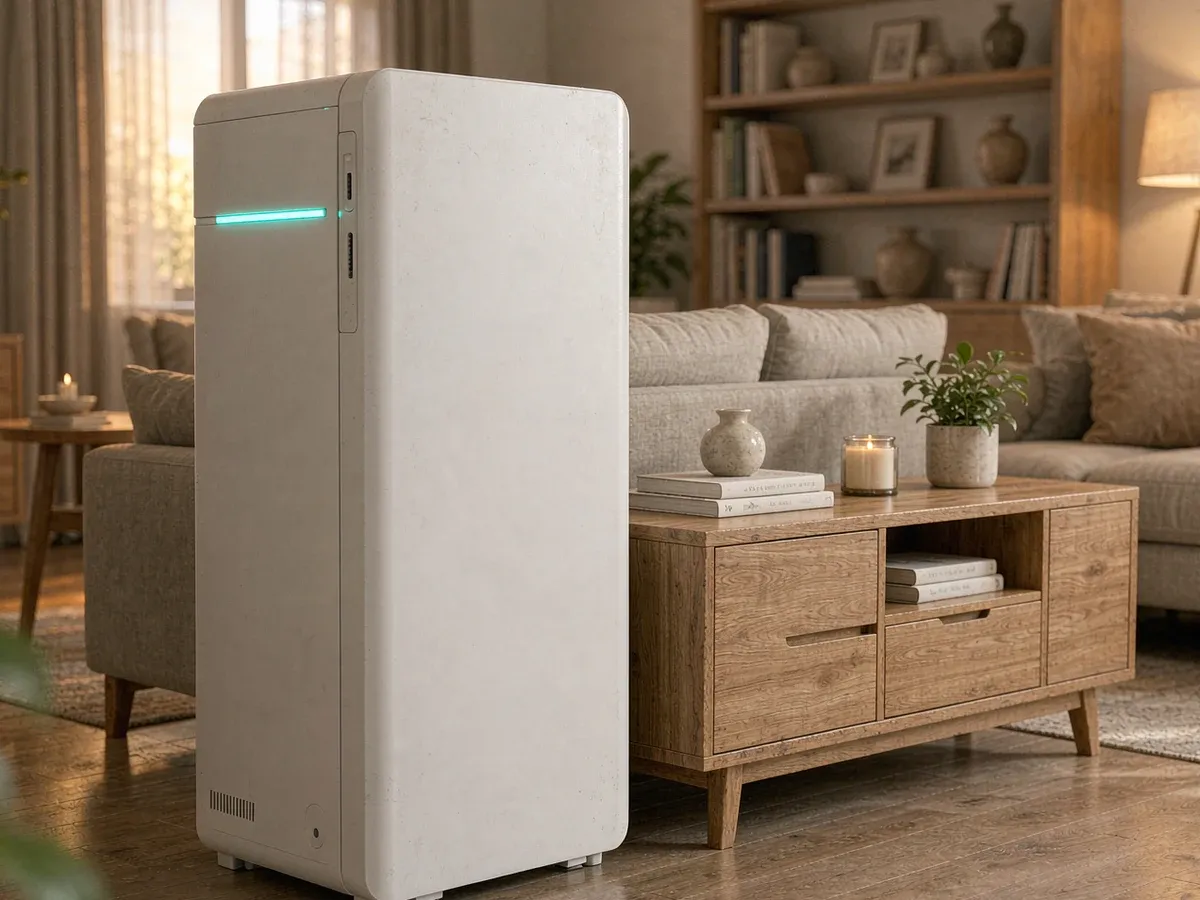
A 10kWh all-in-one home unit is a clean example. It is a floor-standing cabinet with the inverter on the back plane, the LiFePO4 cells in the middle, and a thin status display on the front. Nothing to pair, nothing to mismatch. A household in Nairobi with evening load-shedding and a small rooftop array can be running on it the day it is mounted.
When a Separate Inverter Still Shows Up
Three situations still call for a separate inverter. One: you already own a hybrid or off-grid inverter and only want to add storage behind it. Two: your existing PV system is AC-coupled, meaning the solar feeds the grid through its own inverter and the battery has to sit on the AC side. Three: you are building a large, unusual system - say past 20kWh spread across a property - where a modular design lets you size the inverter independently of the battery.
In those cases you buy a battery cabinet and a standalone inverter and wire them together. The trade is more boxes and more cable for the freedom to mix brands and scales. A 20kWh home system built this way gives a large villa room to grow, but the ease of one box is gone.
Integrated vs Separate: What Actually Changes for You
For most homeowners the difference lands in four places. Space: integrated needs one wall or floor spot; separate needs two and the runs between them. Failure points: integrated has fewer connectors to loosen in a humid climate. Warranty: one vendor covers the lot. Upgradability: separate lets you swap the inverter without touching the battery, which matters if your loads change years later.
On raw performance the gap is small for typical homes. A well-built integrated inverter delivers the same continuous and surge ratings as a quality standalone unit of equal spec. The deciding factor is usually the install site and what you already own, not a power number on a brochure.
How to Tell What Your Setup Needs
Answer four questions before you buy. Do you already have solar on the roof? If yes and it is AC-coupled, an integrated AC battery is the clean add-on. Is your property single and under about 20kWh of storage? Then integrated almost always wins on cost and simplicity. Are you retrofitting behind an existing hybrid inverter? Then a compatible battery cabinet, separate or modular, is the move. Do you expect to add capacity in three years? Separate gives you that option without replacing the inverter.
Technical Notes Buyers Skip
Two numbers decide whether the inverter is adequate, and most listings bury them. Continuous output in watts must clear your essential loads with headroom - a villa running a fridge, lights, a water pump and a router needs more than a one-room backup. Surge rating matters for motor starts; a borehole pump or an air conditioner can pull several times its running watts for a second. Match the inverter's ratings to your worst minute, not your average hour.
Cells and inverter sharing one enclosure also means one cooling path. In hot climates - Riyadh, Lagos, Bangkok - ask how the cabinet manages heat, because an inverter throttling inside a sealed box quietly cuts the power you thought you had. Lithium iron phosphate cells handle heat better than older chemistries, and a traceable cell grade report is something any serious supplier should hand you. We build with Lishen Grade A cells and a self-developed integrated inverter, and you should expect equivalent transparency from whoever quotes you.
The paperwork to request is short. UN38.3 test reports and MSDS travel with the shipment as standard shipping and safety documents, and you should ask each bidder for their inverter's certifications by name rather than taking a sticker on faith.
When Integrated Wins - and When It Does Not
Integrated wins for the overwhelming majority: new builds, first-time storage, villas and townhouses up to roughly 20kWh, and anyone who wants the electrician in and out in a day. It does not win when you are bolting storage onto a bespoke existing system, or when you need to scale the inverter and battery on different timelines.
What to Ask Your Supplier
Five lines get you a correct answer instead of a generic quote: your essential load list in watts, whether you have existing solar and how it is coupled, your daily outage or load-shedding pattern, your available wall or floor space, and your AC voltage (220/230V single phase is common across Asia, Africa, the Middle East and Latin America). Hand those over and a factory can tell you integrated or separate in one reply.
FAQ
Can I add storage to panels I already own?
Usually yes. If your existing solar feeds an inverter already, an AC-coupled battery cabinet connects on the output side without touching the array. If the system is older or the inverter lacks the right port, a separate hybrid inverter plus battery is the cleaner retrofit. Bring your current inverter model to the conversation so the factory can check compatibility before you order.
Does an integrated inverter fail more often?
No more than a separate one, and often less, because there are fewer connectors and external cables to loosen or corrode. The risk shifts from wiring to a single device - which is exactly why you want one accountable manufacturer and a clear support path. Ask for the inverter's mean-time-between-failure figure and read it next to the warranty.
Is a separate inverter better for a large home?
Not automatically. A 16kWh villa system with a self-developed integrated inverter covers most large homes without a second box. Separate earns its place only when you exceed roughly 20kWh, split the load across buildings, or must keep the inverter and battery on different upgrade cycles. Size the problem, not the fear.
How do I know the inverter is sized right?
Add up the watts of everything you want live during an outage, then add the surge of the hardest motor-driven load. If the inverter's continuous rating clears the sum with 20 to 30 percent headroom and its surge rating clears the pump or compressor start, you are safe. A technology overview of how integrated inverters handle these loads helps you read a spec sheet critically instead of trusting the largest printed number.
Will a separate inverter give me more backup time?
Backup time comes from battery capacity in kWh, not the inverter. The inverter only sets how much load you can run at once. A 16kWh integrated unit and a 16kWh separate-inverter unit give the same runtime at the same load; the separate setup just costs more to wire and support. Buy capacity for hours, buy inverter rating for watts.
Tell Us Your Loads, Get the Right Topology
Send your essential load list, your existing solar details, and your outage pattern through the contact page and our engineers will tell you straight whether an integrated home system or a separate-inverter build fits your site - and why. No upsell, just the configuration that matches your walls and your watts.