Aug 22, 2026Residential ESS
Home Battery RFQ Case Analysis: From a One-Line Inquiry to a Quote-Ready Brief
A home battery RFQ case analysis showing how a solar distributor can turn a vague price request into a quote-ready brief without guessing key project data.
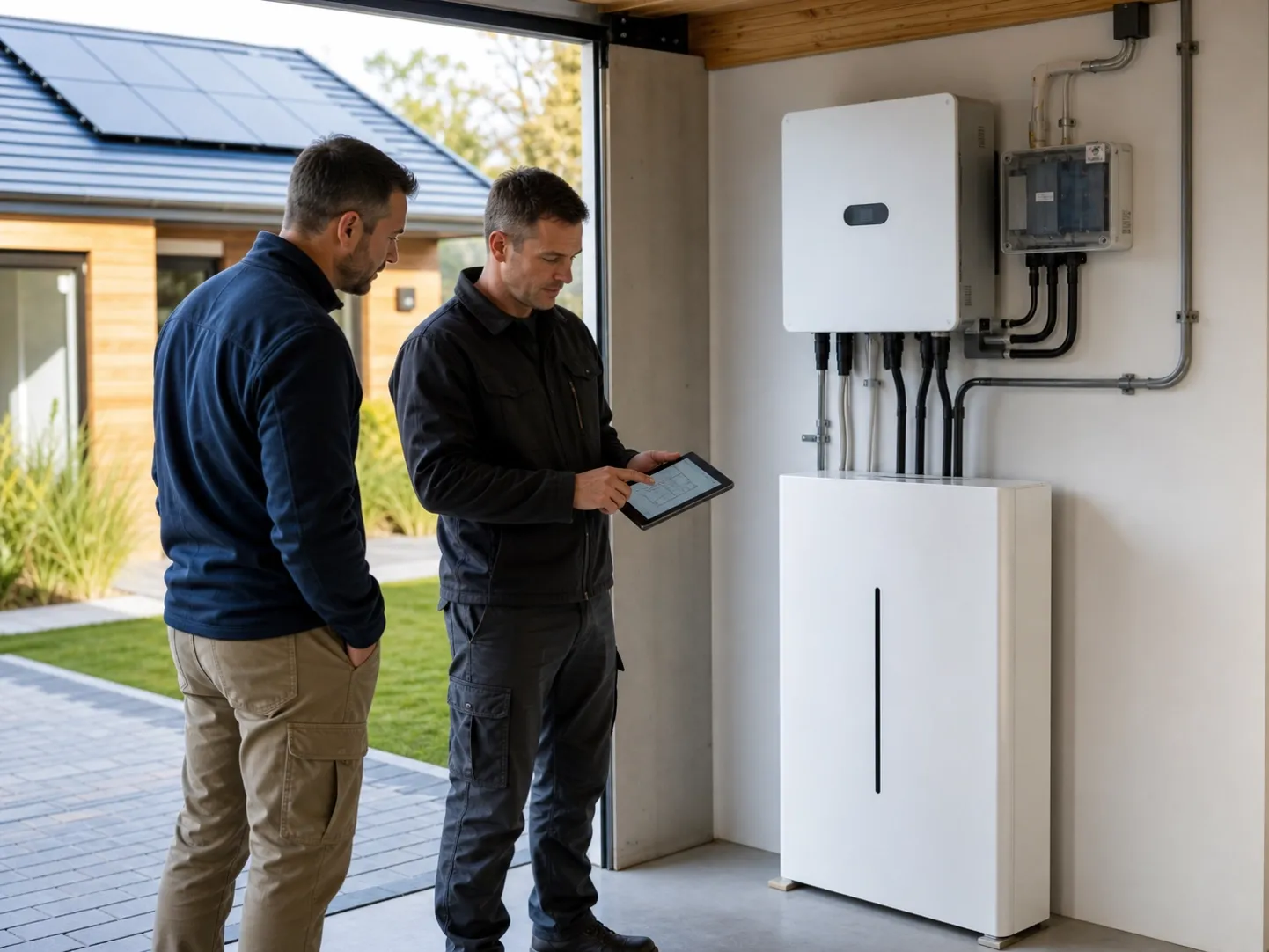
The inquiry was short enough to fit in a subject line:
“Need a home battery for a solar house. Please send price.”
It sounds like a live opportunity. It is also the kind of inquiry that can go wrong quickly. A price sent too early may be based on the wrong battery size, an incompatible inverter or documentation that does not match the buyer's market.
This article uses a composite purchasing scenario based on questions that residential energy storage distributors and installers commonly need to resolve. It is not presented as a named customer project or a claim about a completed LinkPower installation.
The Inquiry Looked Simple. It Wasn't.
In this scenario, the sender is a solar distributor preparing to test a residential battery before deciding whether to add it to the company's product range.
The original message tells us only three things:
- The application is residential
- Solar is involved
- The buyer wants a price
It does not tell us what the household needs to keep running, whether the solar system already exists, which inverter is involved, where the product will be sold or what the distributor expects after the sample.
Those missing details are not paperwork. They change the product selection, quotation scope and support plan.
The First Reply: Six Questions Instead of a Random Number
The fastest useful reply is not a long questionnaire. It is a short message that moves the buyer to the next decision.
We would ask:
- Which country or market is the product intended for?
- Is this a new solar installation or an addition to an existing system?
- Which inverter or system architecture will be used?
- Which household loads need backup, and for roughly how long?
- Will the battery be installed indoors or outdoors?
- Is this a single sample, a project order or a product-line evaluation?
If private labeling is part of the plan, we would add one more question: which items actually need customization—enclosure, label, interface language, packaging or documents?
This first reply is short enough for a busy buyer to answer. It also prevents the sales team from pretending that “home battery” is one universal product.
For a broader list of early-stage questions, see the Home Battery Storage FAQ for Solar Distributors and Installers.
Why Battery Capacity Alone Could Not Solve the Case
A common shortcut is to ask whether the buyer wants 5kWh, 10kWh or 16kWh and quote immediately.
That may be convenient, but it still leaves the important questions unanswered.
Battery capacity does not, by itself, tell us:
- Which appliances can operate at the same time
- How long the selected loads may run
- Whether the inverter and battery can communicate
- How solar production changes the operating plan
- Whether future household loads should be considered
- Which installation and market documents are required
In this case, the right move is to separate the household's energy requirement from its power requirement. We need a load list, not a guess.
The buyer can then use our 5kWh, 10kWh and 16kWh home energy storage comparison to organize the discussion without promising a runtime that has not been calculated.
Turning the Answers Into a Working Brief
Once the distributor replies, the information should be reorganized into one page that engineering, sales and purchasing can all read.
A quote-ready brief should look like this:
Buyer and Market
- Buyer type: distributor, installer, EPC or project owner
- Destination market: confirmed by the buyer
- Current stage: sample evaluation, active project or product-line planning
- Expected quantity: sample quantity plus a realistic order forecast
Household Use Case
- Essential loads: listed by the installer or end customer
- Backup objective: outage support, solar self-consumption or both
- Desired operating period: stated as a target, not a guarantee
- Future loads: marked as confirmed, planned or unknown
Existing System
- Solar status: existing or planned
- Inverter model: supplied by the buyer where applicable
- System architecture: checked before compatibility is claimed
- Installation location: indoor, outdoor or still to be surveyed
Commercial Requirements
- Branding and label language
- Packaging and included accessories
- Monitoring or interface expectations
- Required documents for the destination market
- Sample deadline and target order window
- Warranty and technical-support expectations
Notice what is missing from this template: invented answers. Unknown items stay marked “to be confirmed.”
A Three-Option Comparison the Distributor Could Actually Use
Instead of sending one product and hoping it fits, the distributor can compare three application levels.
Essential-Load Option
This option is built around a short list of priority circuits. It may suit a household that mainly wants basic outage support. The final capacity still depends on the load data and operating target.
Balanced Home Option
This option covers a broader set of household priorities and gives the installer more room to balance solar self-consumption with backup use.
Higher-Resilience Option
This option is considered when the household has a longer backup objective, a larger load list or expects future demand to increase. It also requires closer attention to installation space and system compatibility.
The point is not to make every buyer choose the largest battery. The point is to show how the decision changes when the use case changes.
The Procurement Questions That Usually Appear Too Late
The technical discussion often gets most of the attention. Then, just before the sample is approved, someone asks about labels, packaging, manuals or after-sales support.
That is too late.
For this case, the commercial brief should confirm:
- Whether the distributor wants a standard product or private label
- Which language is required on labels and documents
- Whether packaging must include local contact information
- Which accessories are included in the sample and production order
- How product revisions will be communicated
- Who handles installer questions after delivery
- What information is needed for a warranty claim
- Whether spare parts or replacement units need to be planned
Before and After: What Actually Changed?
Before qualification, the buyer had a price request.
After qualification, the buyer has a decision brief.
The difference is practical:
- “Home battery” becomes a defined household application
- “For solar” becomes a checked system architecture
- “Send price” becomes a quotation with stated assumptions
- “Maybe bulk order” becomes a sample and validation plan
- “Need our brand” becomes a controlled list of OEM changes
- “Must meet local requirements” becomes a document list for a named market
Nothing in this process is complicated. The value comes from asking the questions in the right order.
What We Would Not Put in the Quotation
A responsible supplier should leave some statements out until evidence is available.
We would not include:
- A fixed backup-time promise without a confirmed load profile
- A compatibility claim without the inverter and communication details
- A blanket compliance statement that ignores the exact model and market
- A final installation recommendation without a site survey
- A firm delivery promise before the approved configuration is frozen
- An OEM commitment that is not shown in the approved sample or written brief
Saying “to be confirmed” is better than creating a precise-looking answer that the project cannot support.
Copy This Home Battery RFQ Checklist
Before asking a supplier for a final quotation, collect:
- Destination country or market
- Buyer type and project stage
- Sample quantity and expected follow-up quantity
- Household load list
- Backup objective and desired duration
- Existing or planned solar information
- Inverter model and system architecture
- Indoor or outdoor installation location
- Capacity range being considered
- Monitoring and communication expectations
- Standard or private-label requirement
- Label, packaging and document languages
- Required market documentation
- Accessories and spare-parts expectations
- Sample validation schedule
- Warranty and support workflow
A phone photo of the installation area, a recent electricity bill and the inverter datasheet can often answer more than several rounds of general emails.
Why This Format Works for a B2B Buyer
The buyer does not need another article telling them that energy storage is growing. They need a way to make a purchase decision with fewer surprises.
A case-based RFQ article works because it follows the actual sequence of a deal: inquiry, clarification, comparison, sample, validation and order. It also gives sales teams something useful to forward internally.
That is the standard we will use for future LinkPower case content: one real purchasing problem, one clear decision path and no invented results.
Have a Similar Inquiry?
Browse LinkPower's residential energy storage products to understand the available product direction. Then send us your project brief with the destination market, load list, inverter information, installation environment and expected quantity.
If some details are not available yet, mark them as unknown. We can help organize the questions before discussing a model-specific quotation.