Indoor vs Outdoor Installation for a Home Battery: Where It Should Actually Go
The real question is not which home battery to buy but where it can safely live. Most residential cabinets are built for a sheltered indoor spot, and only some survive full weather exposure. This guid
Indoor vs Outdoor Installation for a Home Battery: Where It Should Actually Go
The real question is not which home battery to buy but where it can safely live. Most residential cabinets are built for a sheltered indoor spot, and only some survive full weather exposure. This guide covers the three things the spec sheet hides - IP rating, ventilation, and local rules - so you pick a placement that protects the unit instead of shortening its life.
The short answer is that most home batteries are designed for a sheltered indoor spot - a utility room, a garage, a laundry nook - and only some are built to sit fully exposed to weather. Where yours goes depends on three things the spec sheet hides: the enclosure's IP rating, how it vents heat, and what your local rules allow. Get those right and placement stops being a worry; get them wrong and you quietly shorten the unit's life or wipe out its safety margin.
A home energy storage system is only as safe as the wall or floor it rests on, so the first decision is not which brand but which room - or which shaded corner of the yard - can actually host it.
Where Most Home Batteries Actually Live
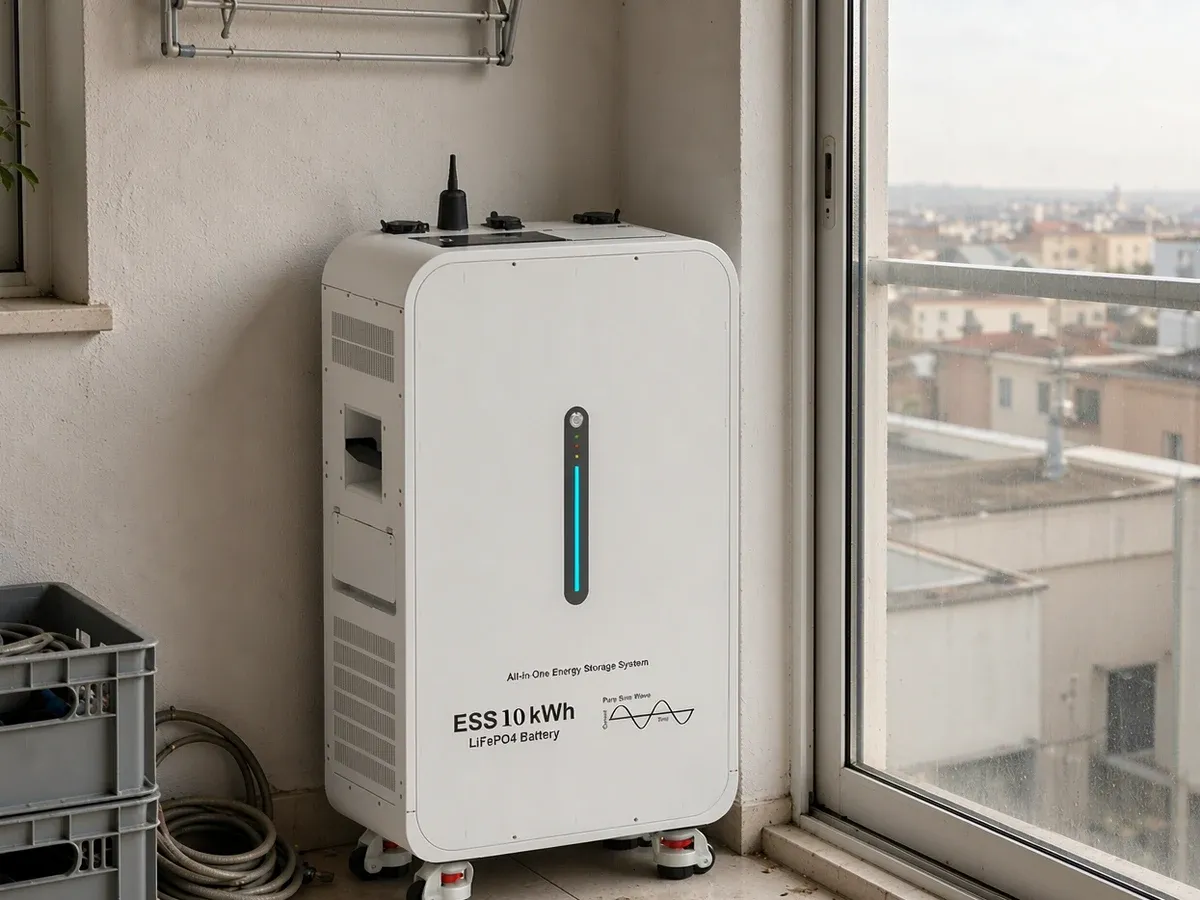
Most residential cabinets on the market are indoor-rated boxes. They are happiest in a dry utility room, a garage, a laundry nook, or under a staircase: a place with a roof, a wall, and a steady temperature. In a humid town near the West African coast or a villa outside Dubai, that indoor placement also keeps the enclosure away from salt air and dust that quietly corrode busbars. The point is not that outdoor is forbidden; it is that 'outdoor' means different things to different enclosures, and the label on the box decides which one you have.
Indoor Placement: The Easy Default
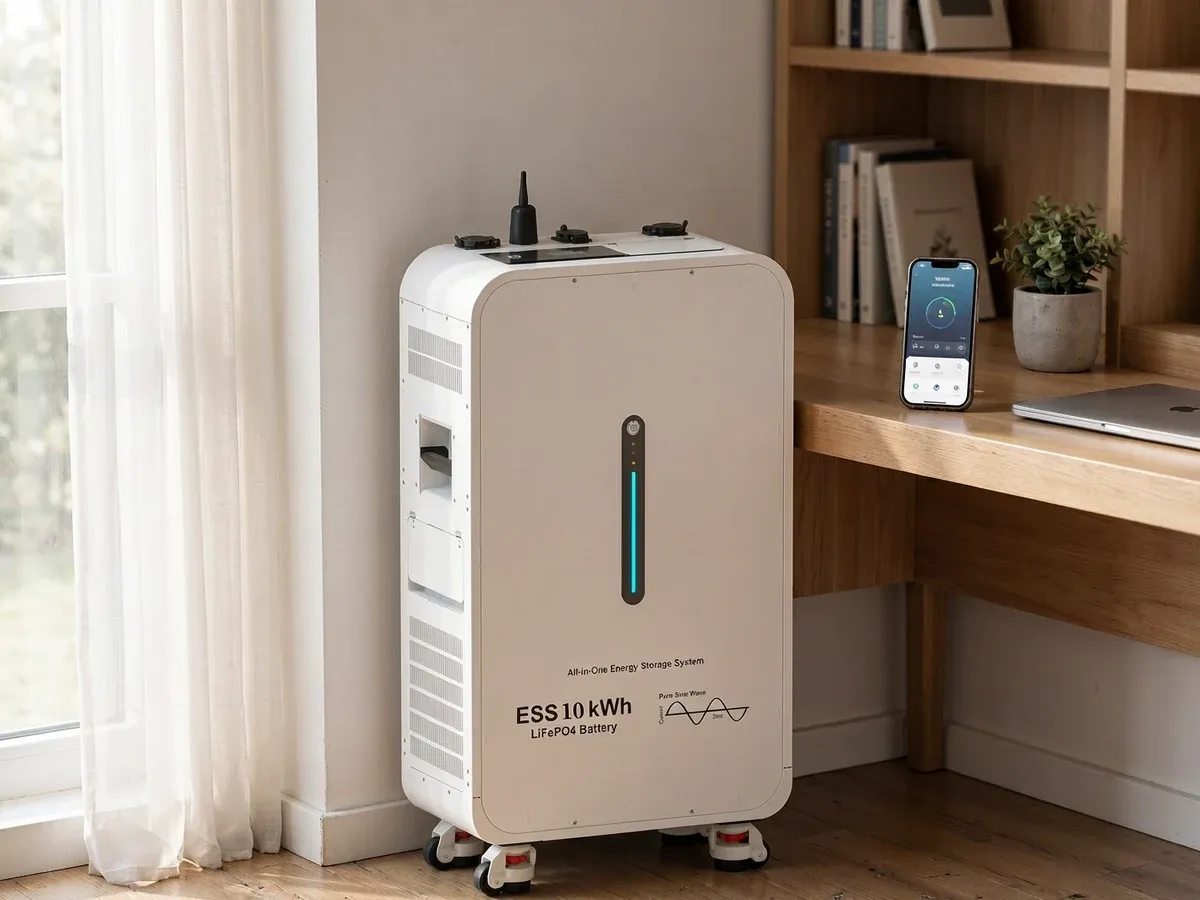
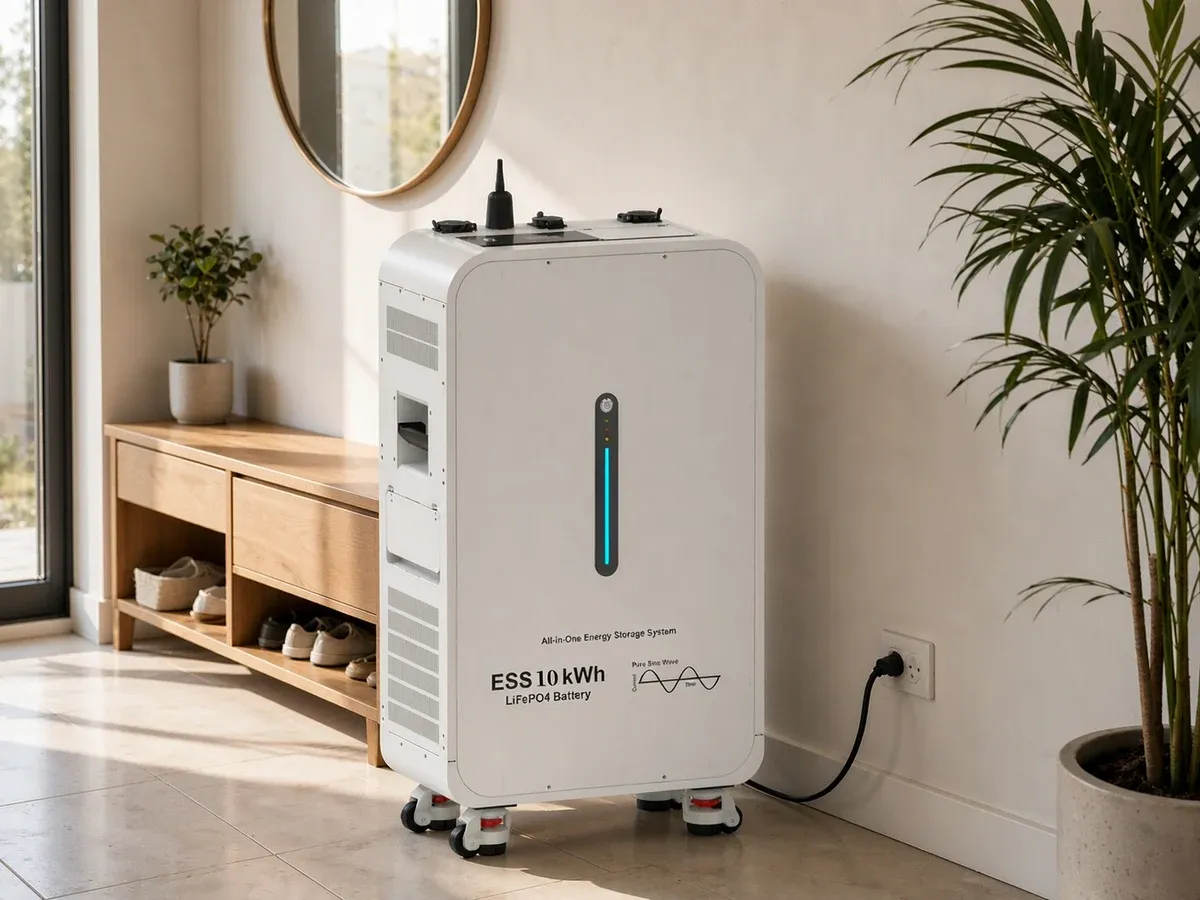
Indoor is the default for good reasons. Temperature swings are smaller, there is no rain or direct sun on the case, and you can run the cable to the inverter along a wall instead of through conduit. A 16kWh villa system sized for a larger home fits naturally into a utility room where the family already keeps the water heater and distribution board. The trade-off is space: a floor-standing cabinet needs a clear footprint and a wall rated for its weight, and you should lift it off the floor in any area that floods during the rainy season.
Outdoor Placement: When It Earns Its Keep
Outdoor makes sense when there is no spare room and the run to the main panel is shorter outside. A sheltered terrace, a covered carport wall, or the shaded side of a building can work - but only with an enclosure rated for it. 'Sheltered' is the keyword: full sun bakes the case and ages the cells faster than the calendar, and an unsheltered wall turns a light shower into a corrosion event. If you mount outside, pick the wall that stays in shade through the hottest part of the day, and keep the unit clear of wherever the sprinkler or gutter throws water.
Ventilation and Heat: The Quiet Killer
Batteries do not explode from heat the way the headlines suggest, but they do age. Every charge and discharge moves heat, and a cabinet boxed into a sealed cupboard traps it. In hot climates - inland Nigeria, the Gulf, parts of Southeast Asia - ventilation matters more than the headline capacity number. Give the unit breathing room: a few centimeters of clearance on the vented sides, nothing stacked against it, and never build it into a fully airtight cabinet. How the cooling and inverter design handles that heat is worth a look before you compare two quotes that look identical on paper.
IP Rating: The Number Buyers Skip
IP rating is the most skipped line on a residential spec sheet, and it is the one that decides indoor versus outdoor. IP20 suits a dry indoor room. Anything facing weather needs a higher figure, and 'higher' should be matched to the actual exposure, not a salesman's promise. Ask the supplier for the IP rating in writing and confirm it covers the exact spot you picked - a number that looks fine for a covered porch is useless against a wall that takes driving rain. Treat the rating as a placement permit, not a marketing badge.
Wall-Mount vs Floor-Standing
Wall-mount saves floor space and keeps the unit above minor flooding, which is why it suits smaller home energy storage units in apartments and tight utility rooms. Floor-standing cabinets hold more capacity and are easier to service, but they need a solid, level base and clearance all around. Either way, the mounting surface has to carry the weight for years - a hollow partition wall is not it. Match the form to the room you actually have, not the photo on the brochure.
What to Hand Your Installer First
Before anyone drills a hole, give the installer your essential load list, your AC voltage - single-phase 220/230V is the norm across much of Asia, Africa, the Middle East, and Latin America, though some sites run three-phase - and the exact spot you have in mind. If the plan is to pair storage with a rooftop solar setup, have the electrician confirm the coupling first so the battery is not stressed on day one. The installation and support notes from the supplier should spell out clearance, mounting, and cable routing; read them before the ladder comes out.
FAQ
Can I put a home battery in an uninsulated garage?
Yes, as long as the garage stays dry and the temperature stays inside the unit's rated range. An uninsulated garage in a place with mild nights is fine; one that bakes at midday or frosts at night means you should check the operating range first. Dry and in-range beats 'indoors' as a blanket rule.
Is it safe to install a battery outside in the rain?
Only if the enclosure carries an IP rating meant for that exposure, and only in a sheltered position out of direct rain and sun. A cabinet built for indoor use will not survive a wet wall, and no amount of 'weatherproof' wording on a brochure changes that. Match the rating to the wall, not to the hope.
Does outdoor installation void the warranty?
It can, if the placement falls outside the rated IP and temperature range. This is exactly why the rating matters: install within it and you stay covered; install outside it and you accept the risk yourself. Always confirm the placement permit in writing before mounting, so there is no argument later.
How far from the inverter should the battery sit?
Close enough to keep cable runs short and losses low, but with the clearance the enclosure needs to vent. A few meters along a wall is normal; pushing the battery into a separate sealed room adds cable length and heat-management headaches. Ask the supplier for the recommended run rather than guessing from the floor plan.
Do I need a fire-rated room for an indoor battery?
No, not for a standard residential LiFePO4 cabinet - the sealed enclosure is the containment, and a dry, ventilated, code-compliant spot is enough. Fire-rated rooms belong to large C&I installations with a different rulebook. Keep the indoor unit out of airtight cupboards and away from ignition sources, and you have met the practical bar.
Tell Us the Room, Get the Right Spot
Send your available space, your AC voltage, and your essential load list through the contact page, and our engineers will tell you plainly whether a compact unit or a larger villa system fits the corner you have - and which IP rating to insist on before the installer arrives.